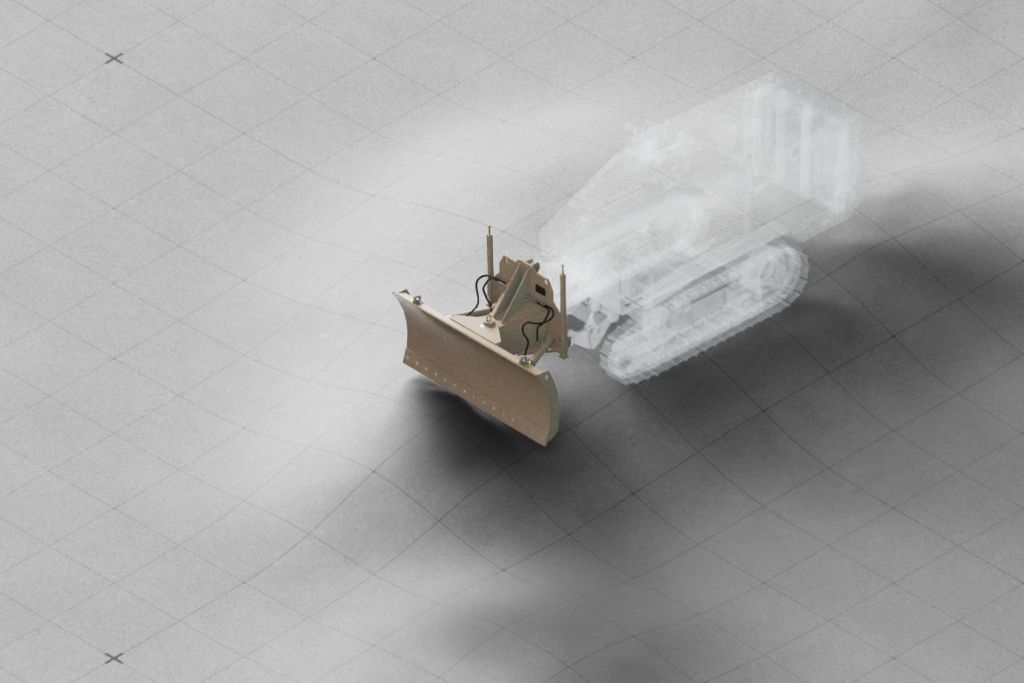
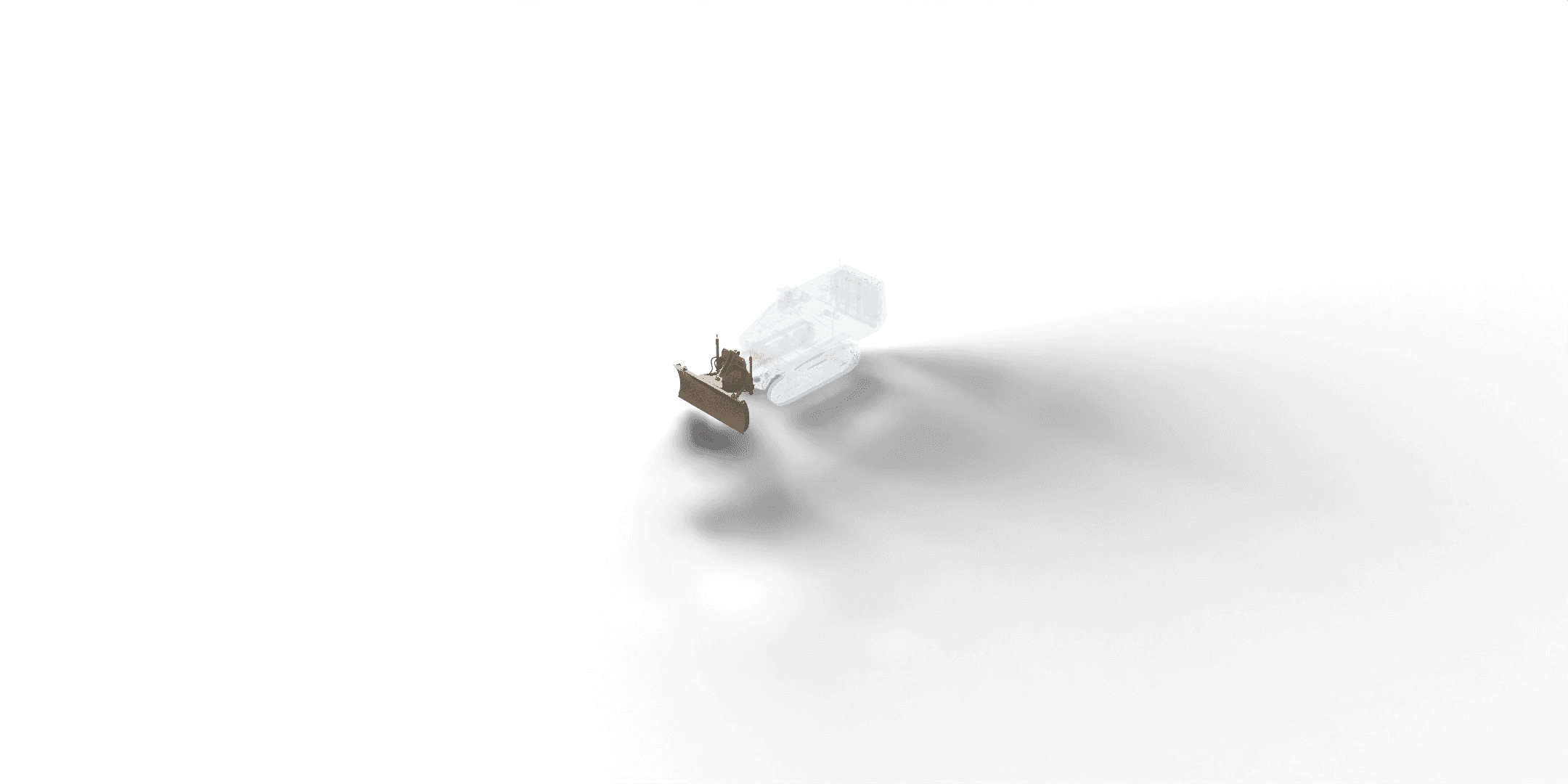
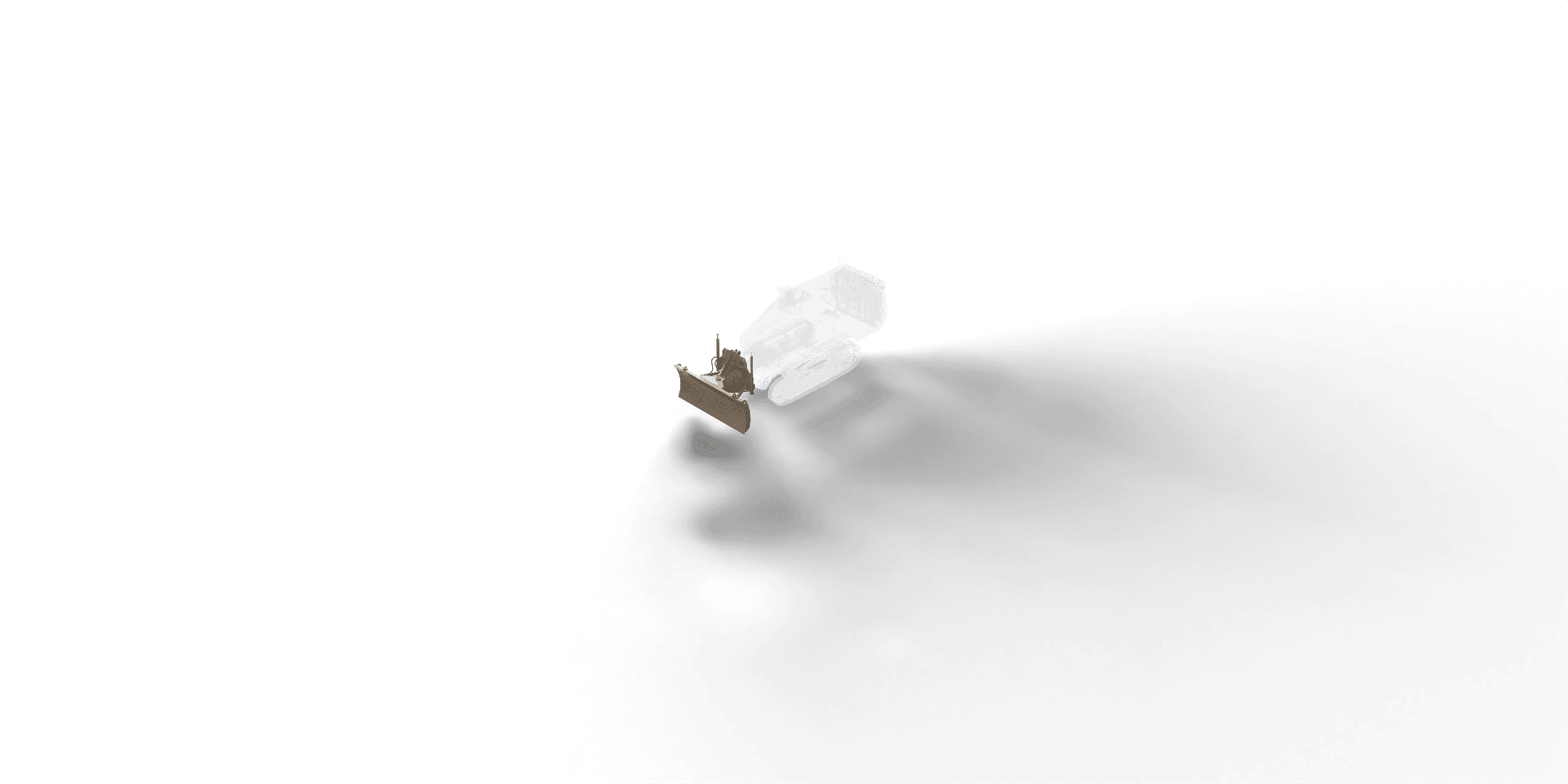
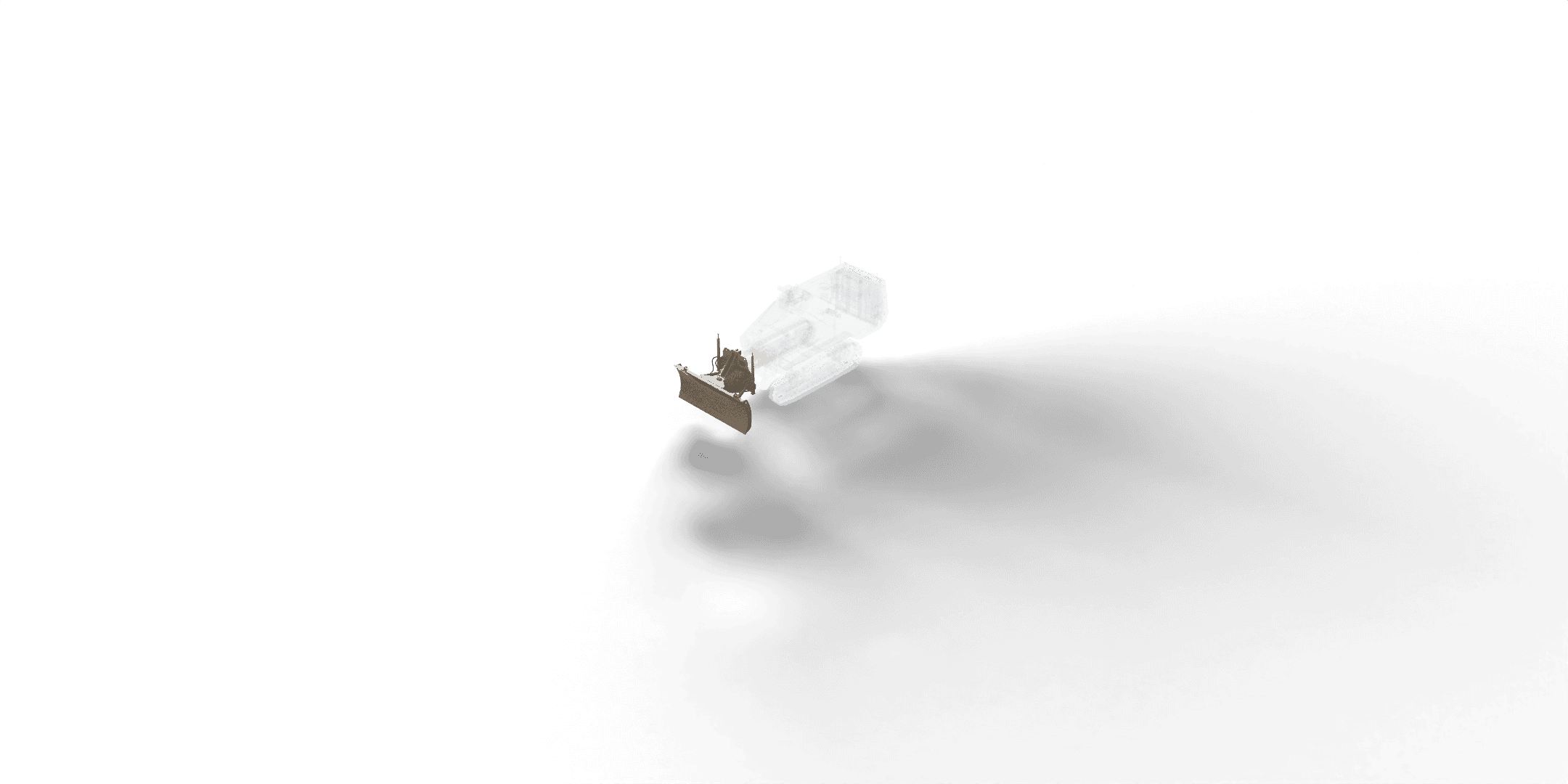
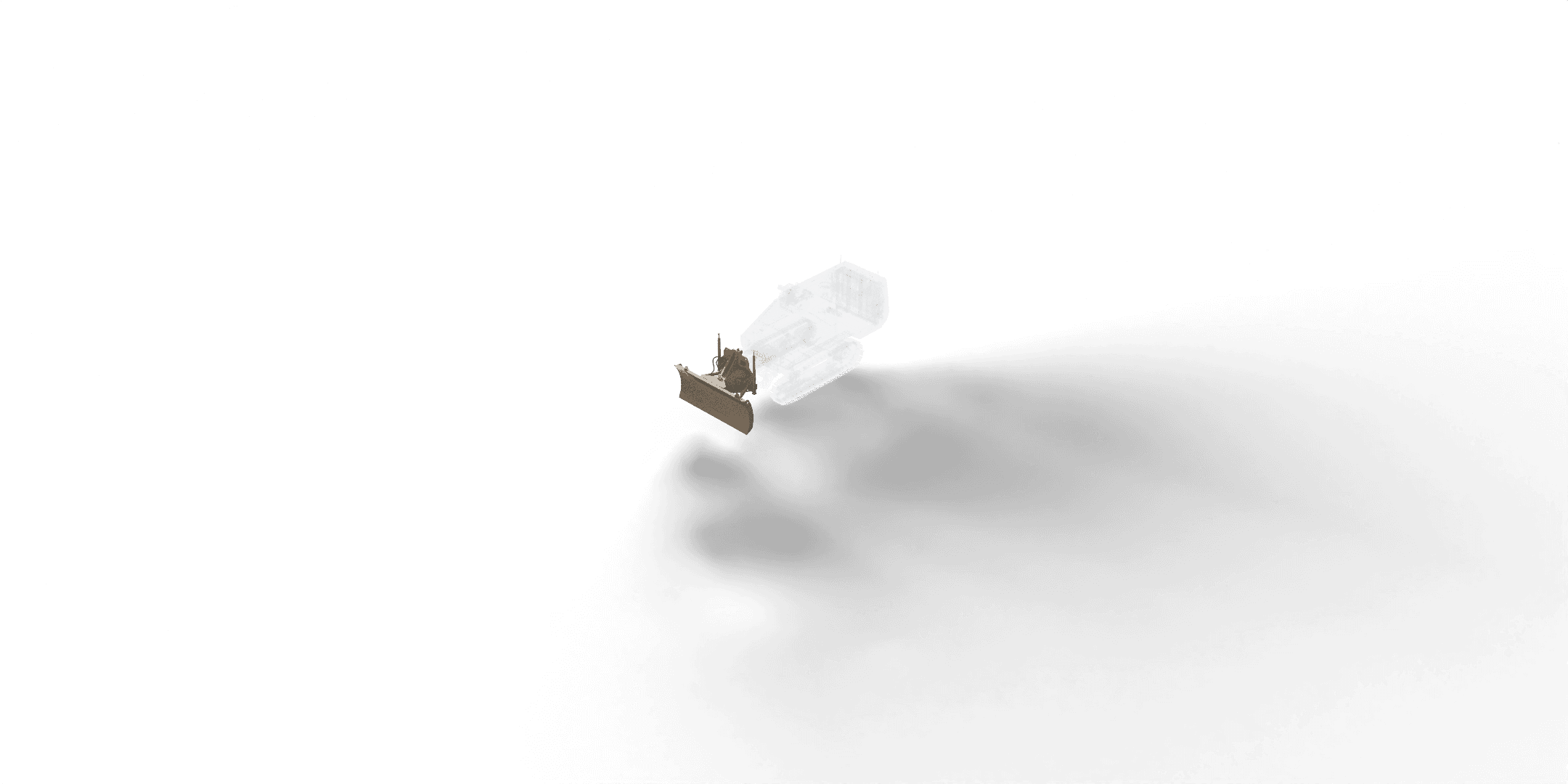
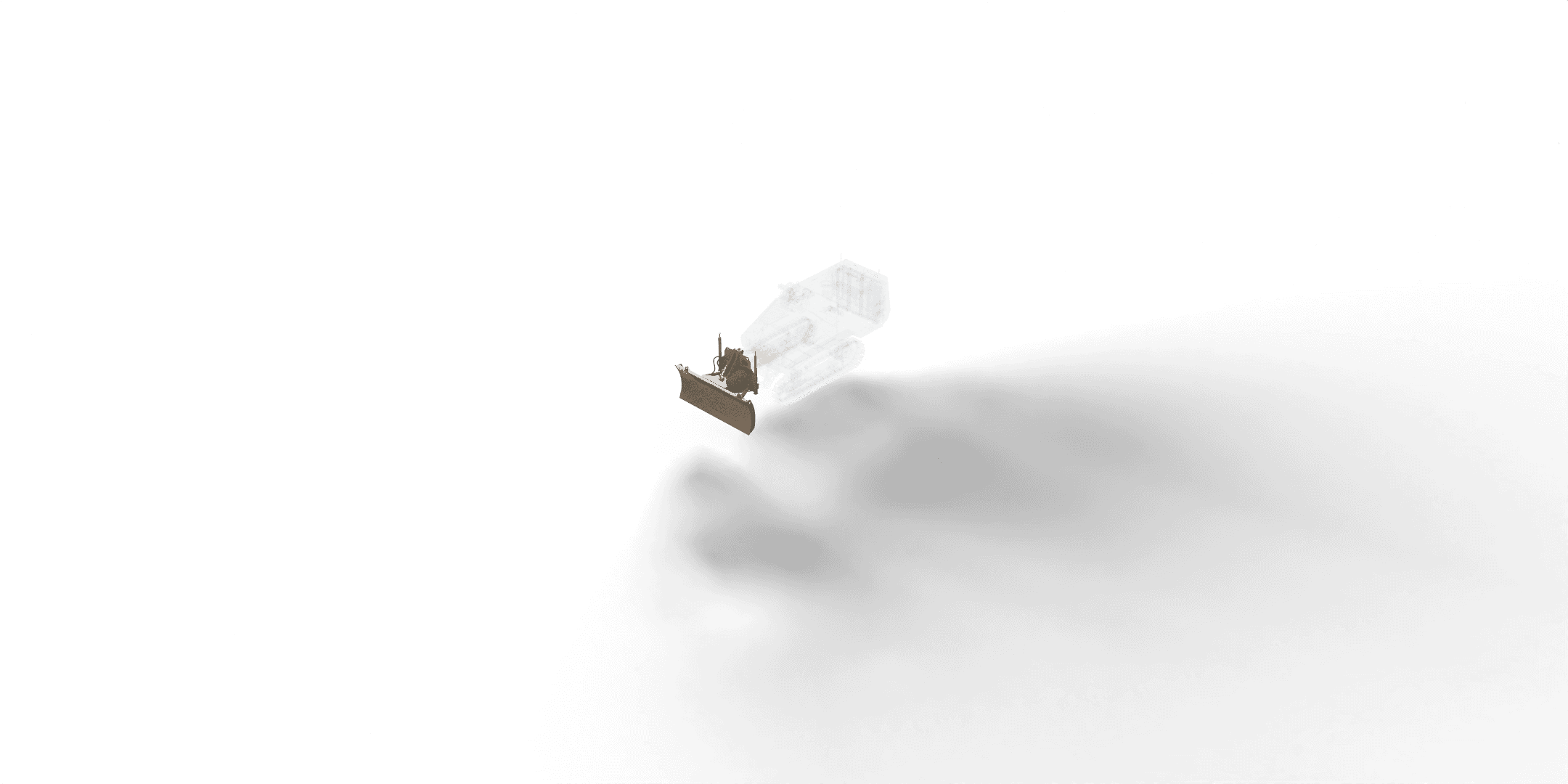
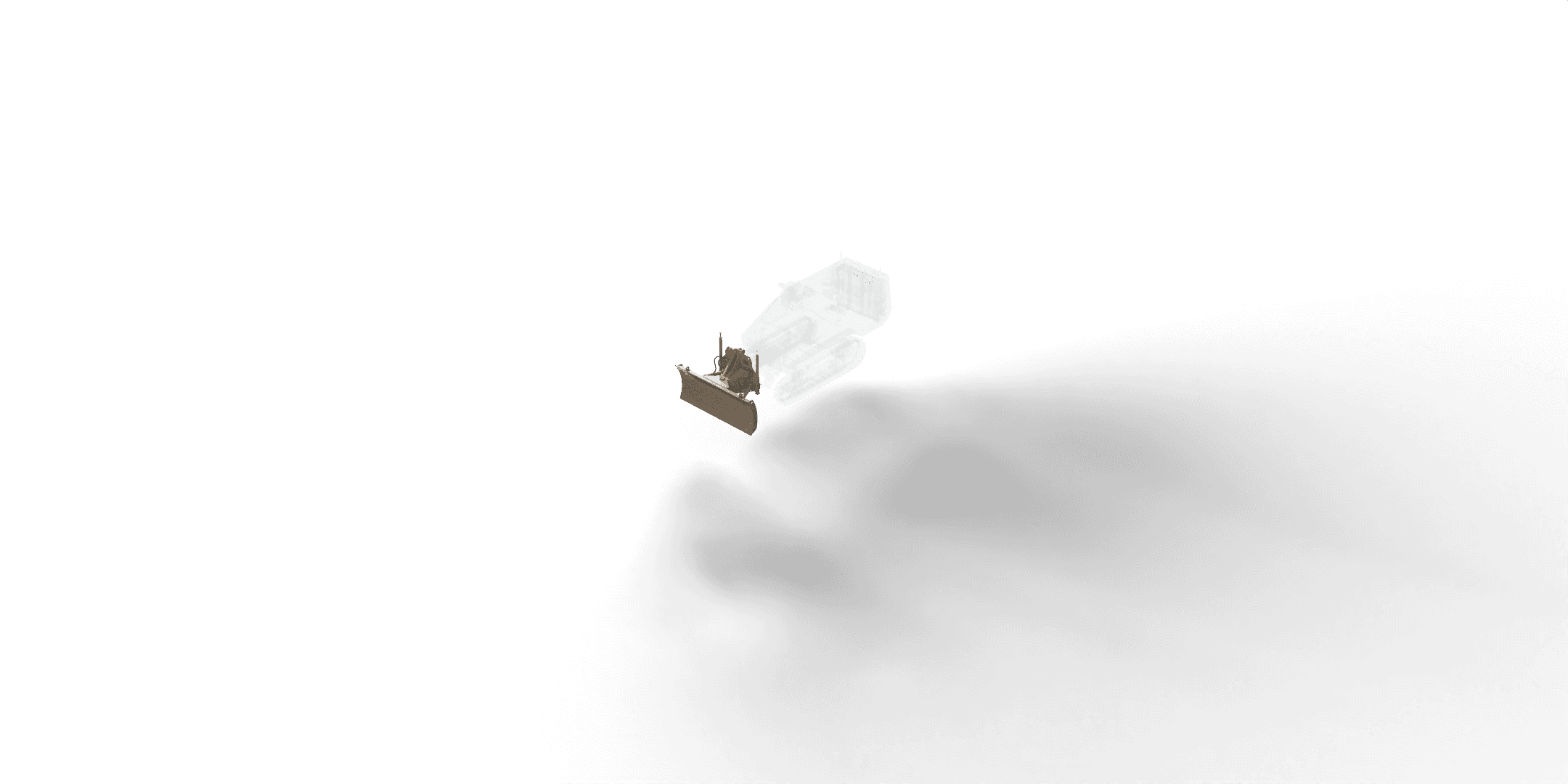
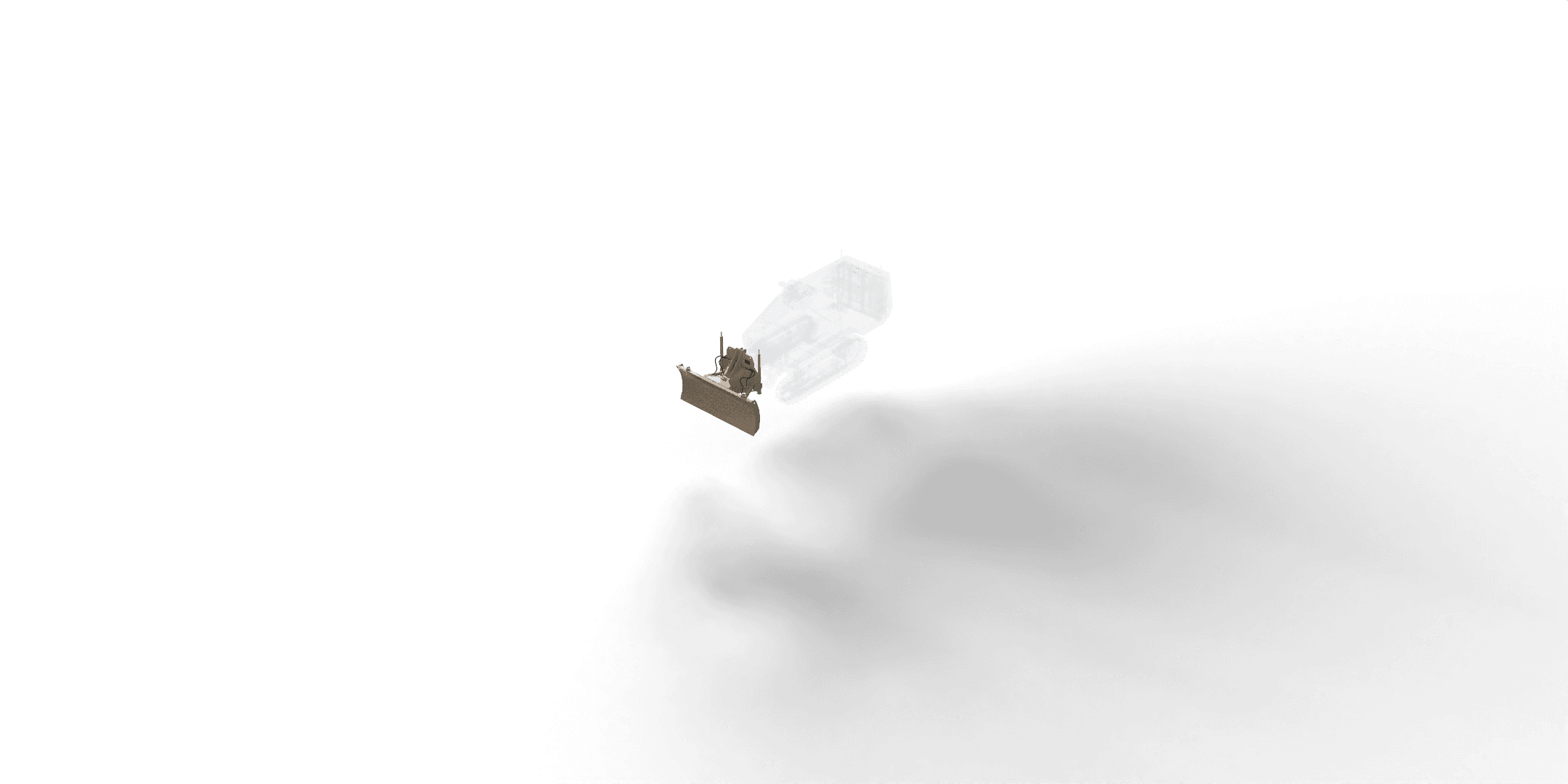
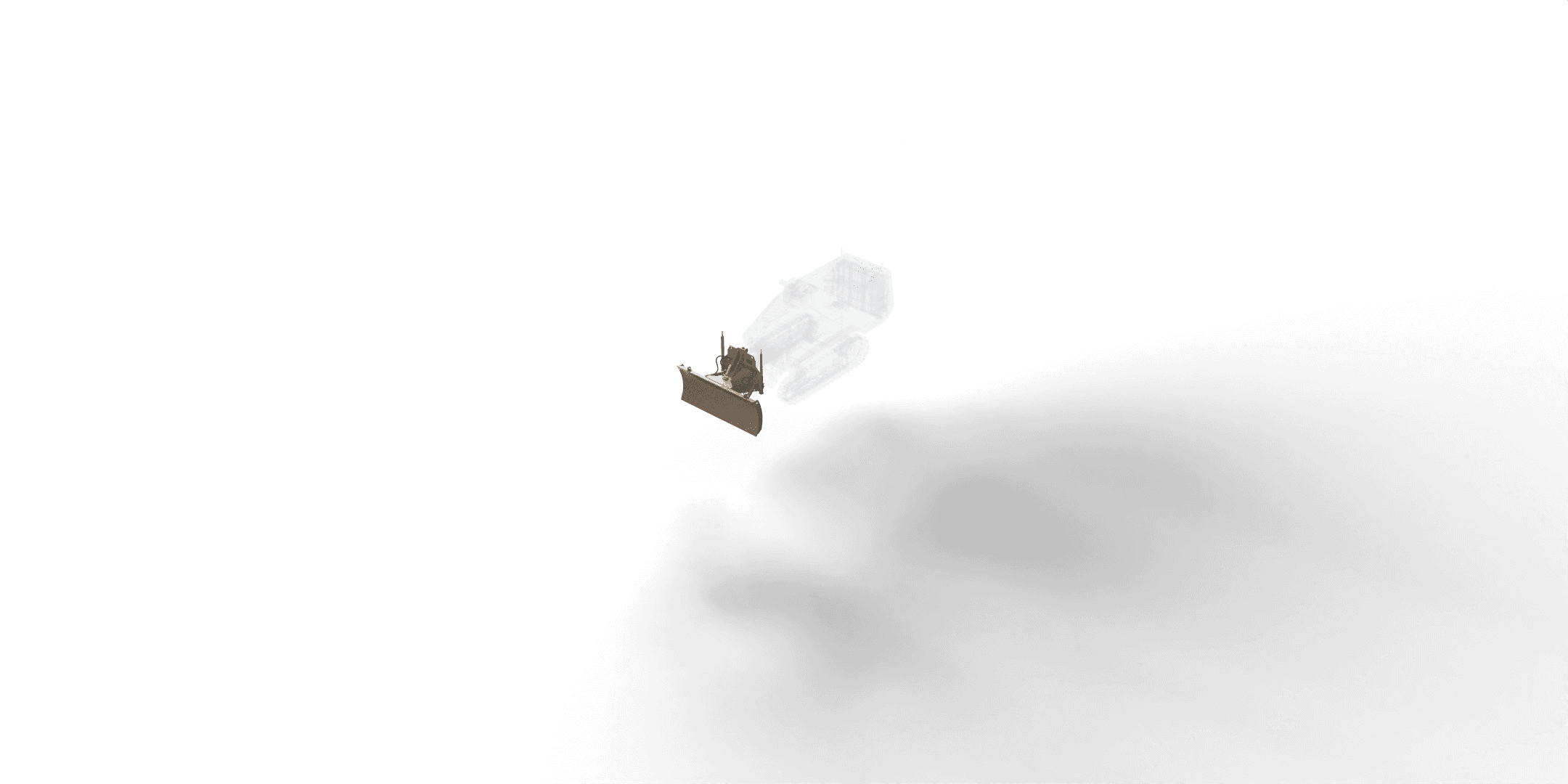
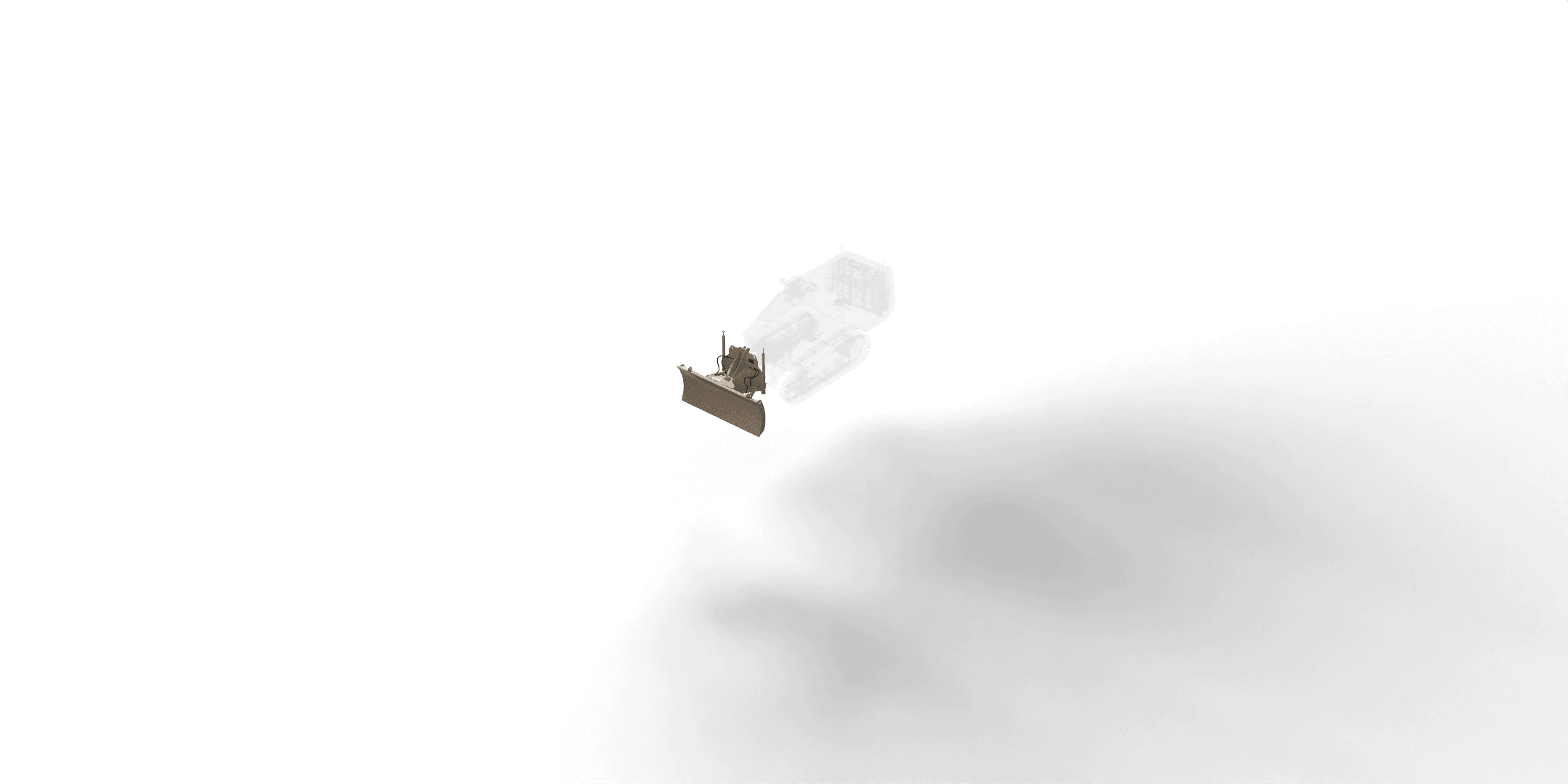
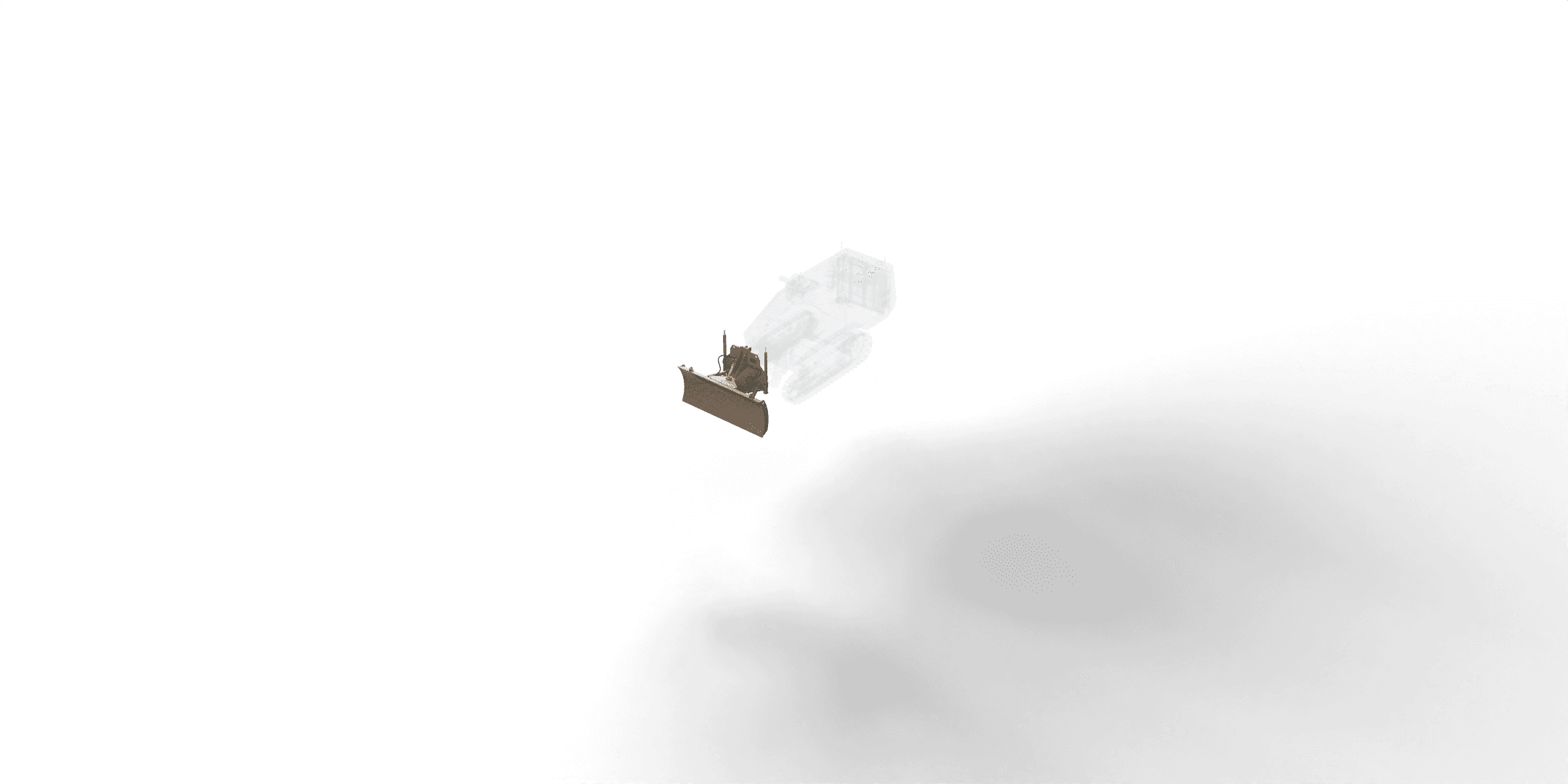
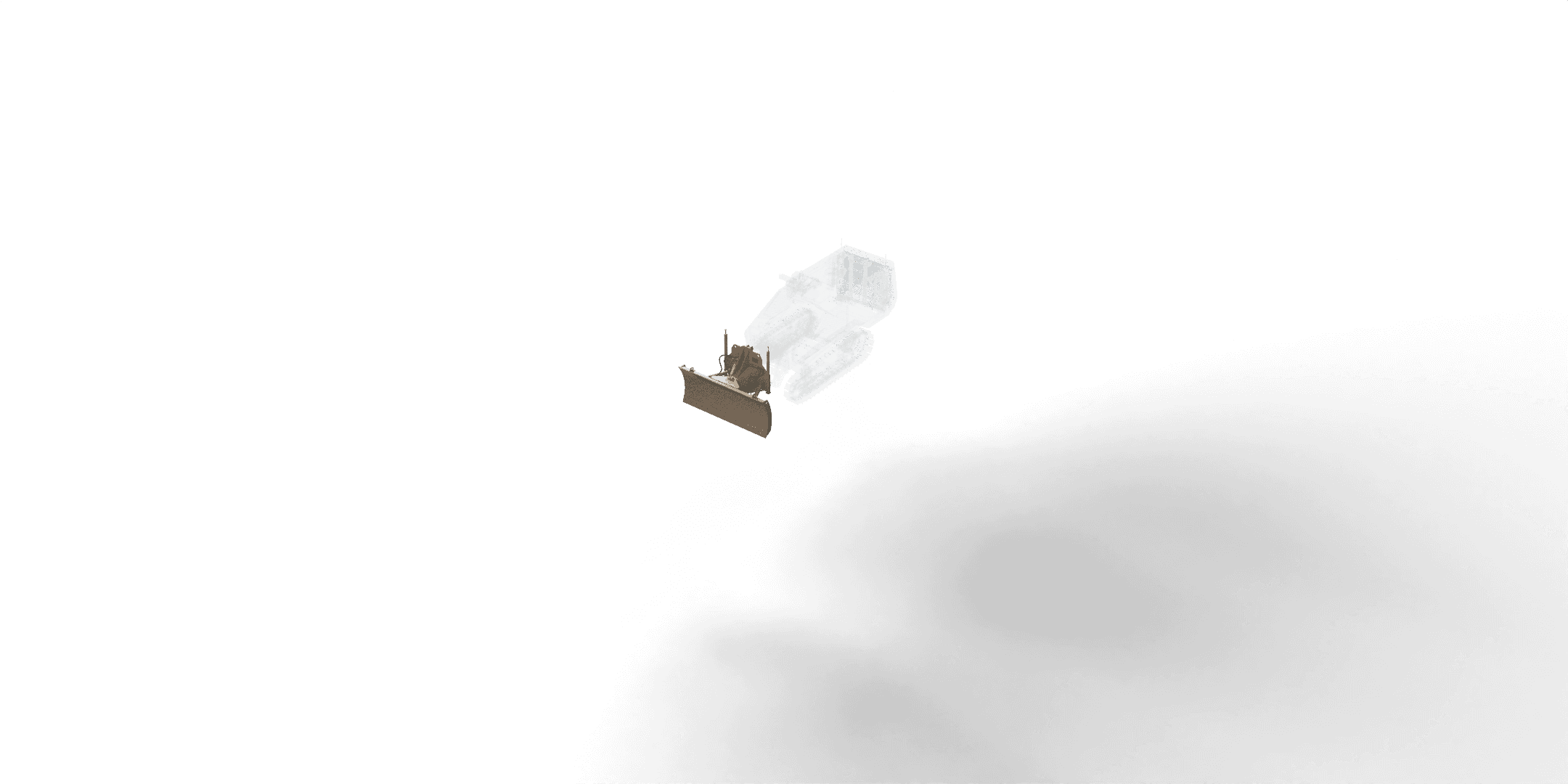
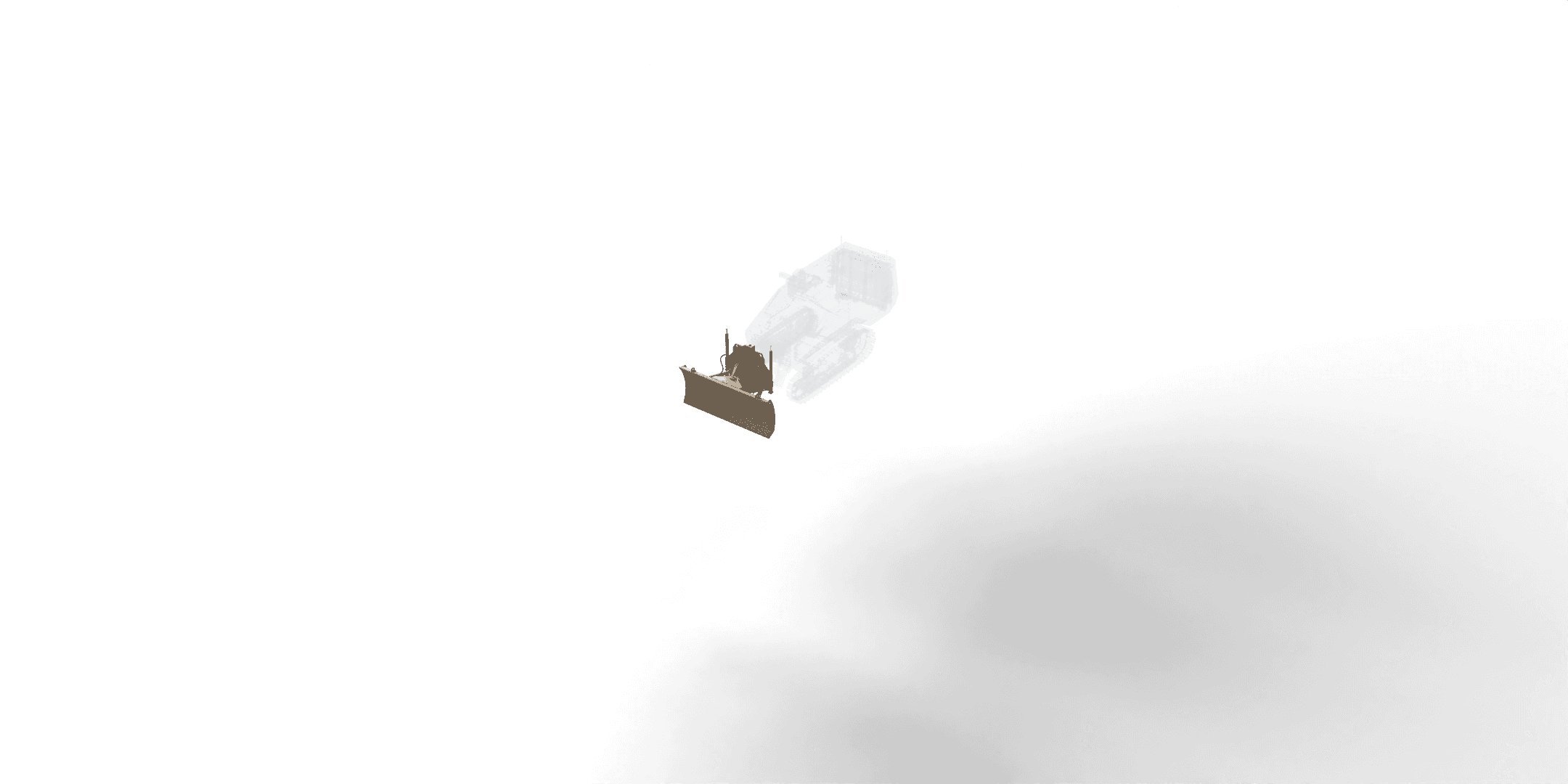
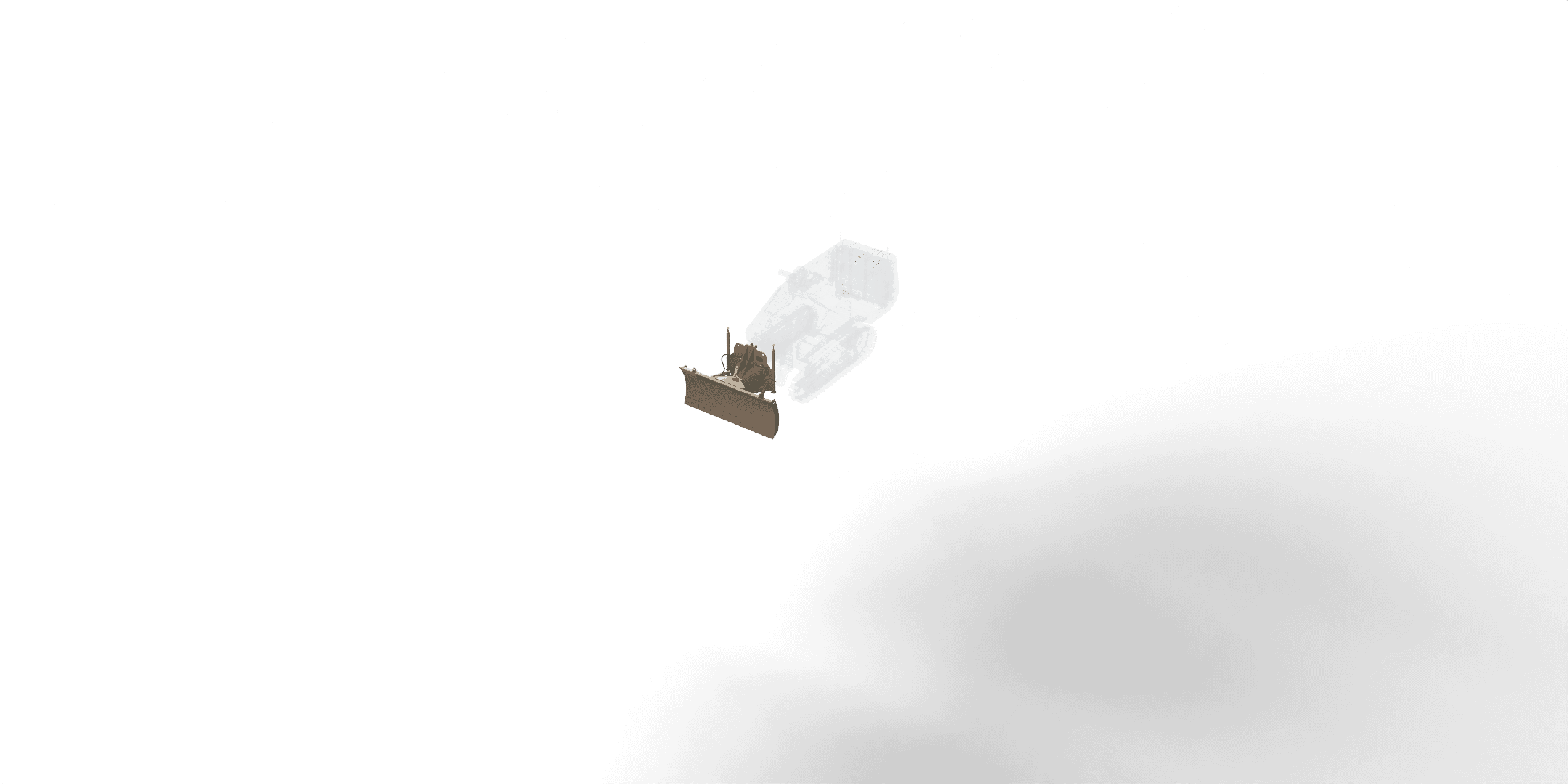
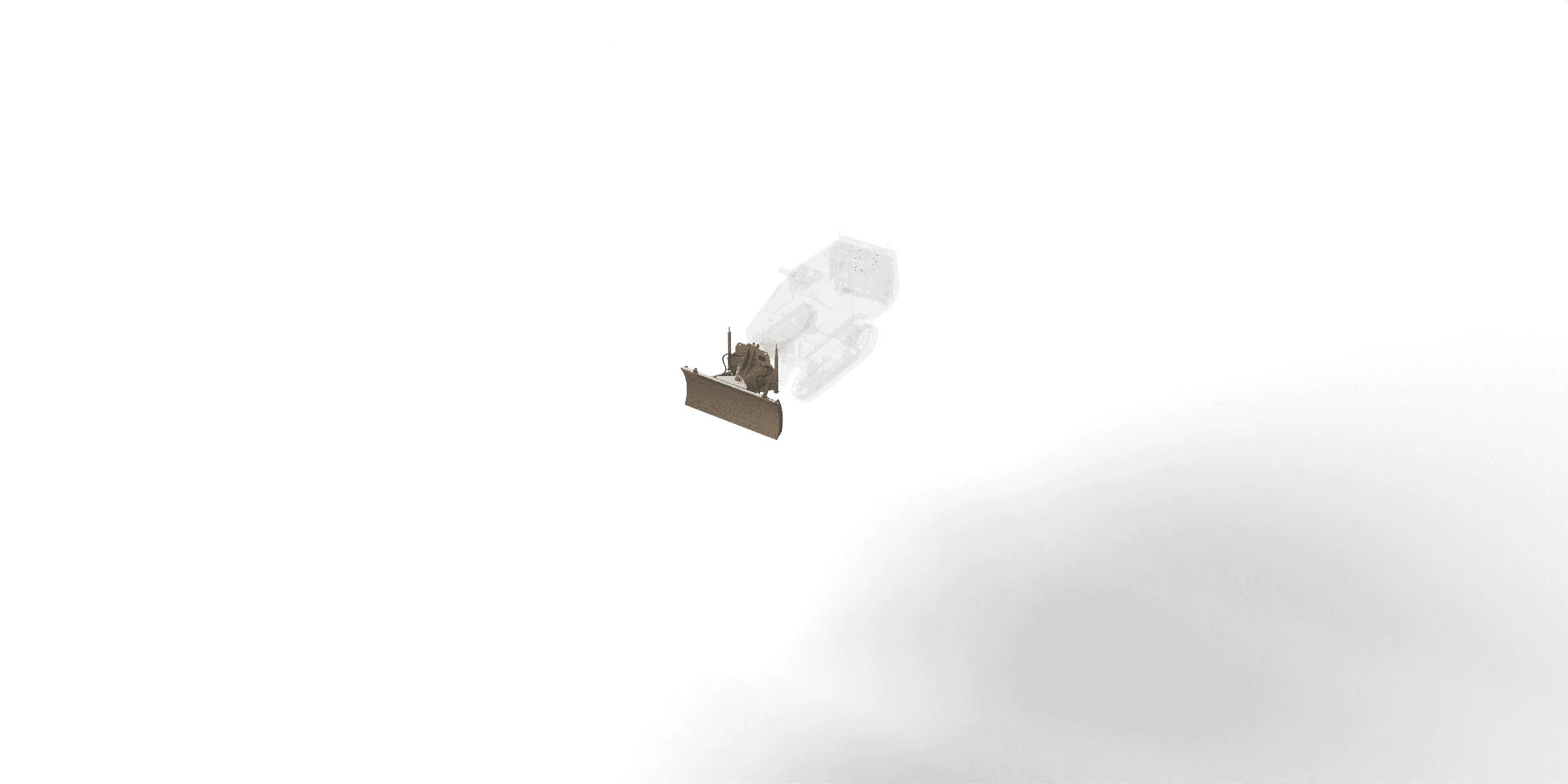
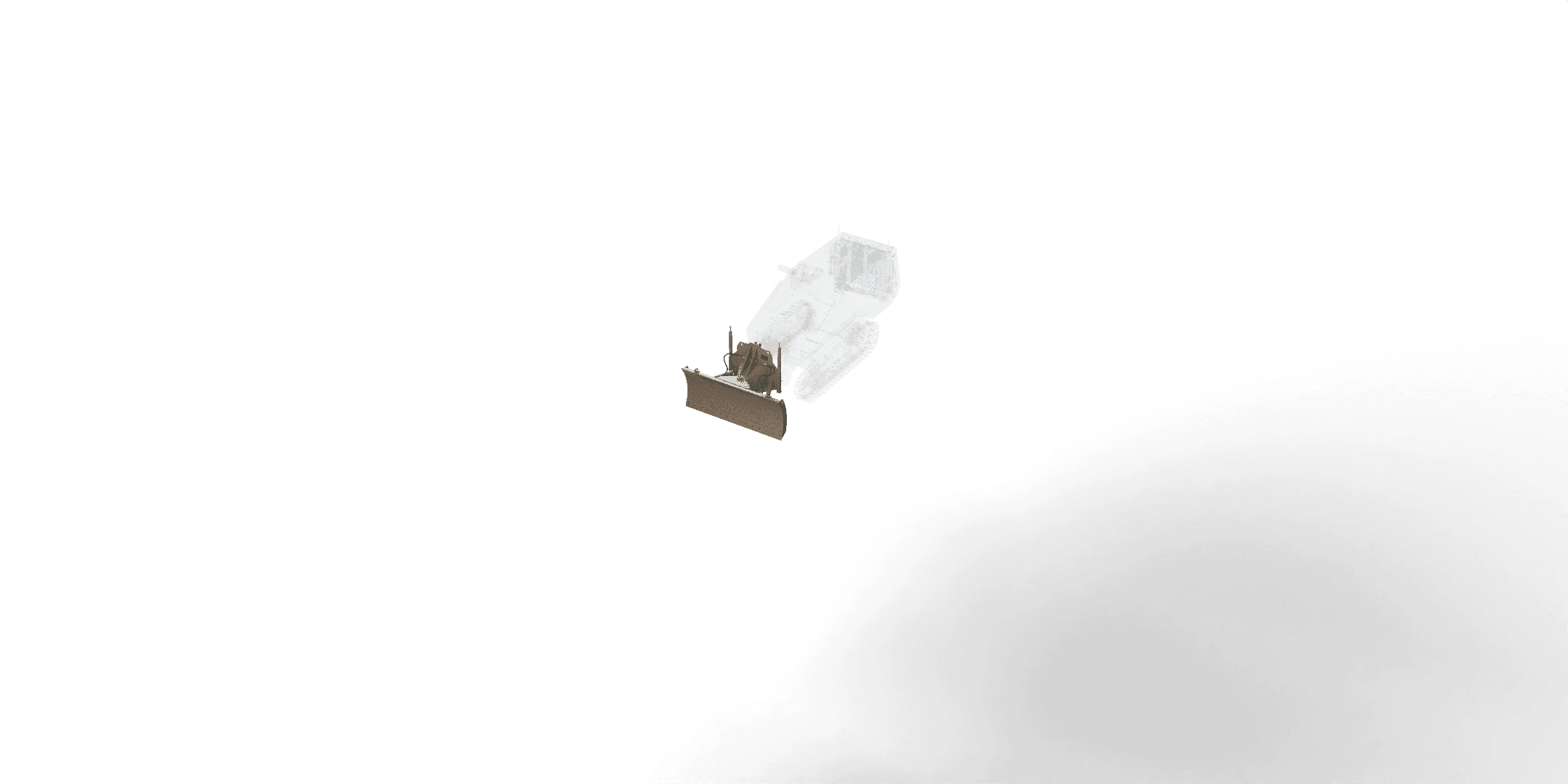
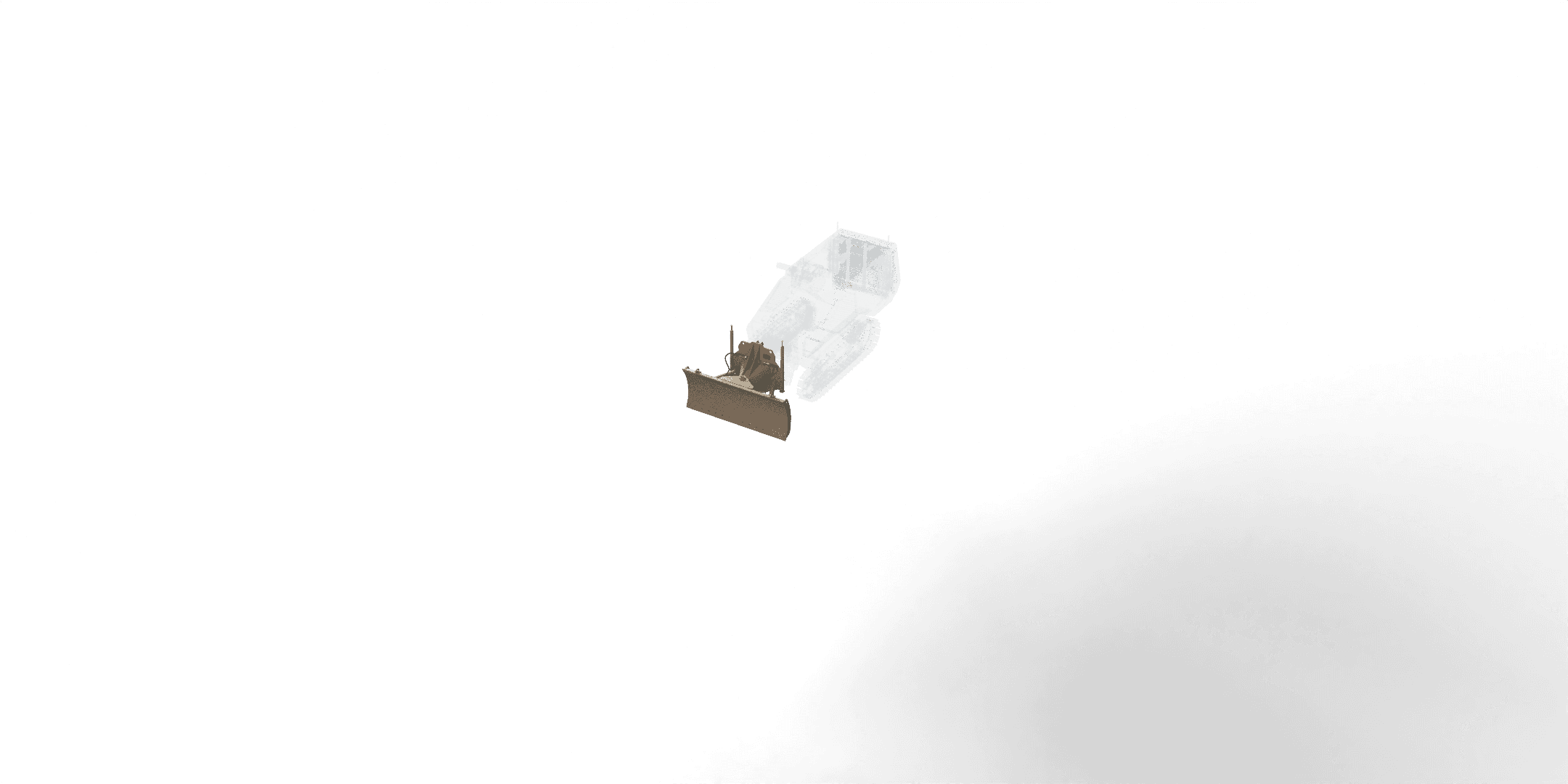
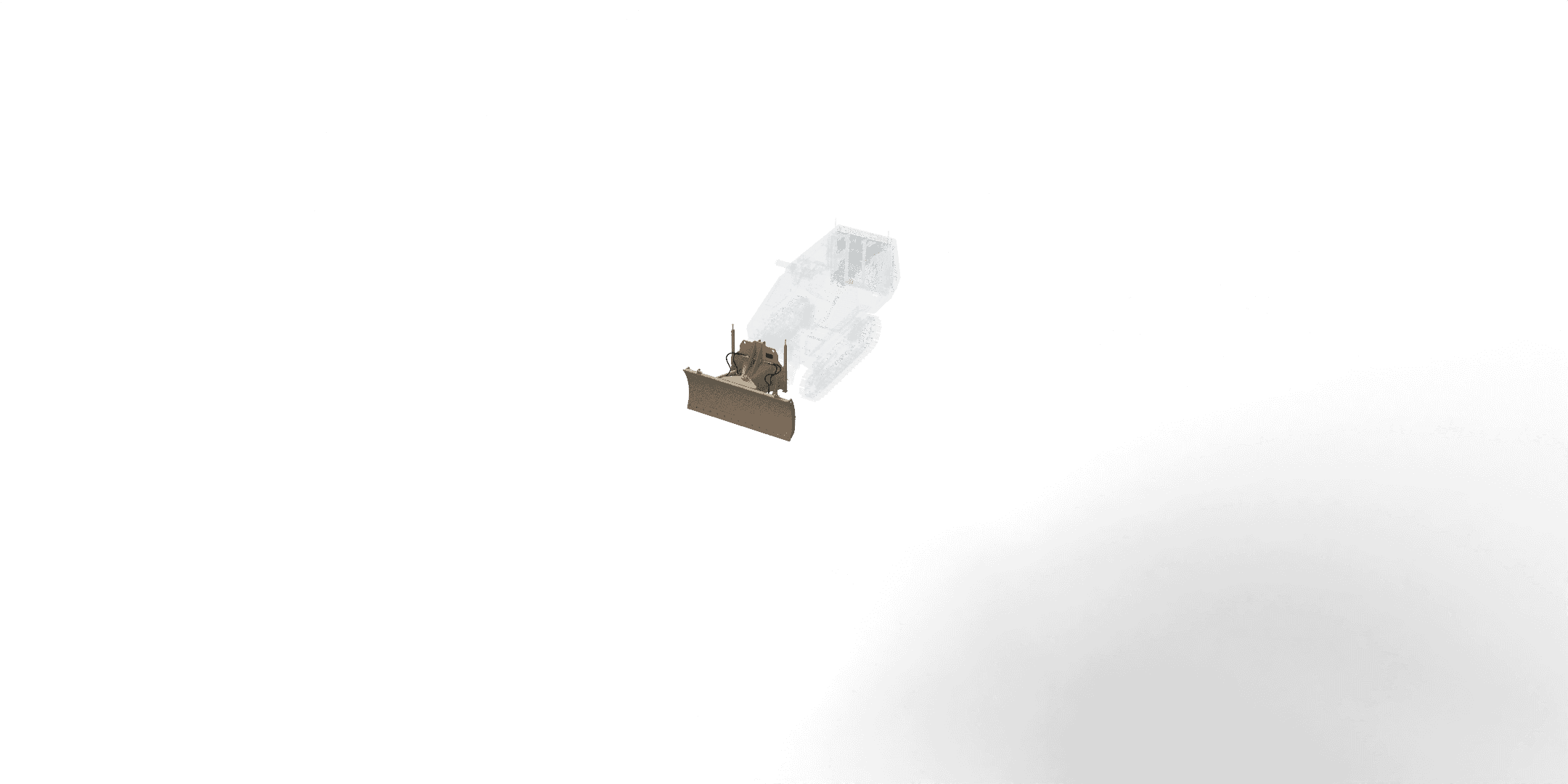
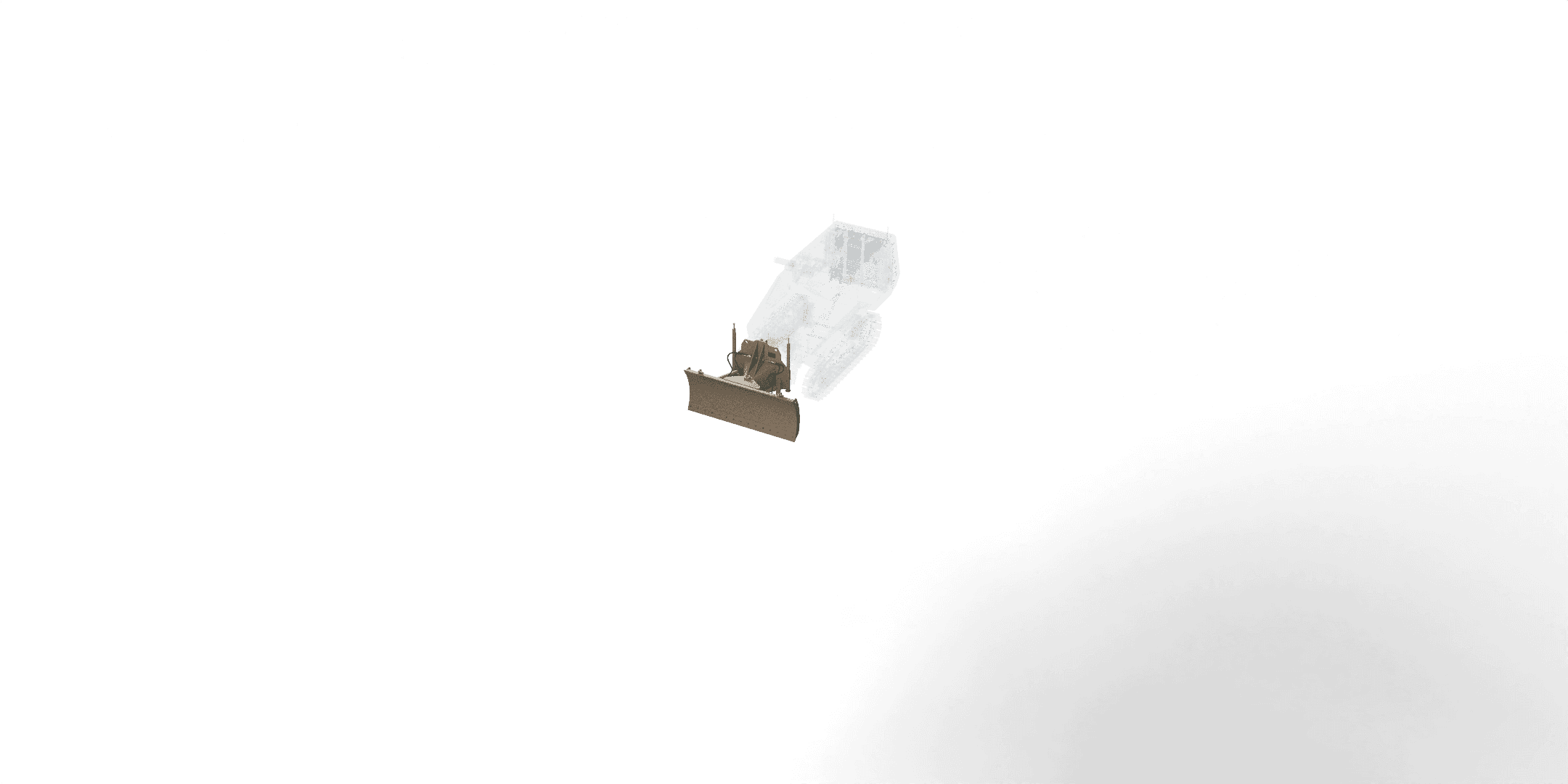
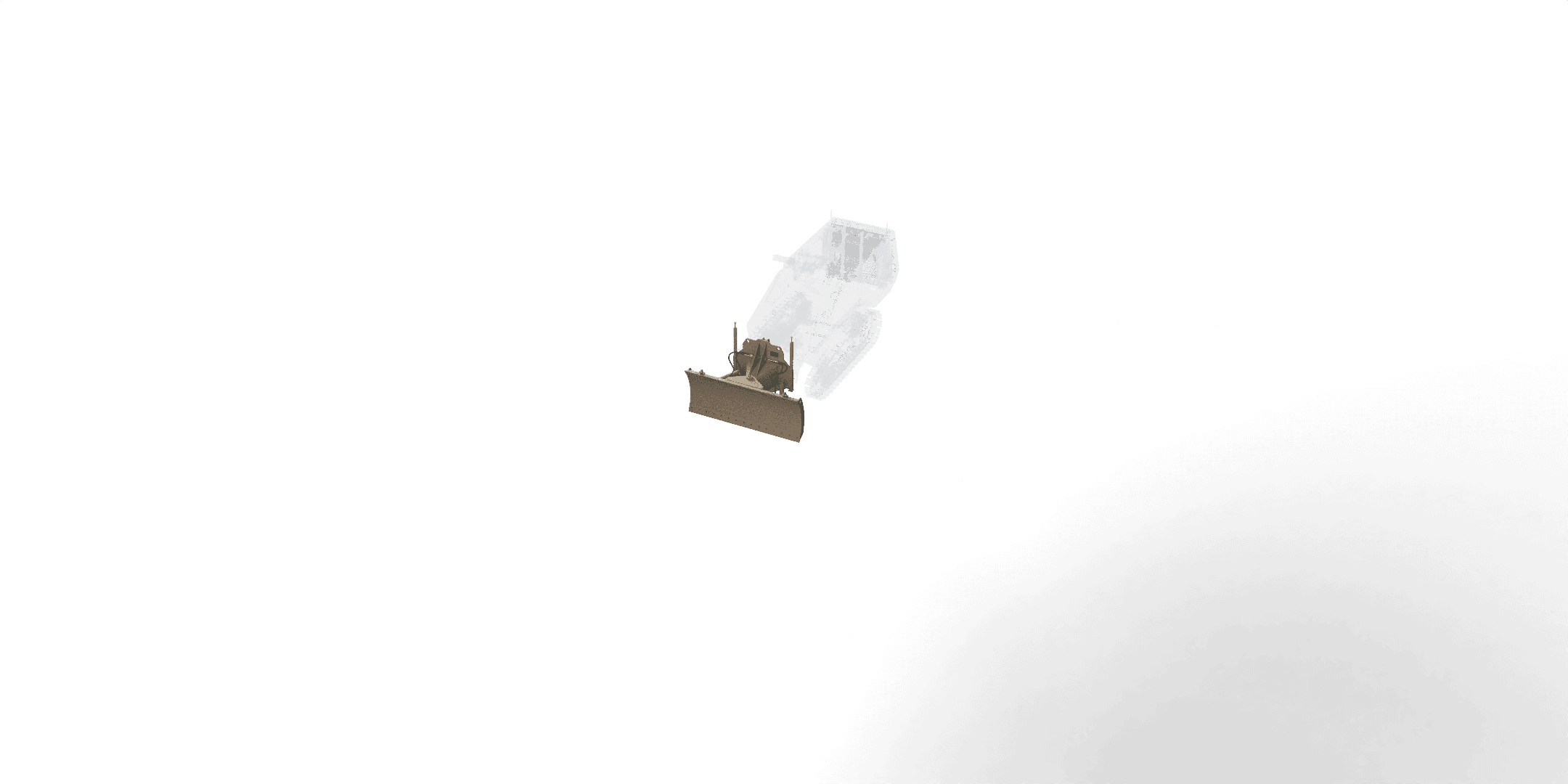
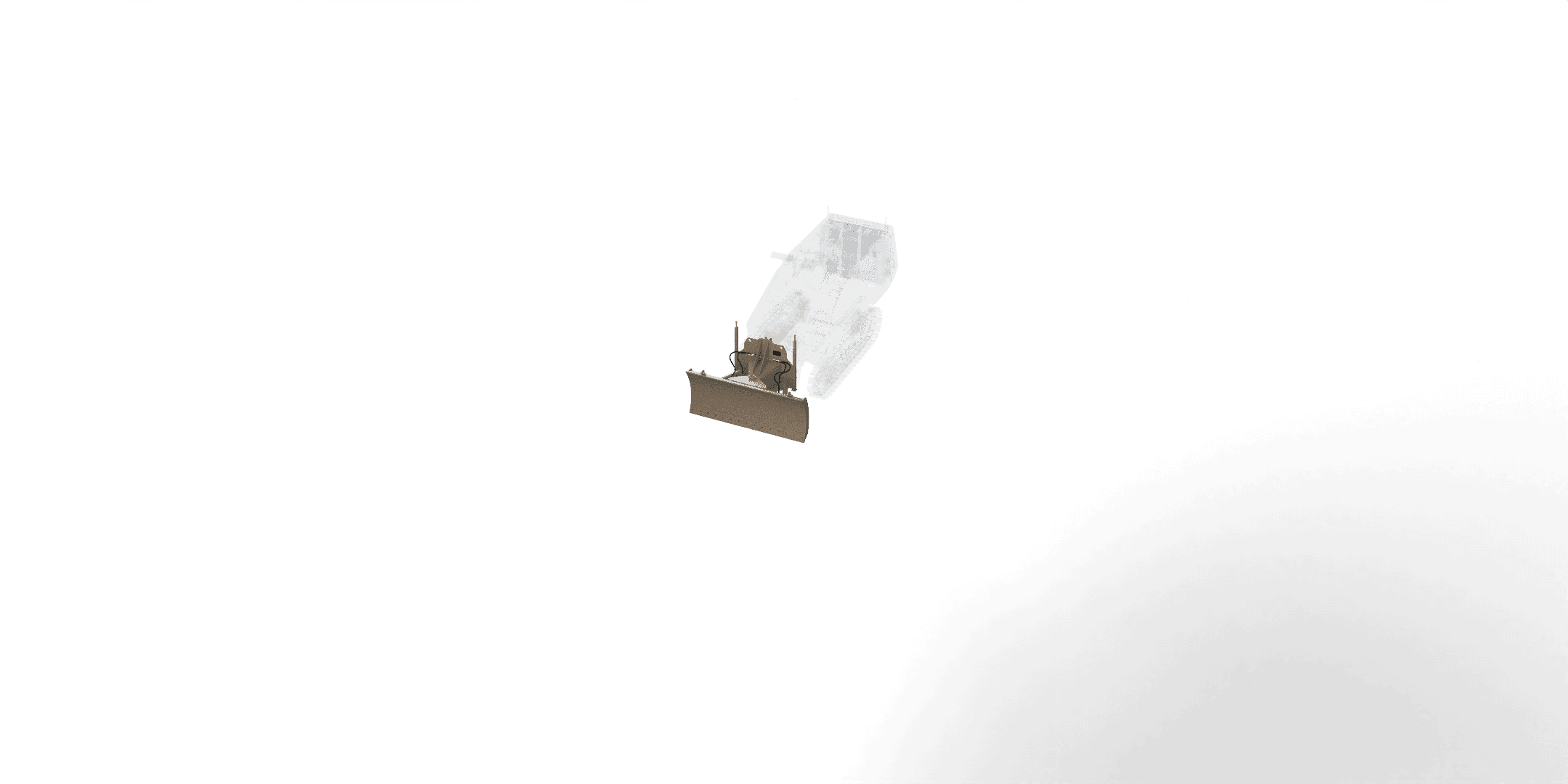
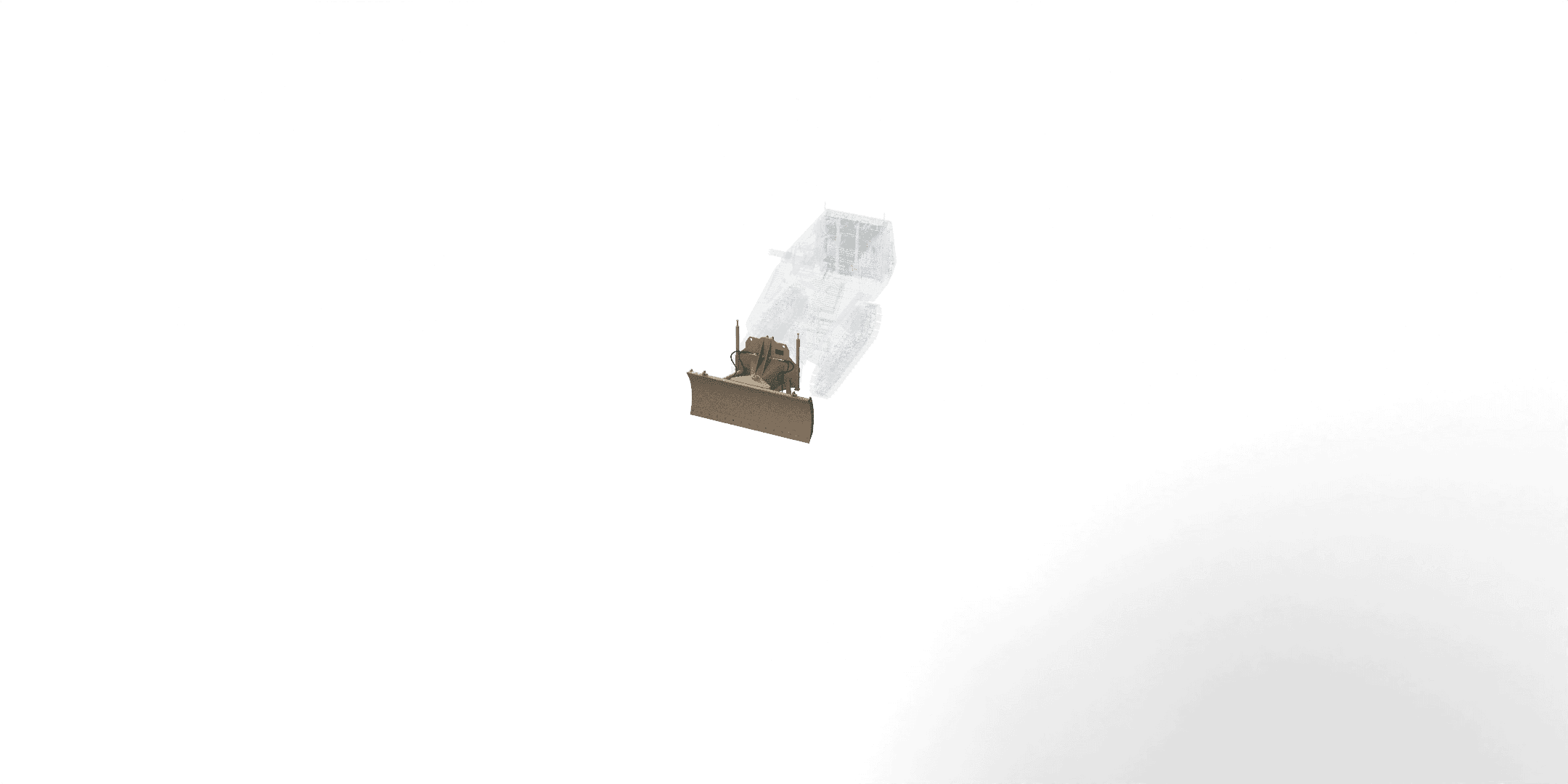
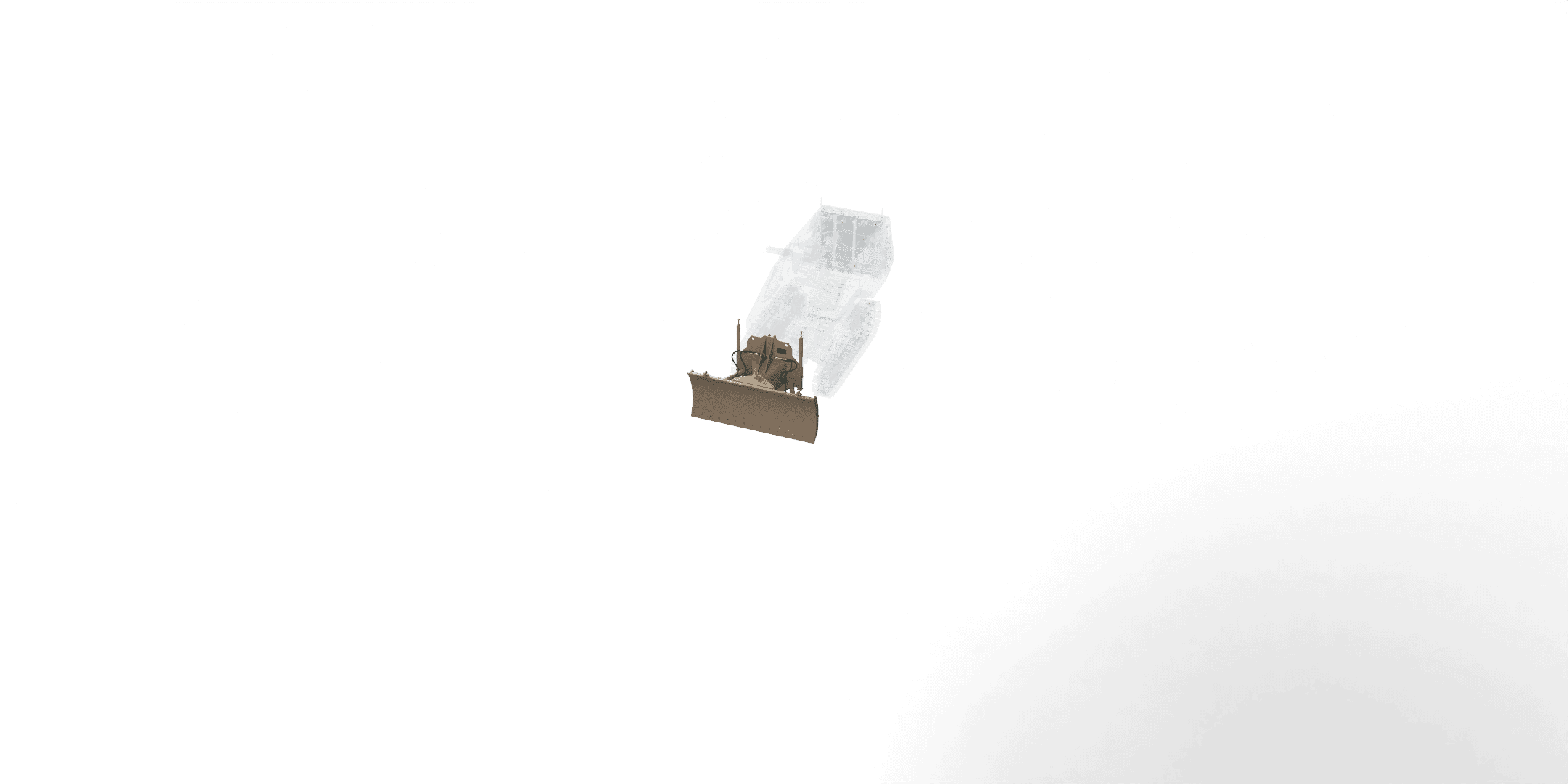
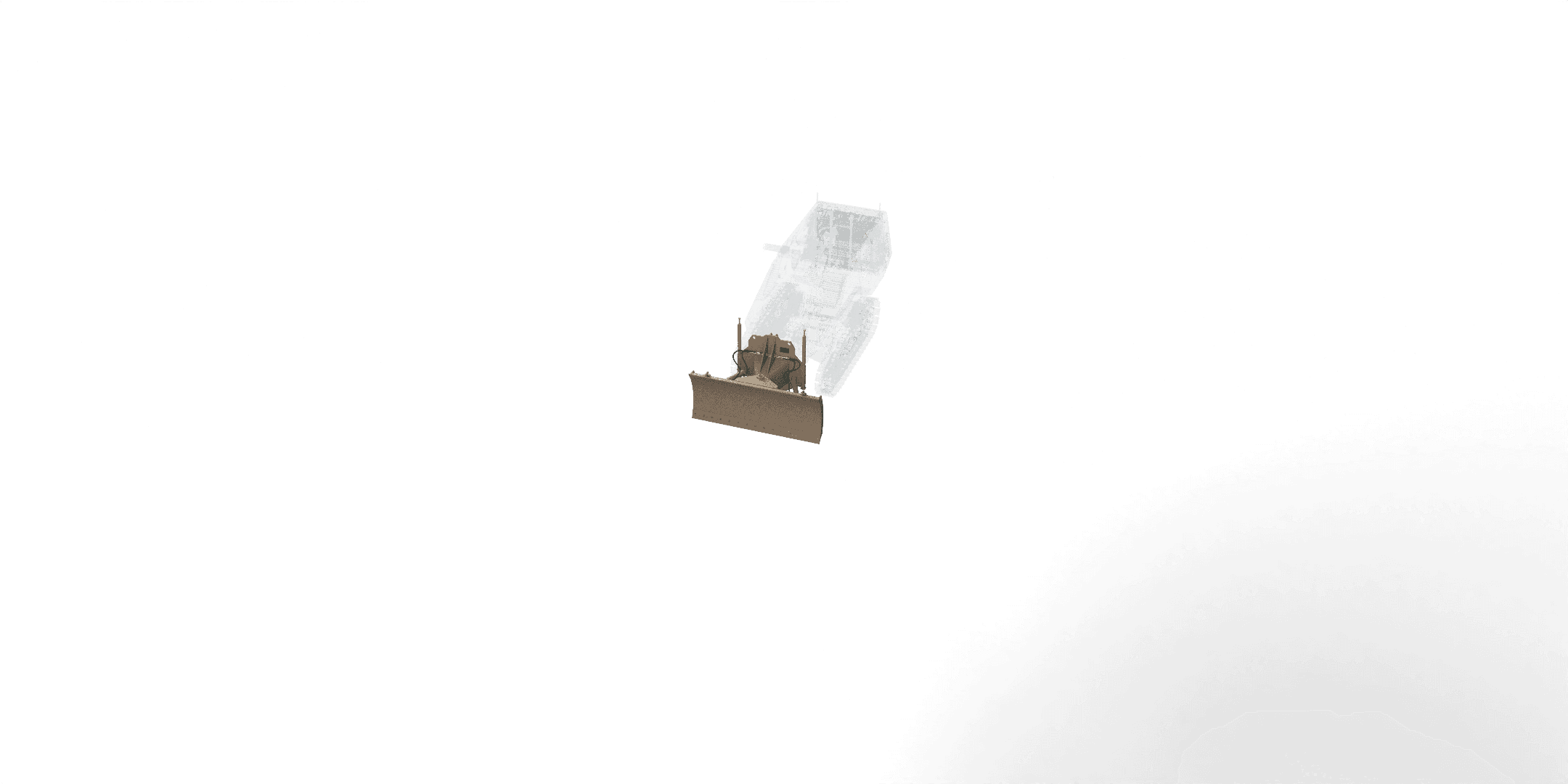
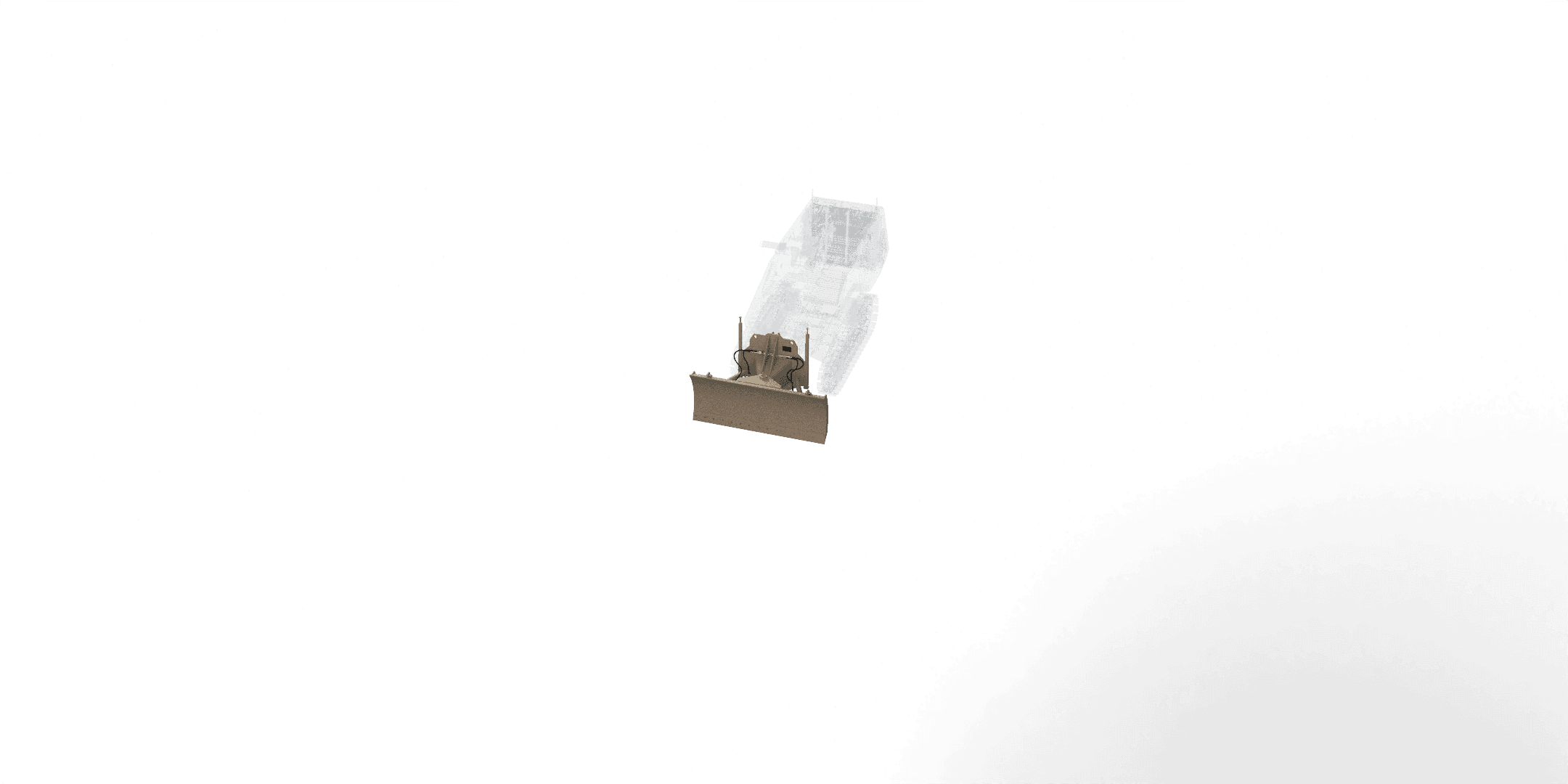
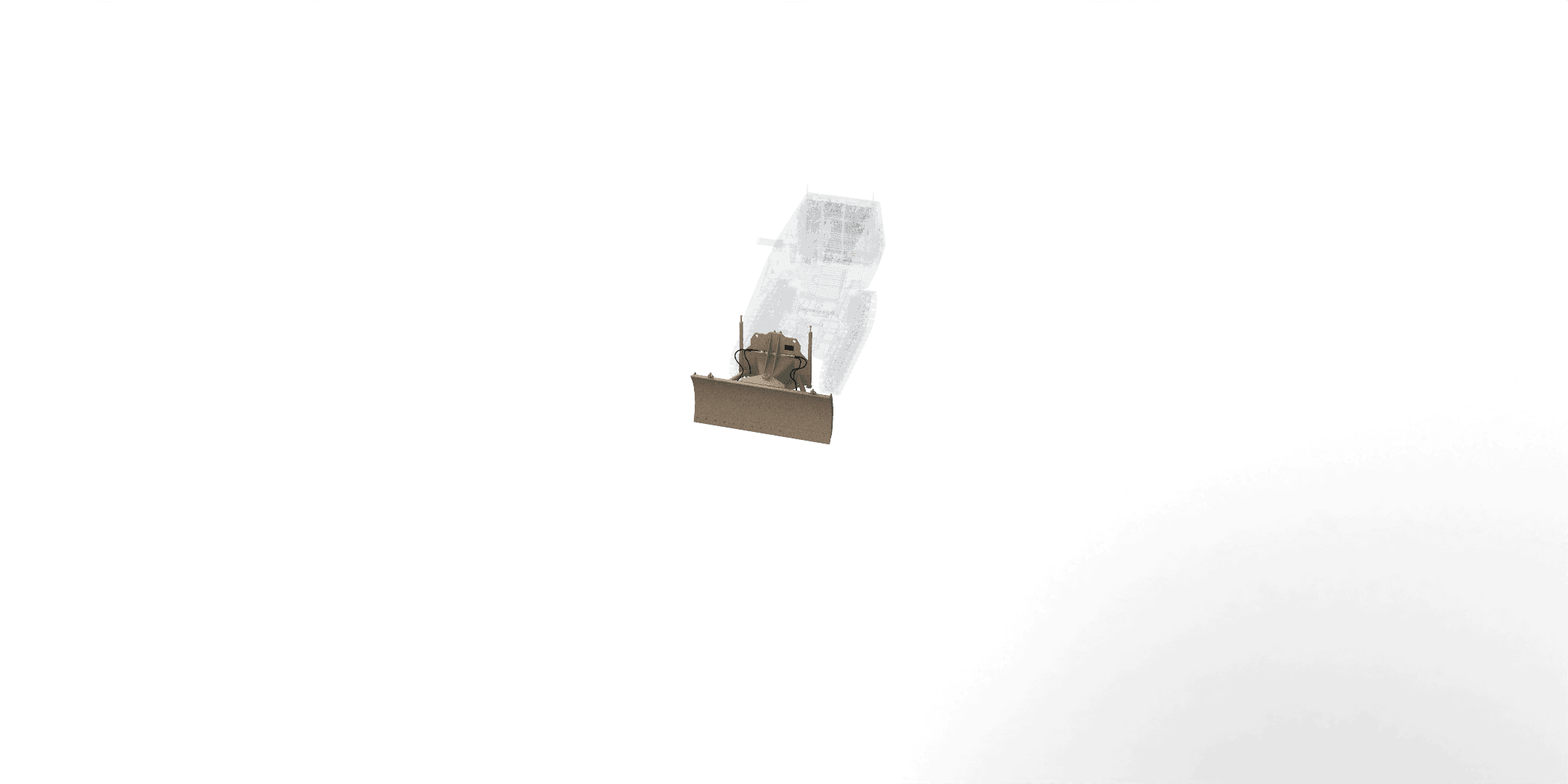
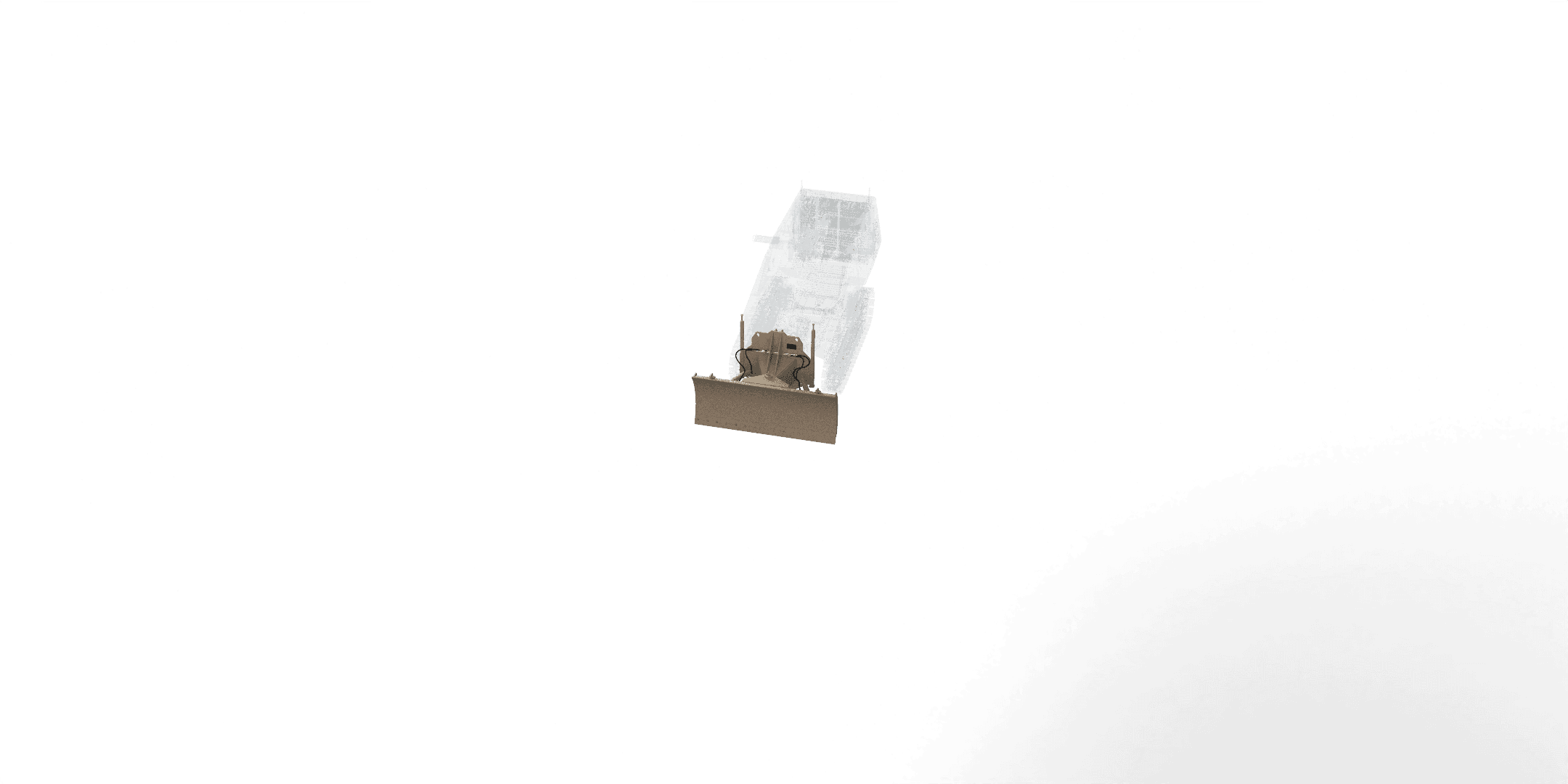
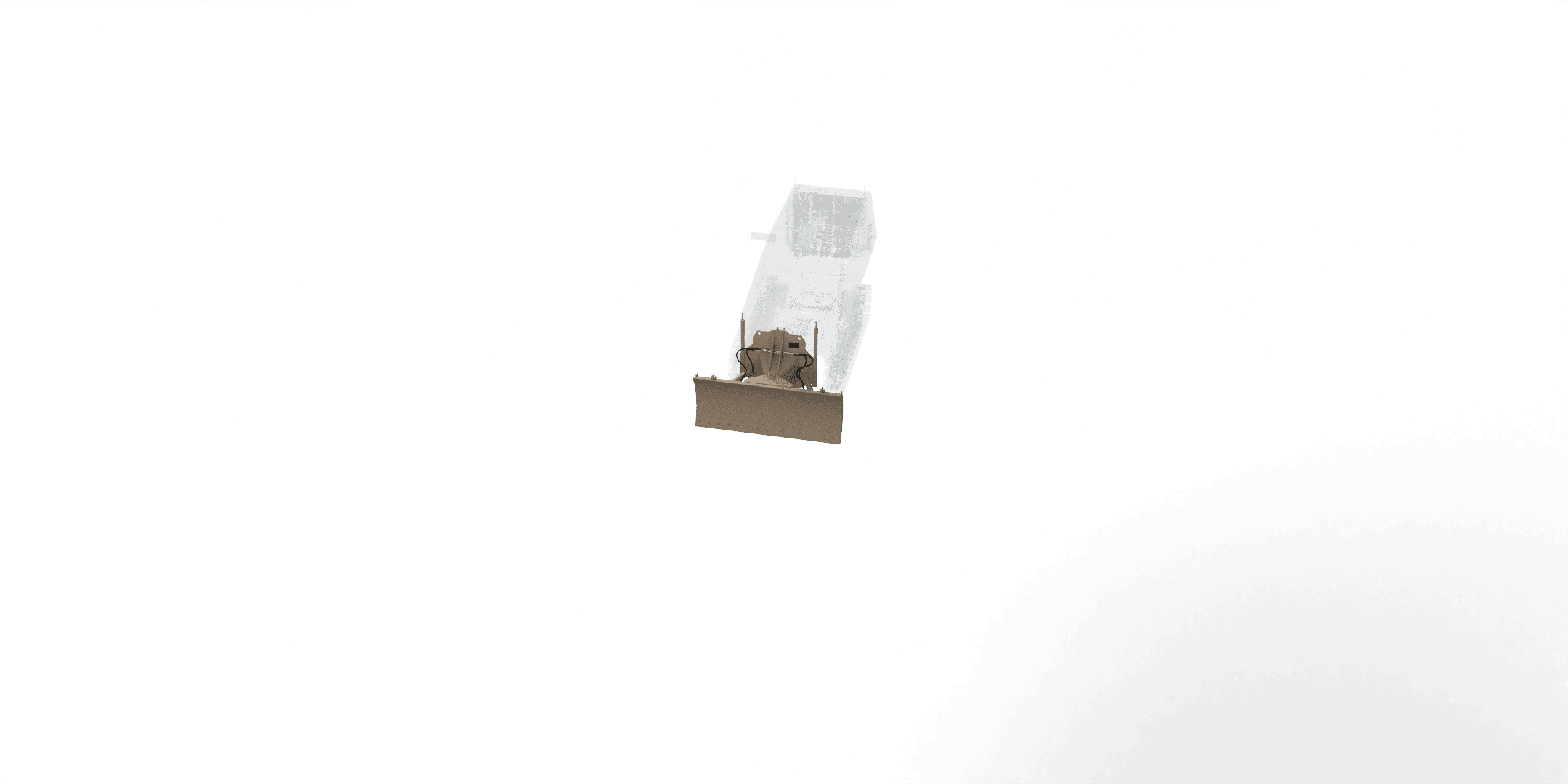
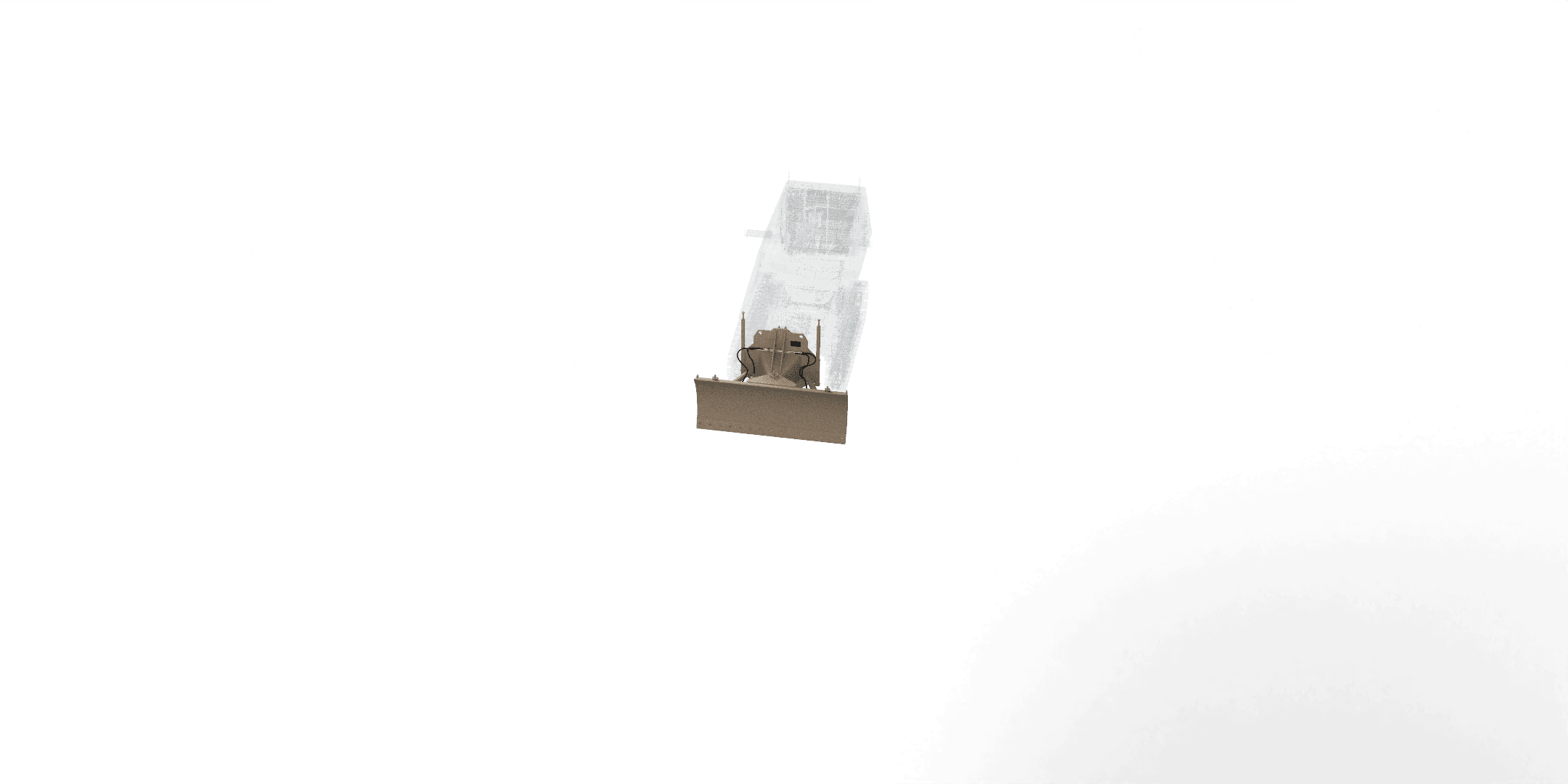
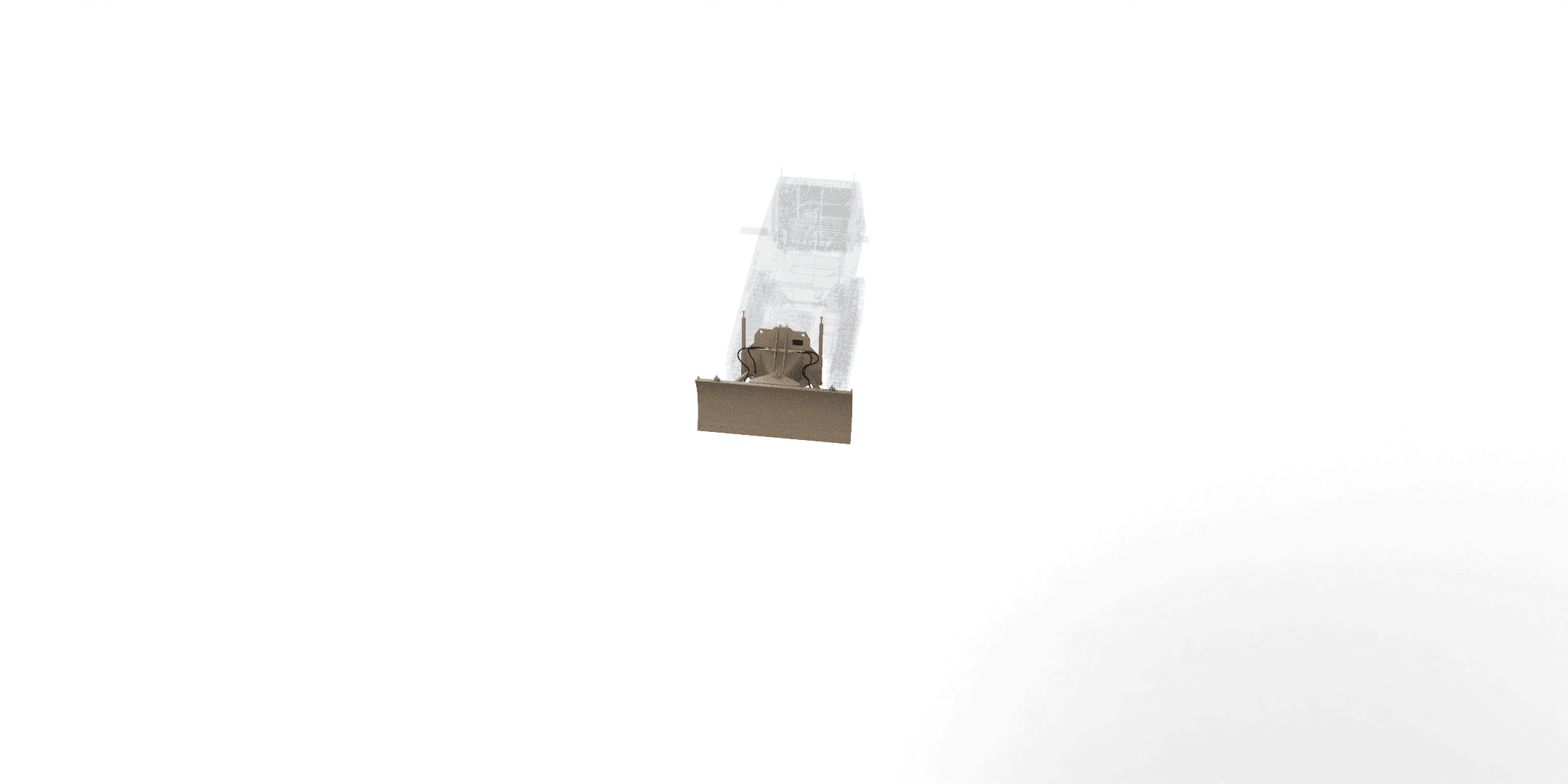
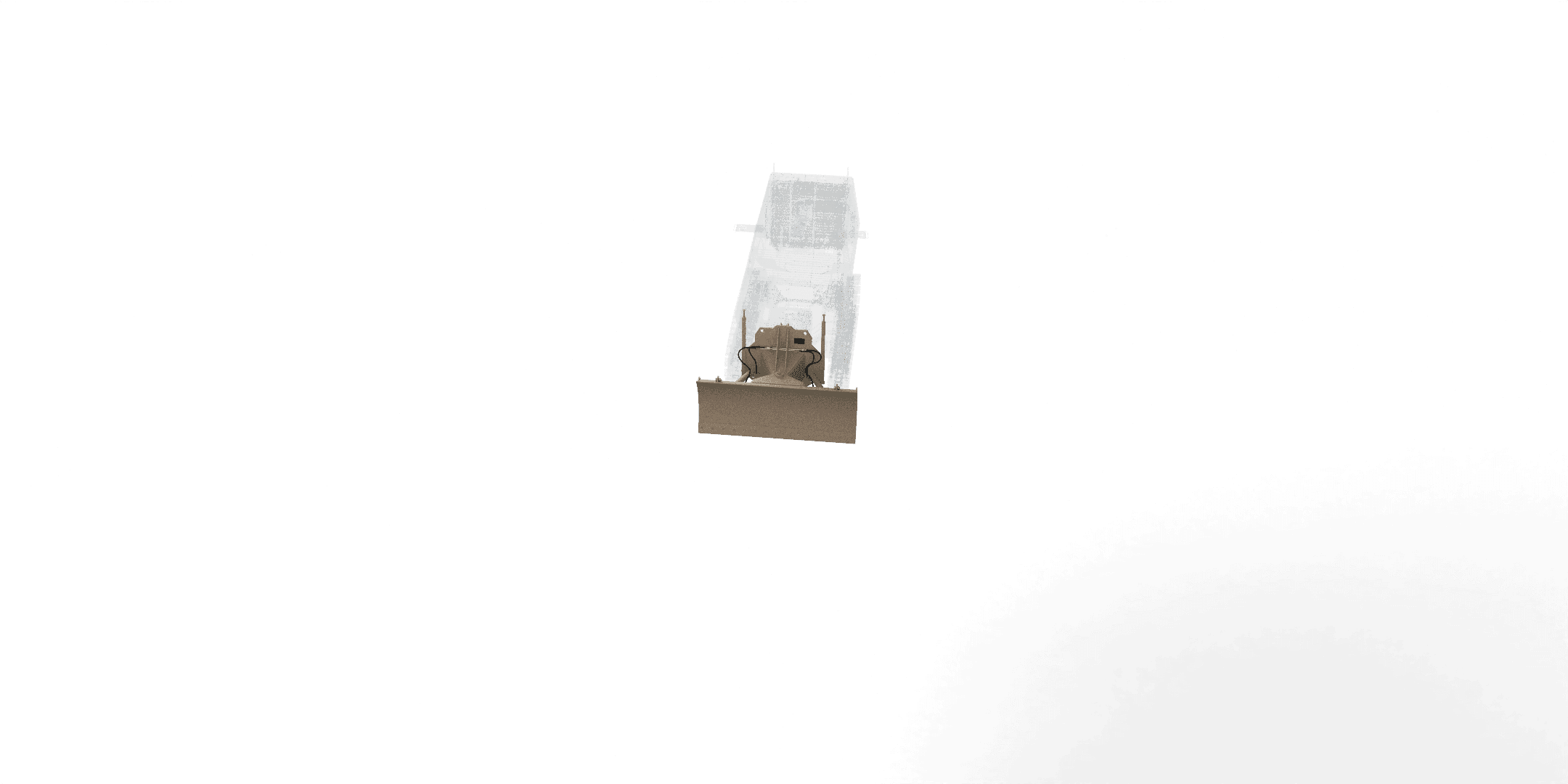
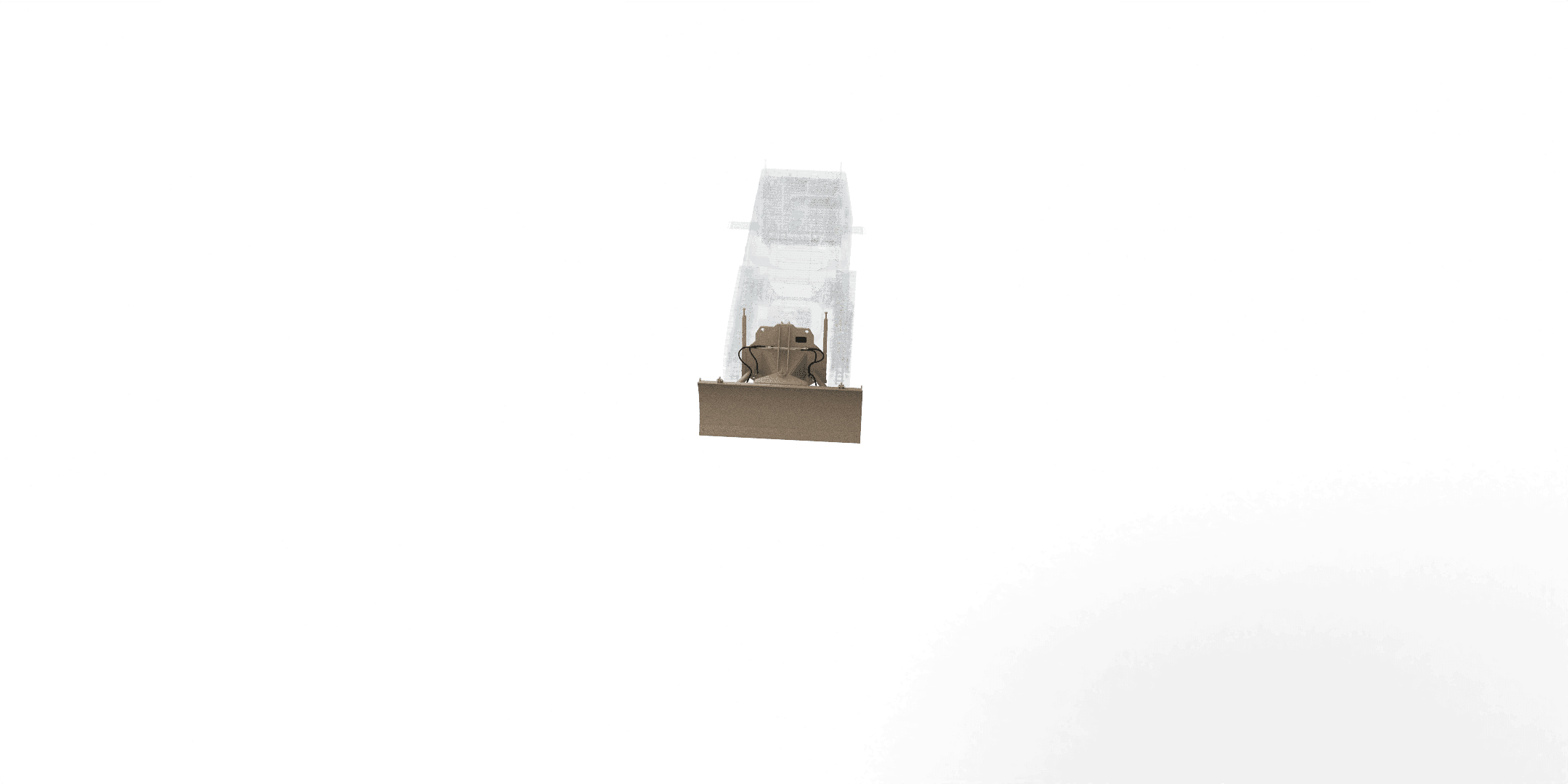
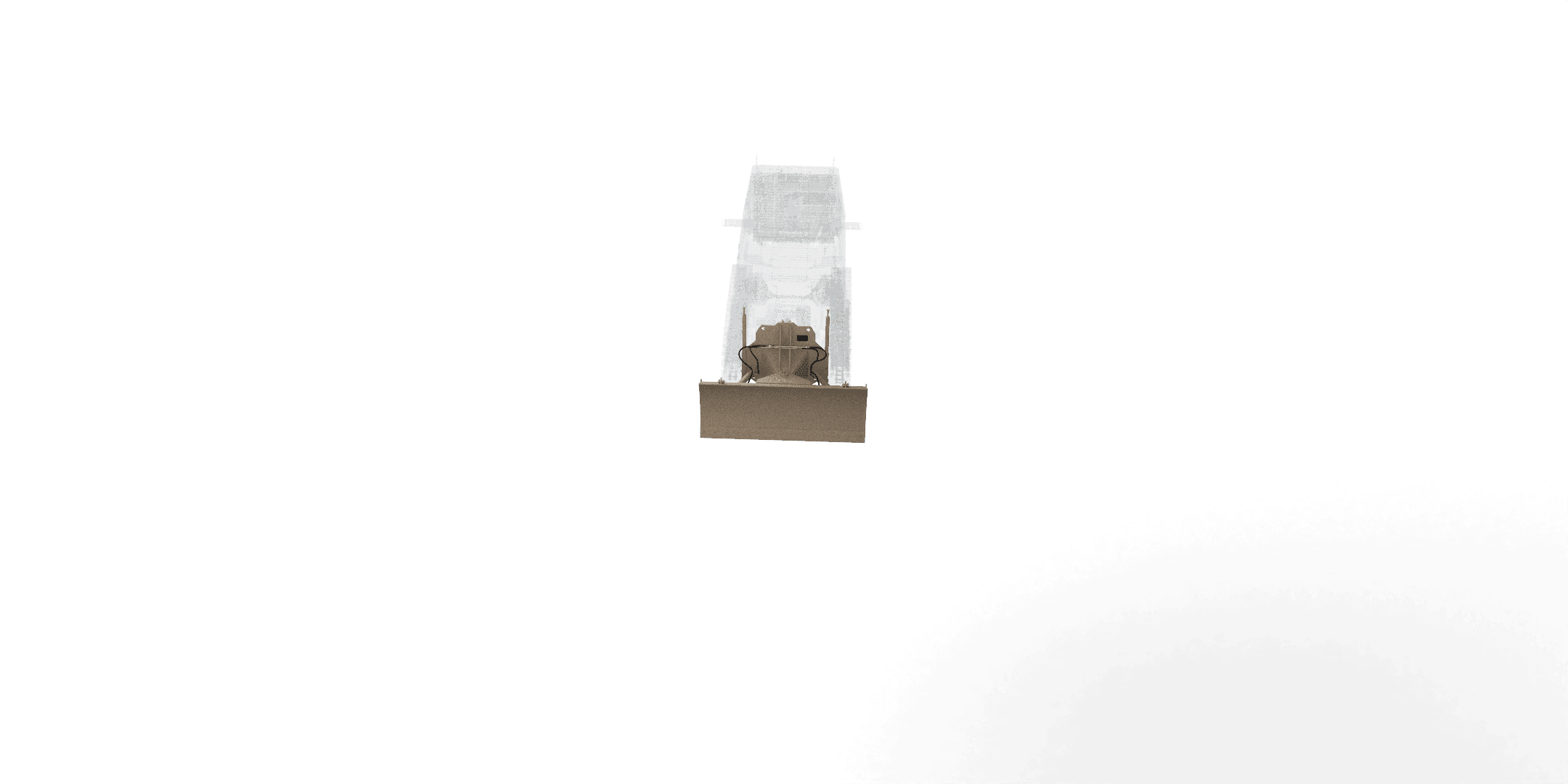
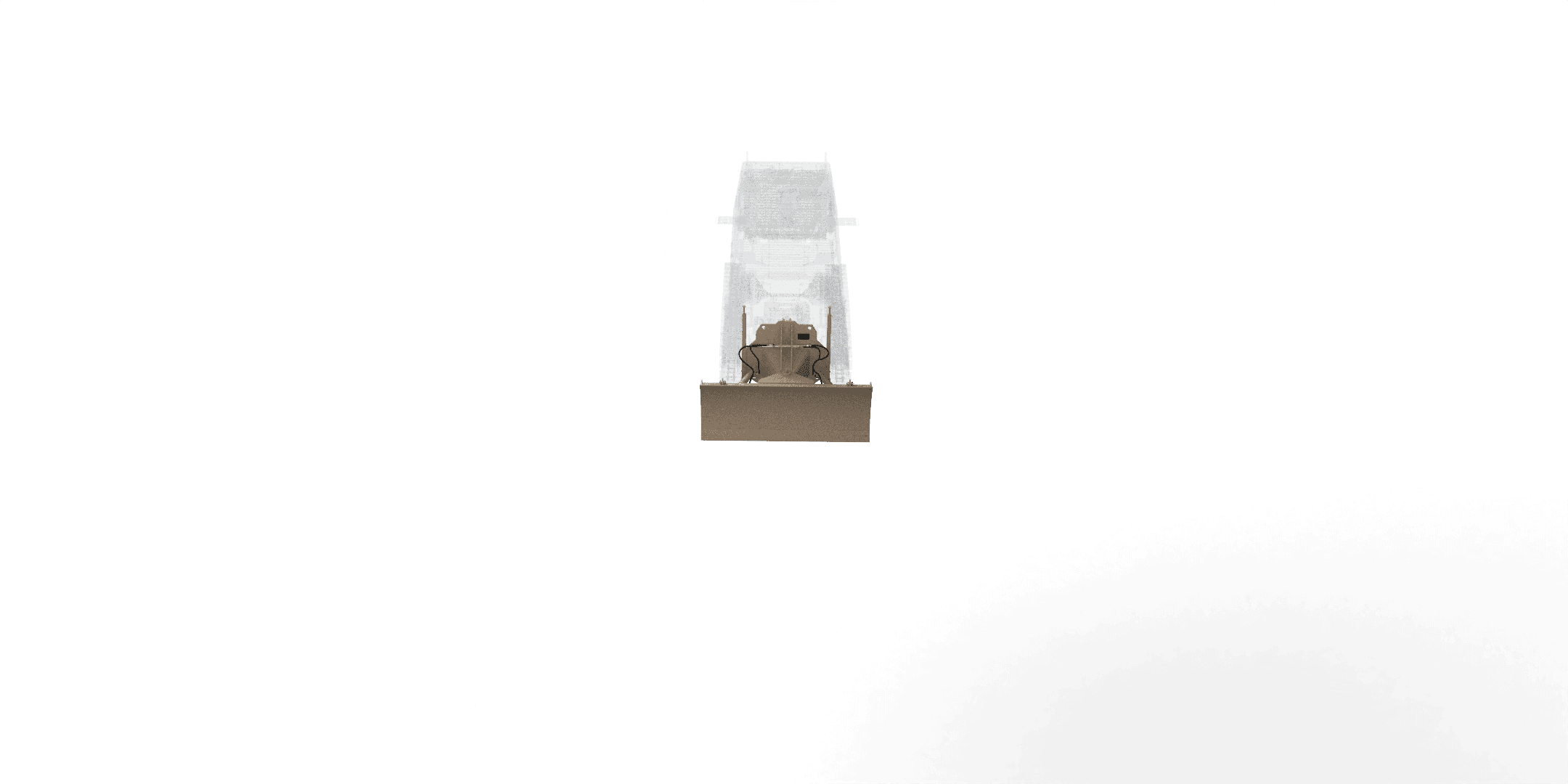
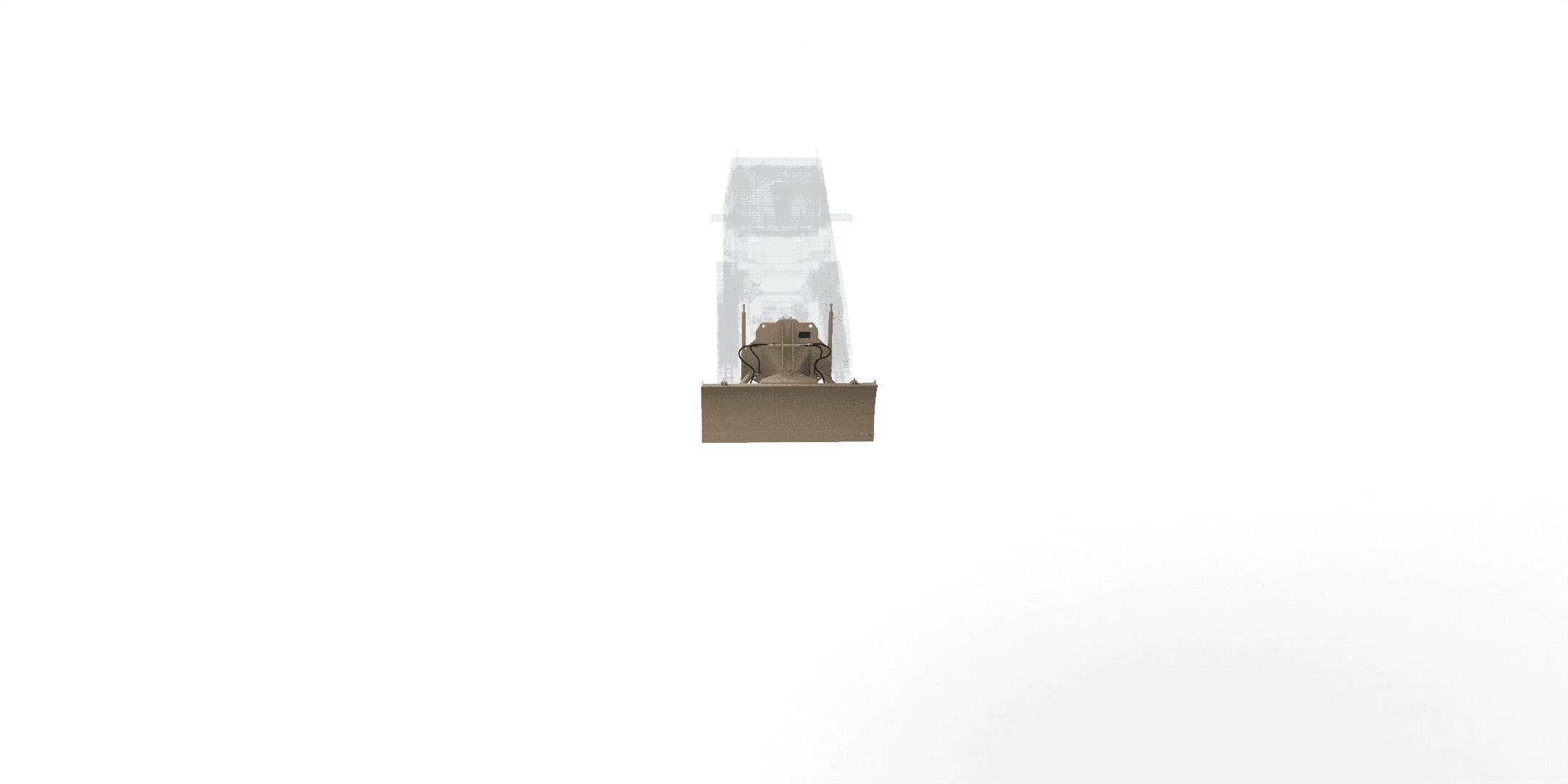
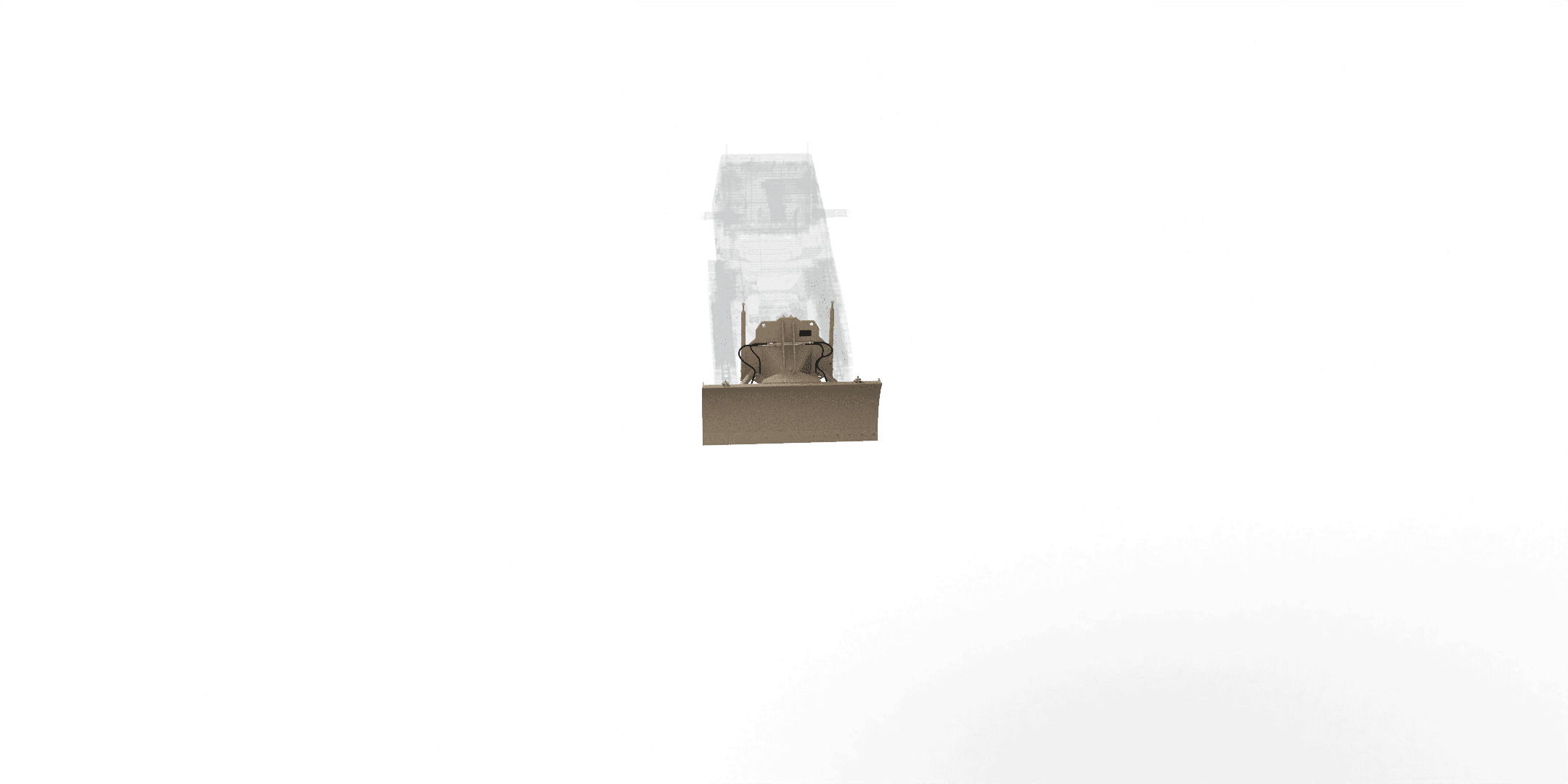
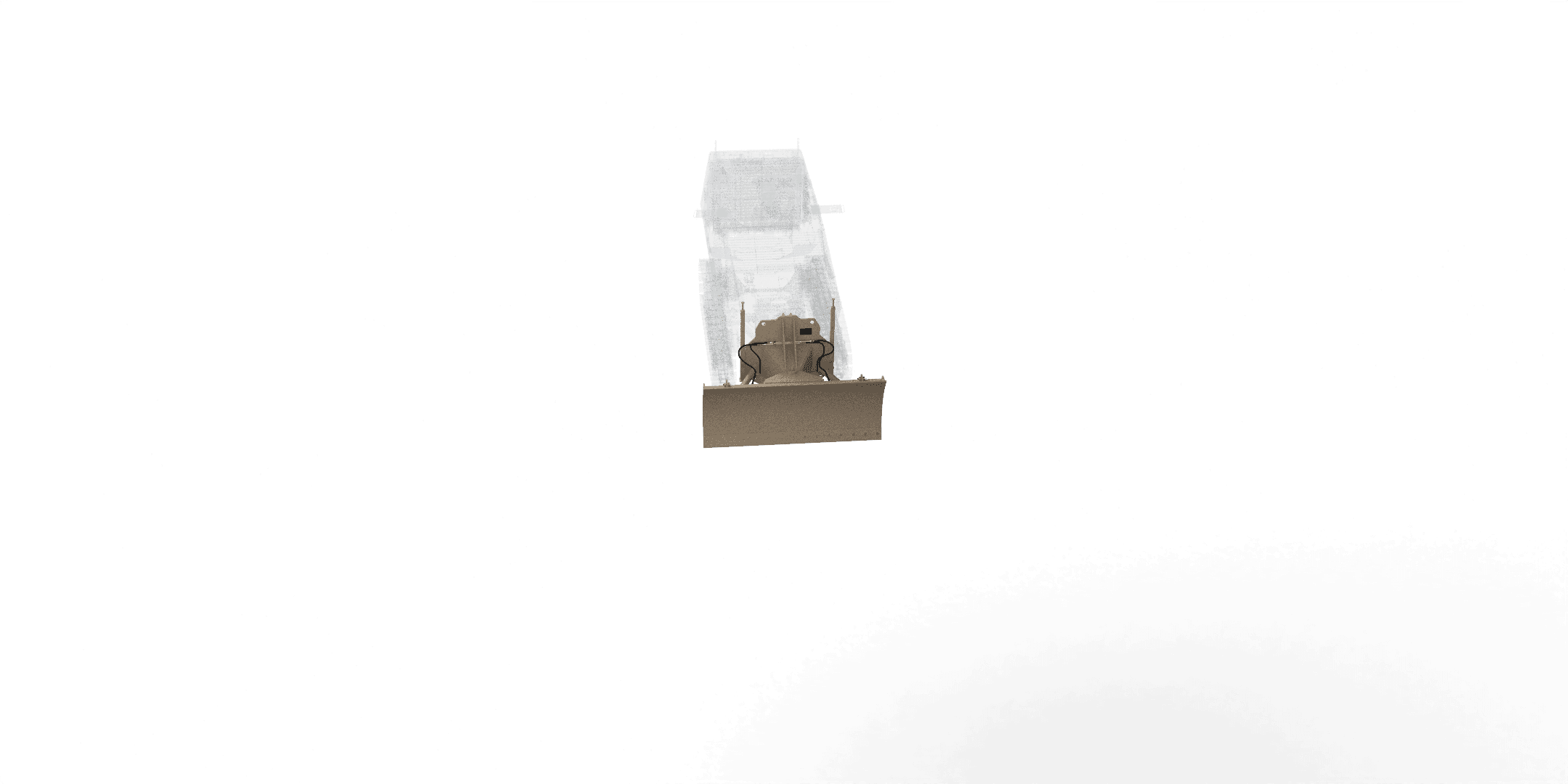
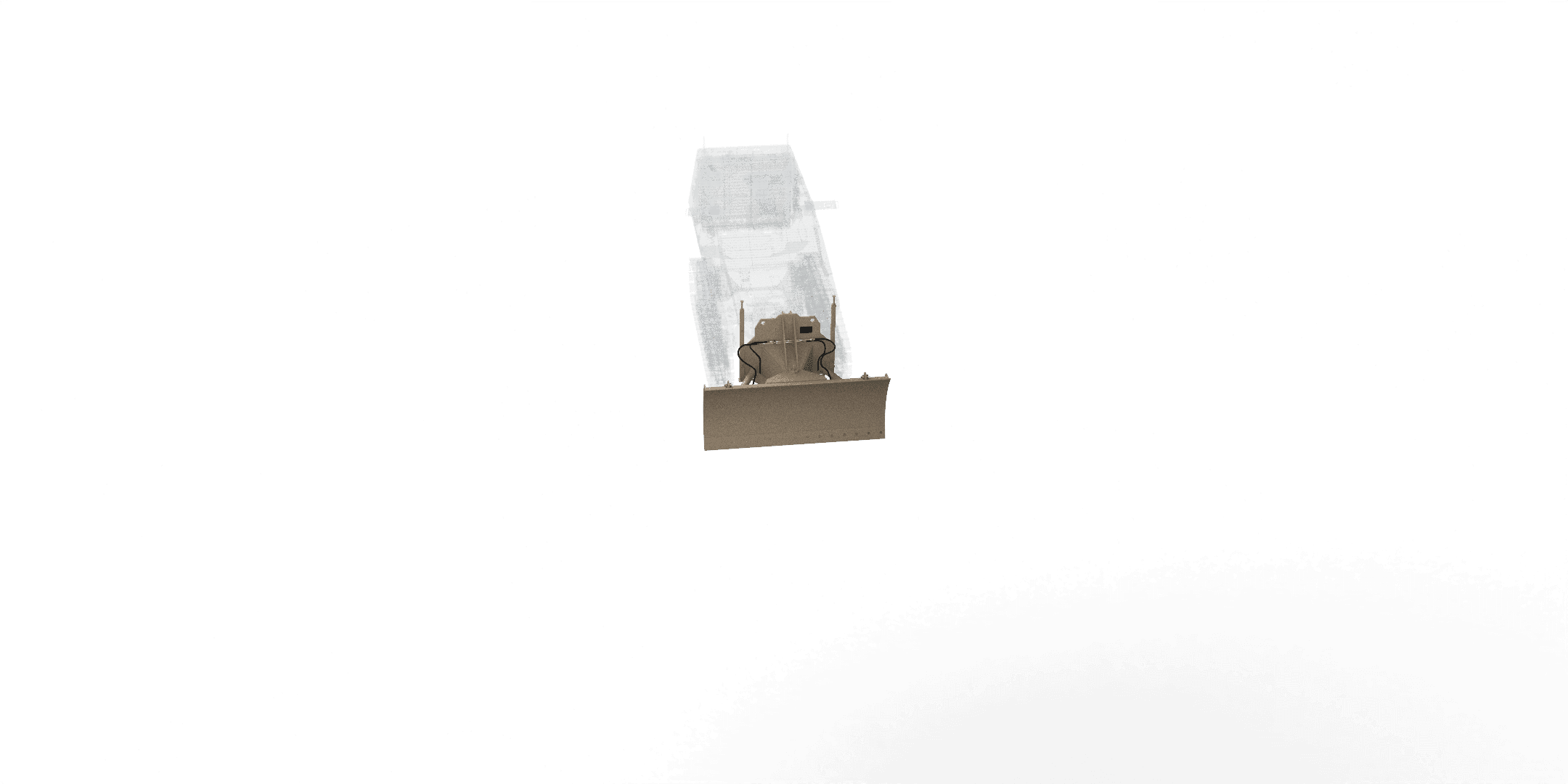
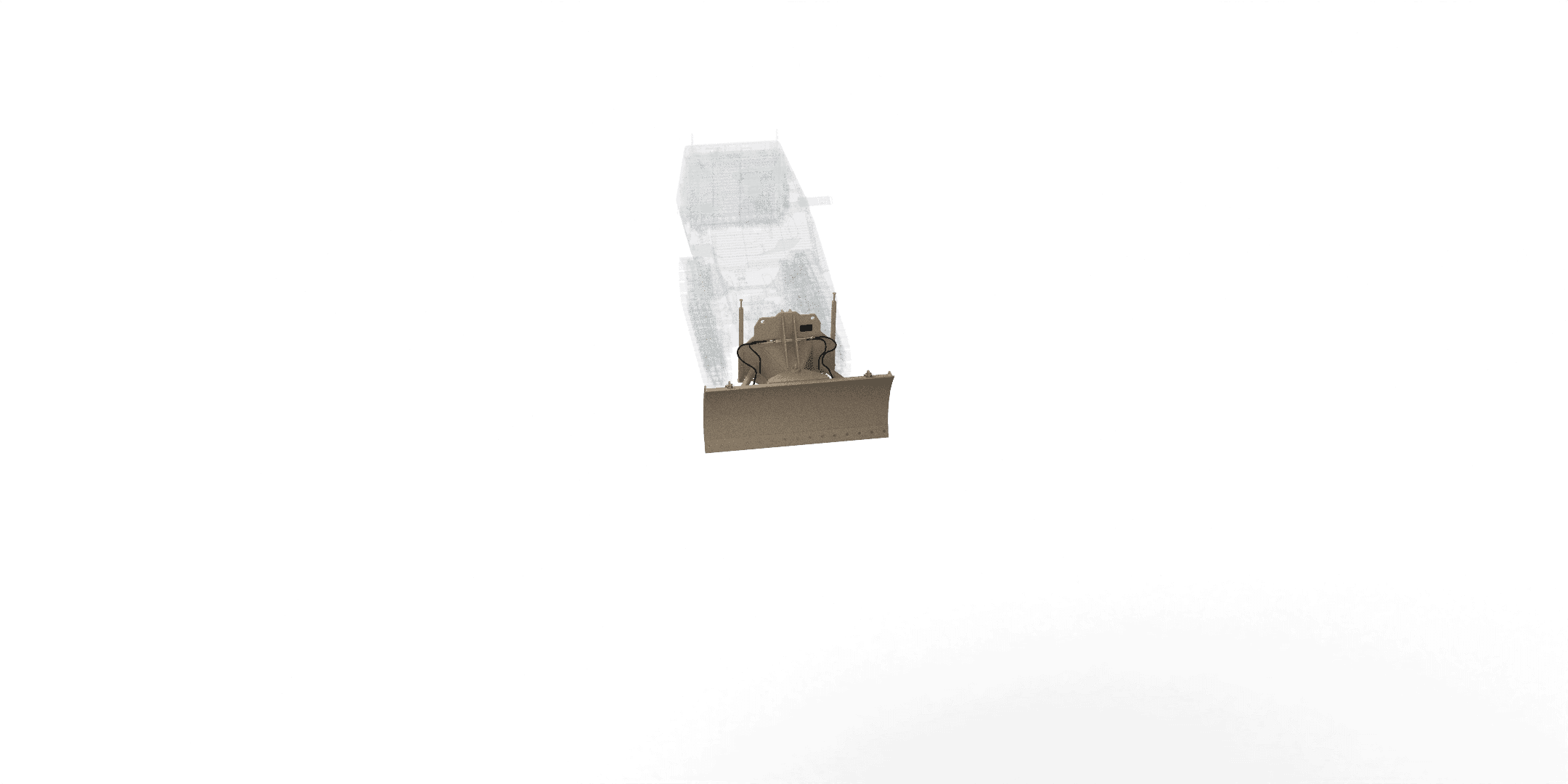
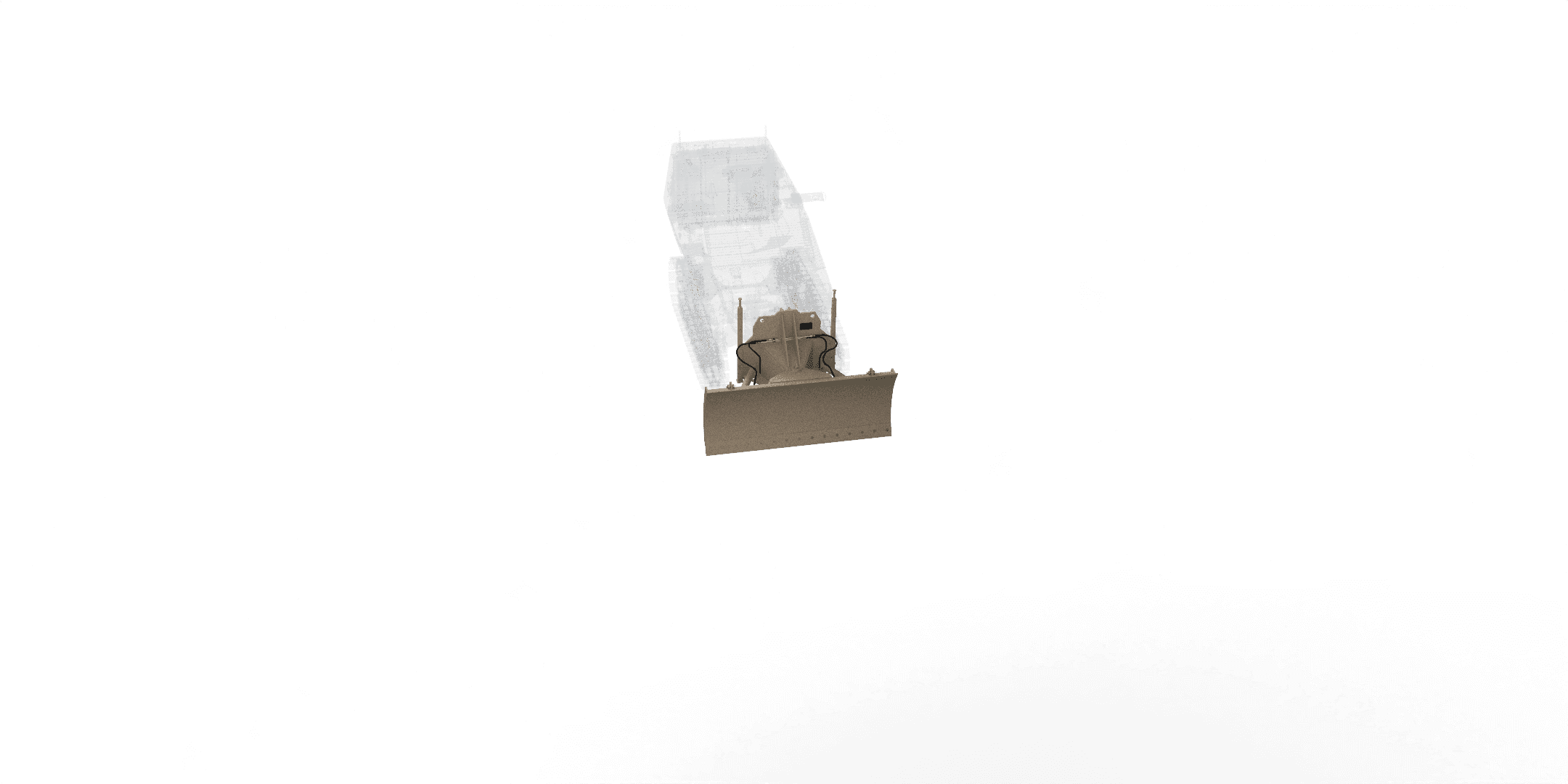
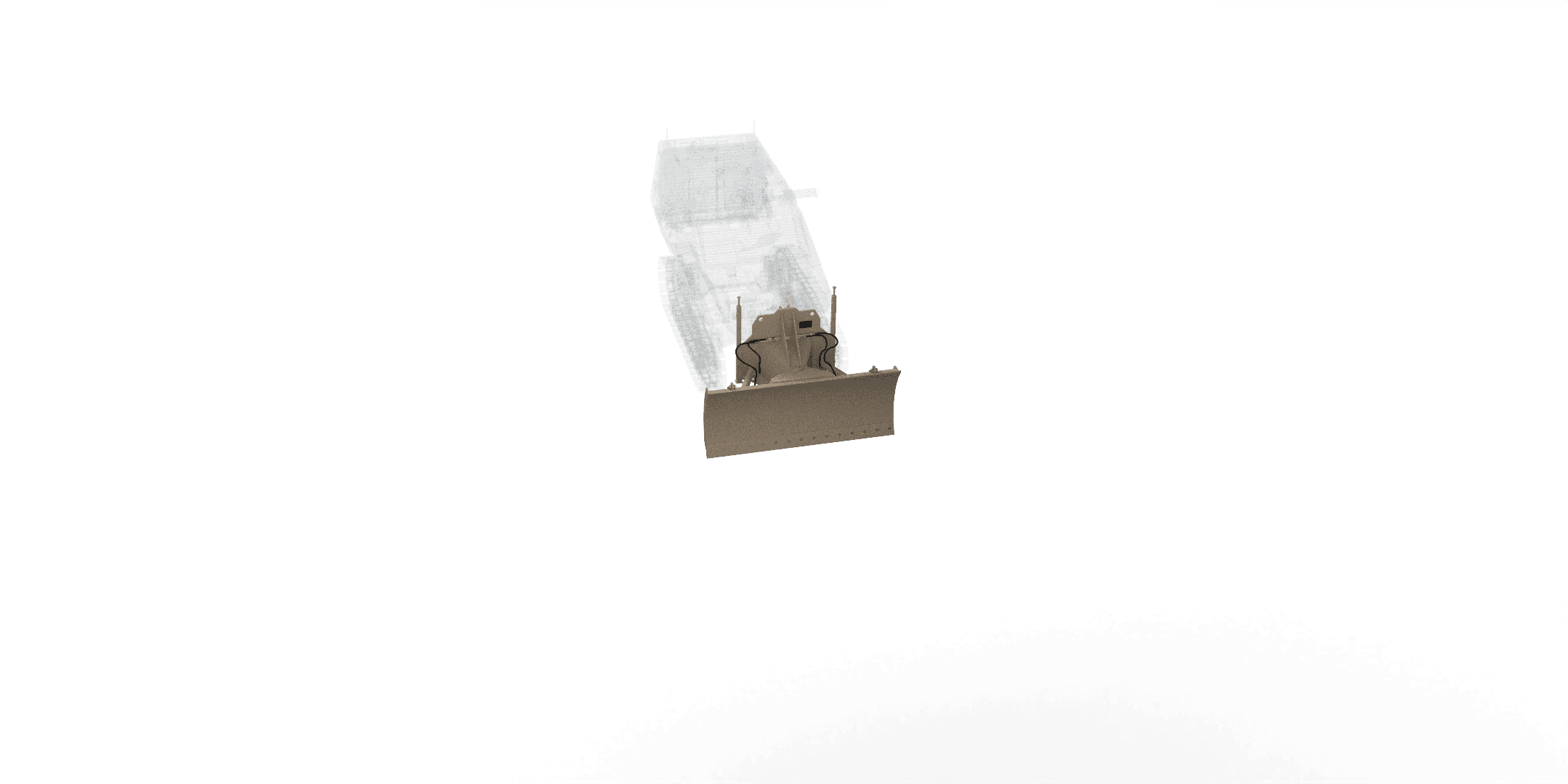
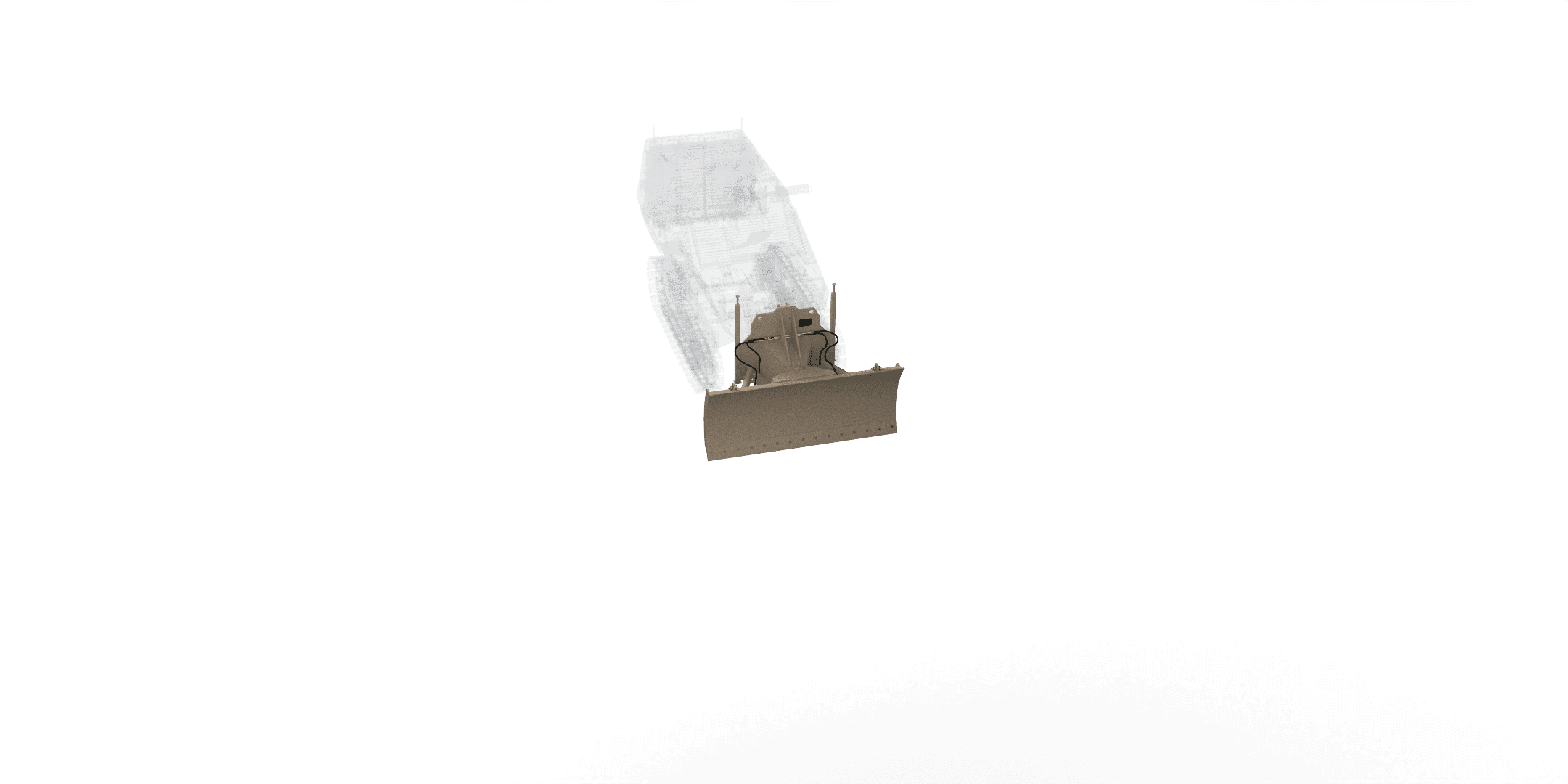
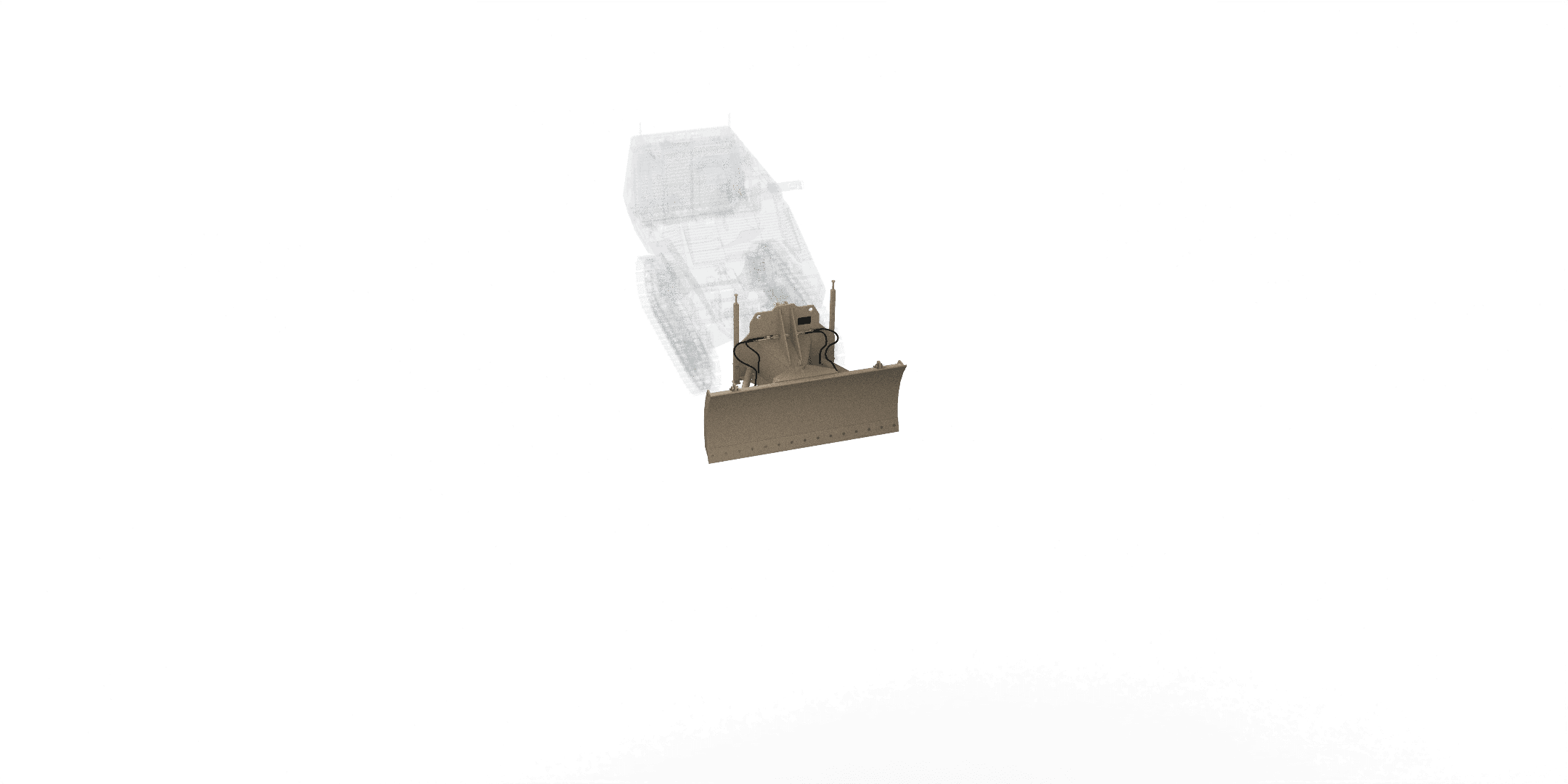
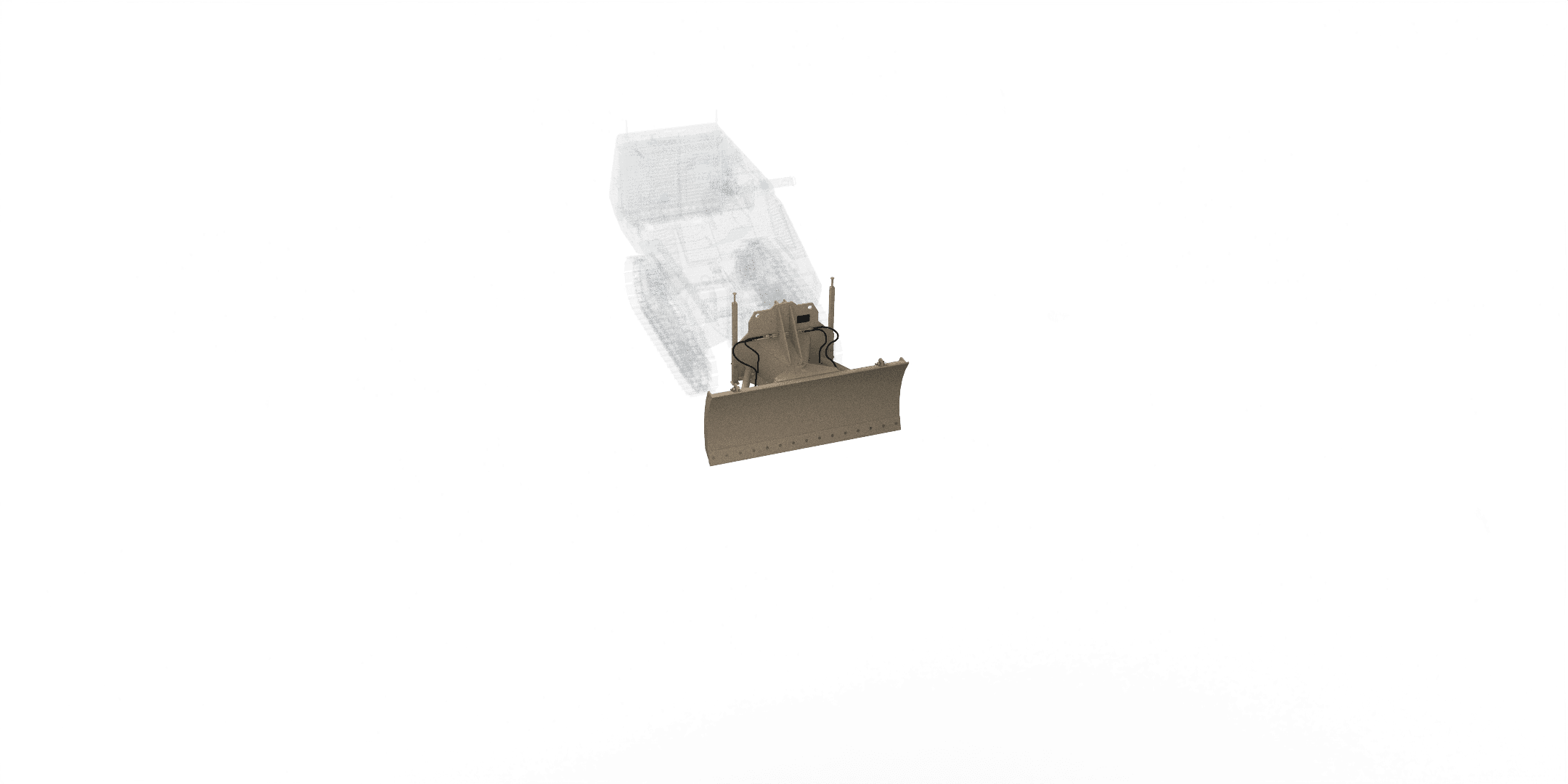
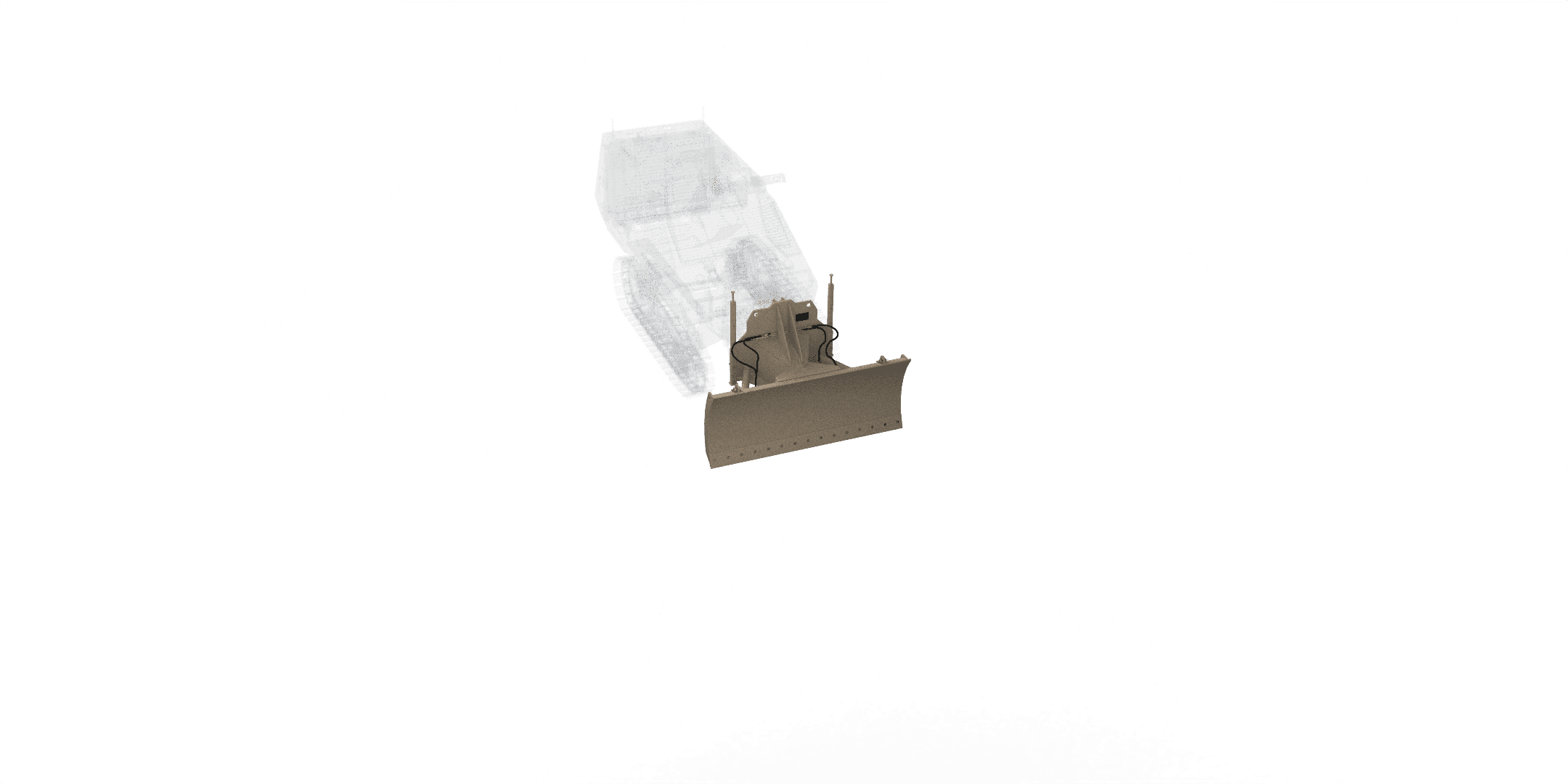
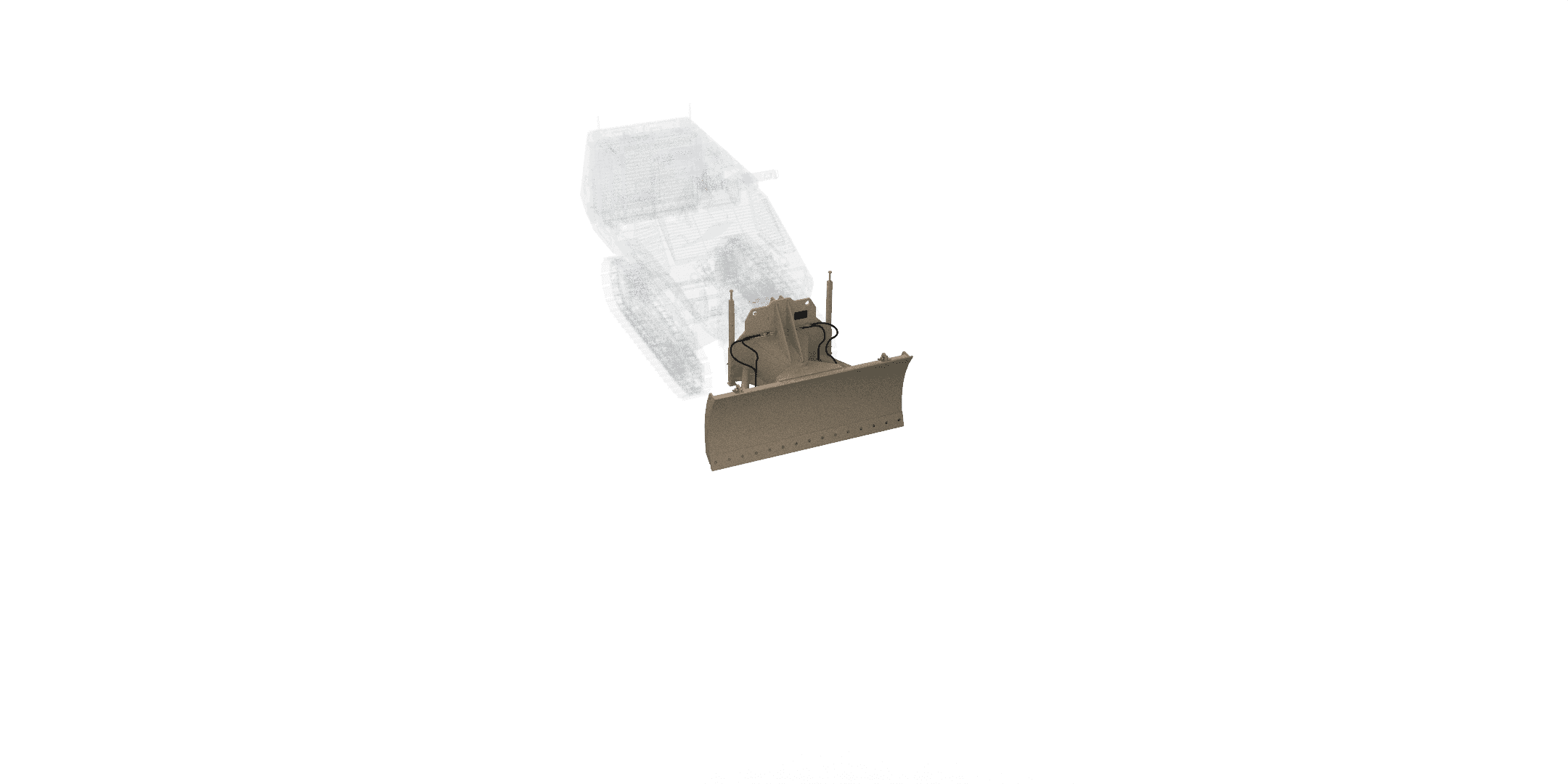
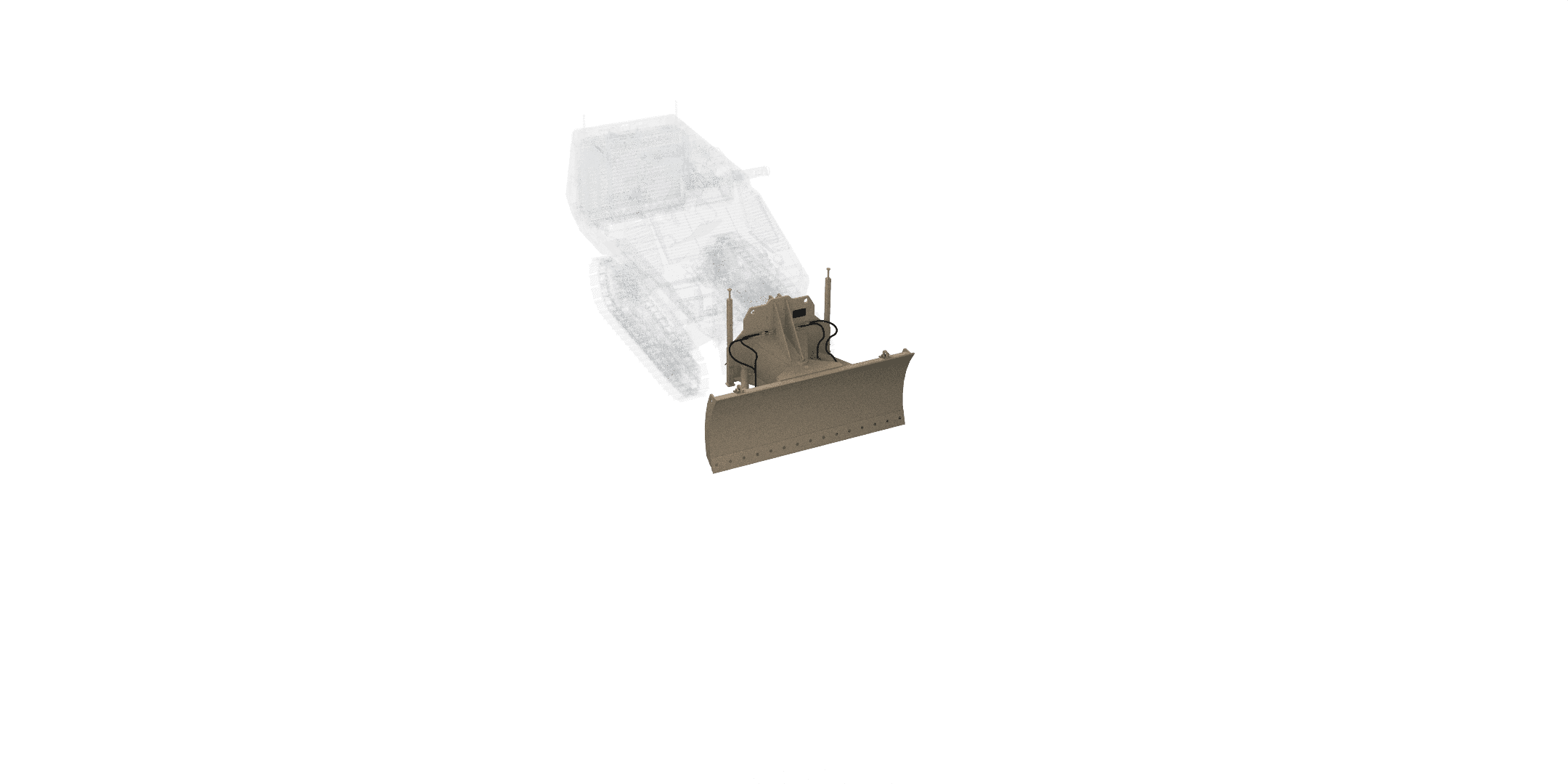
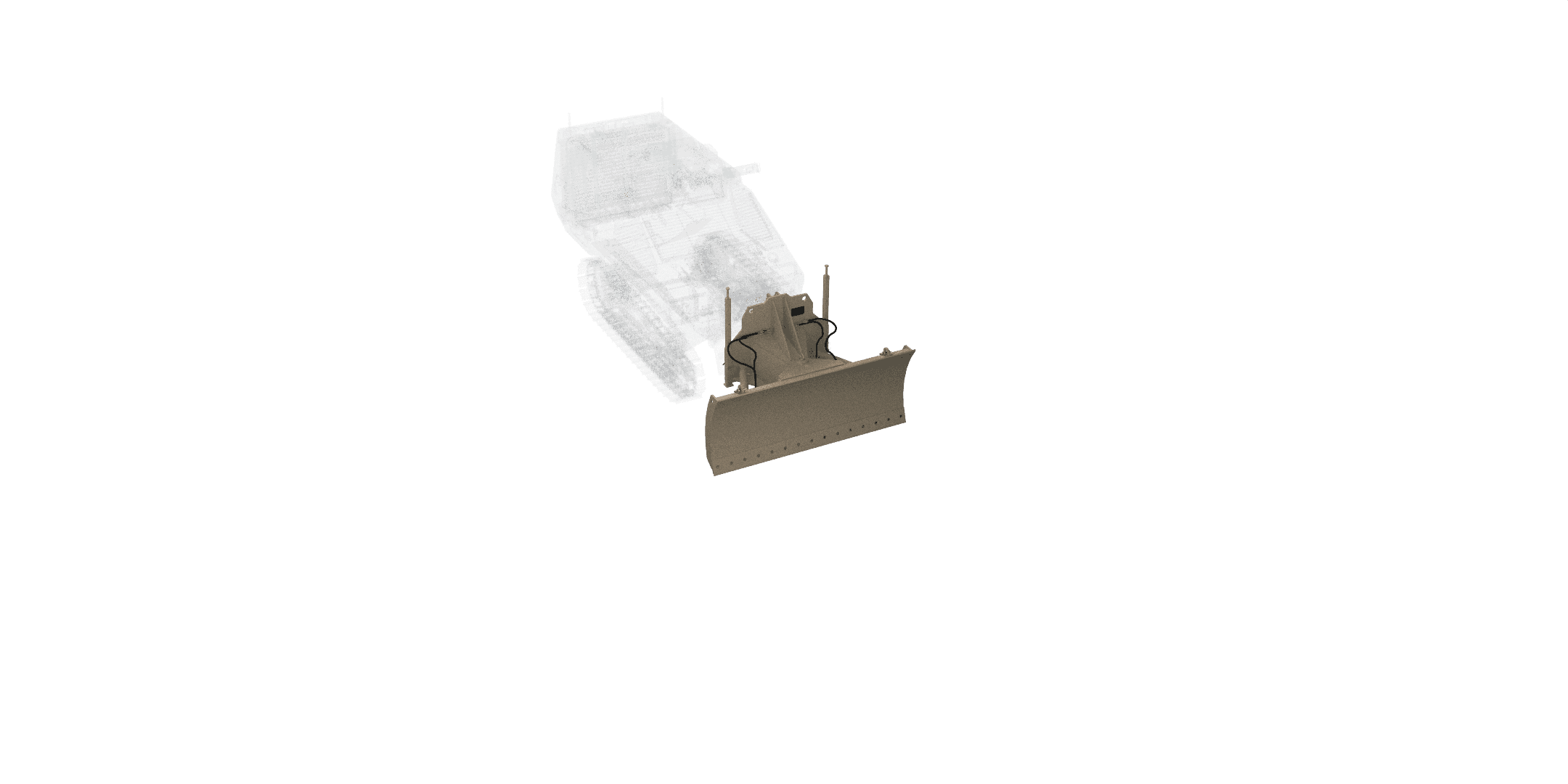
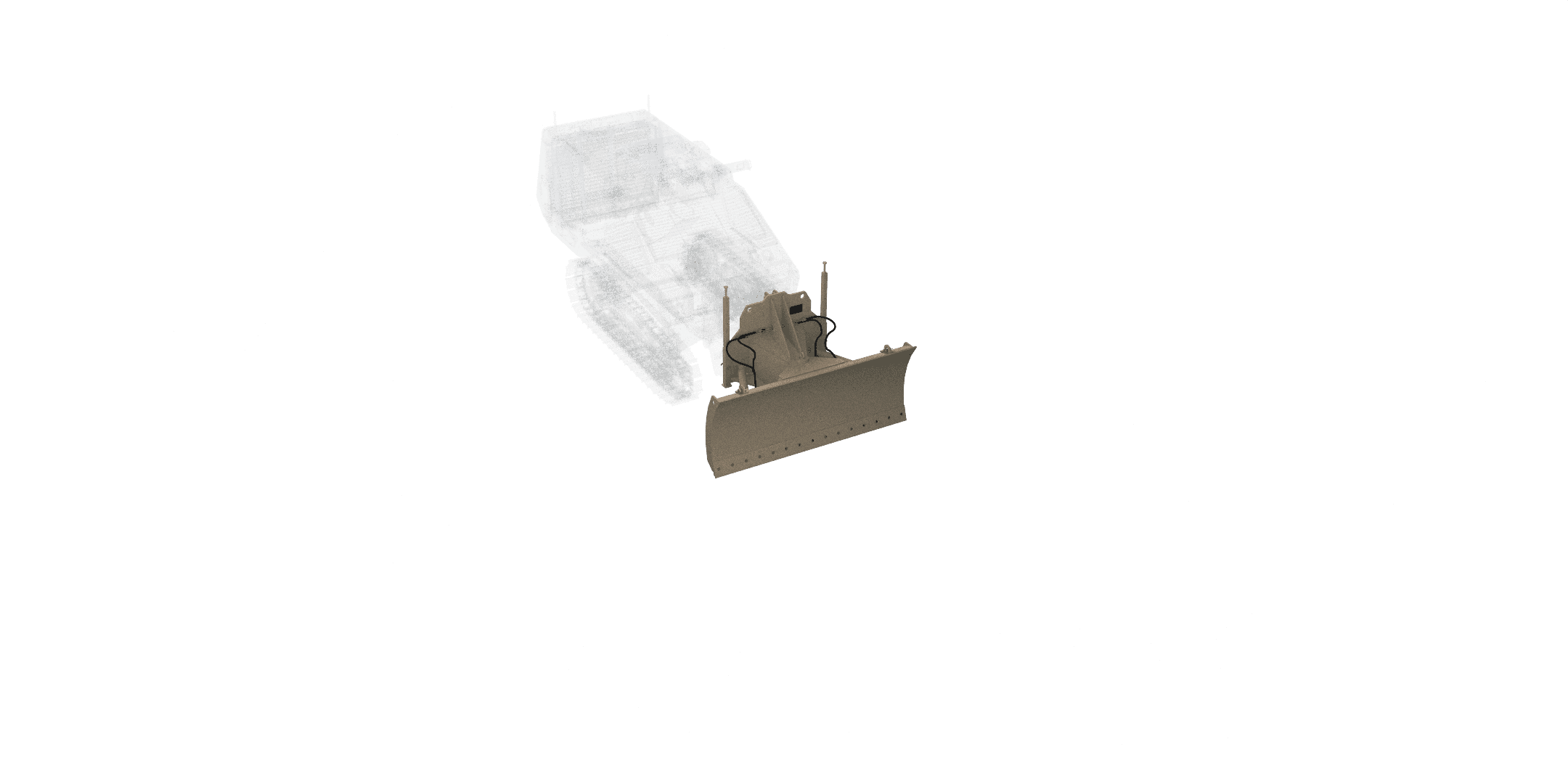
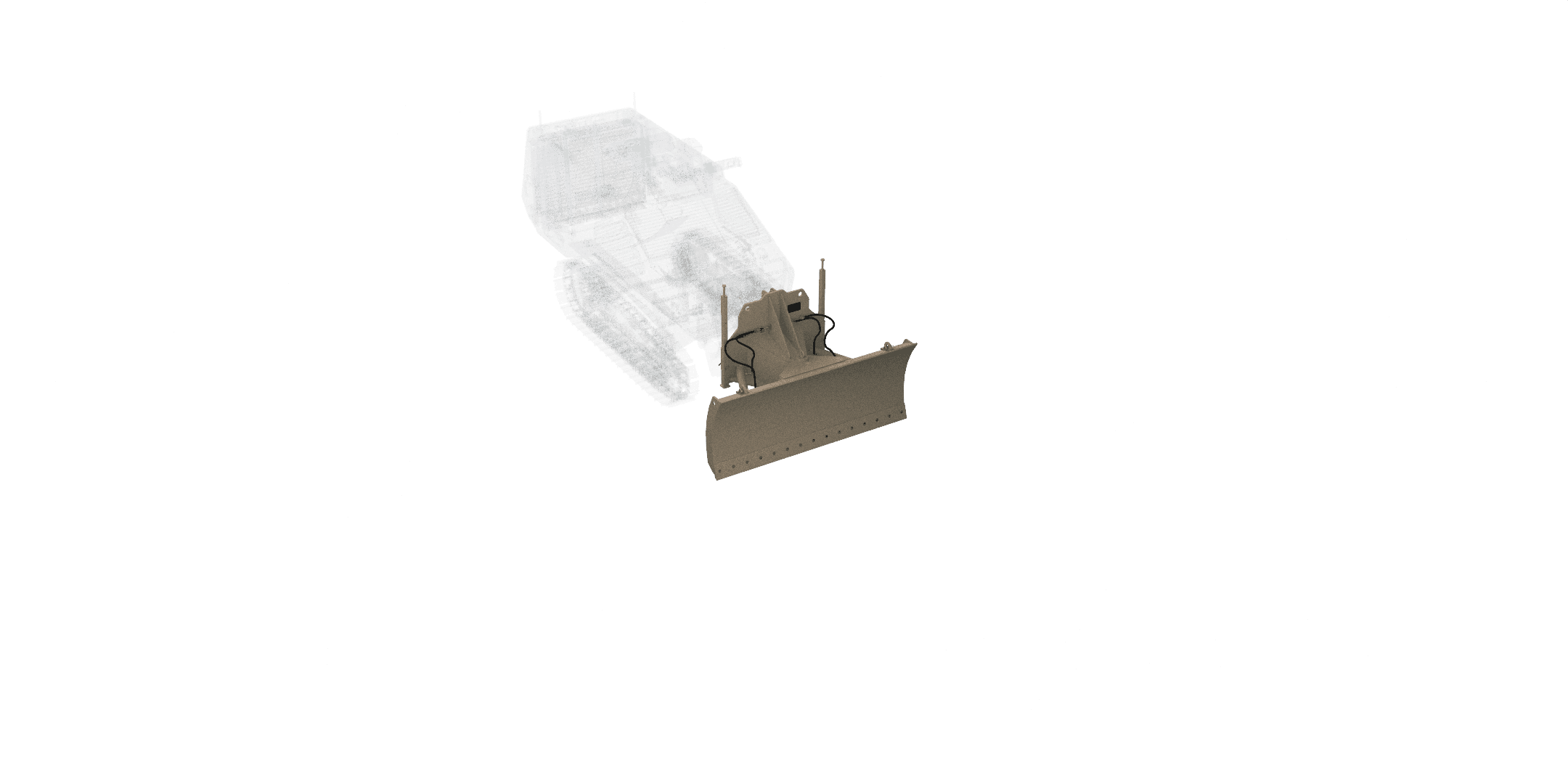
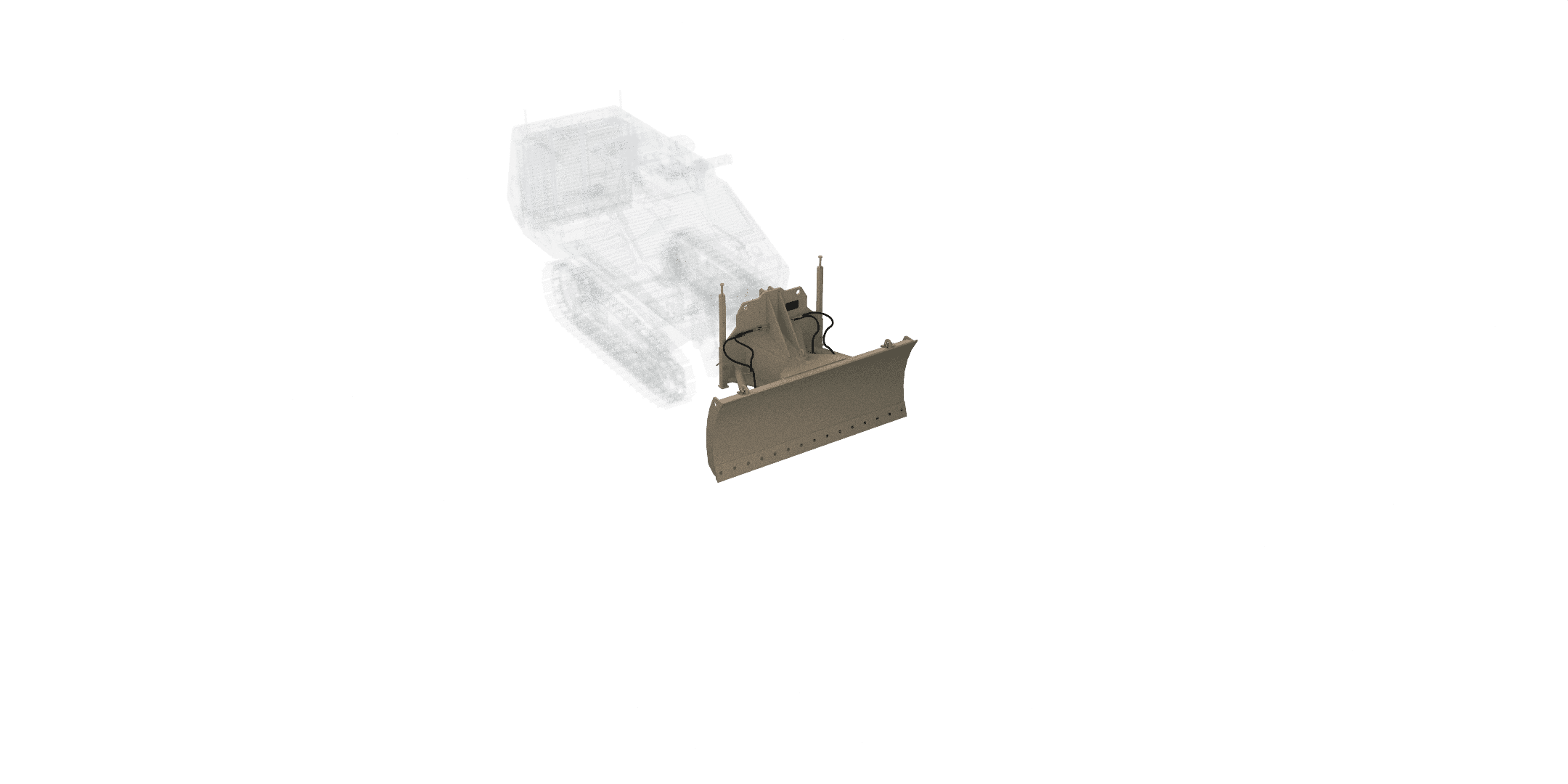
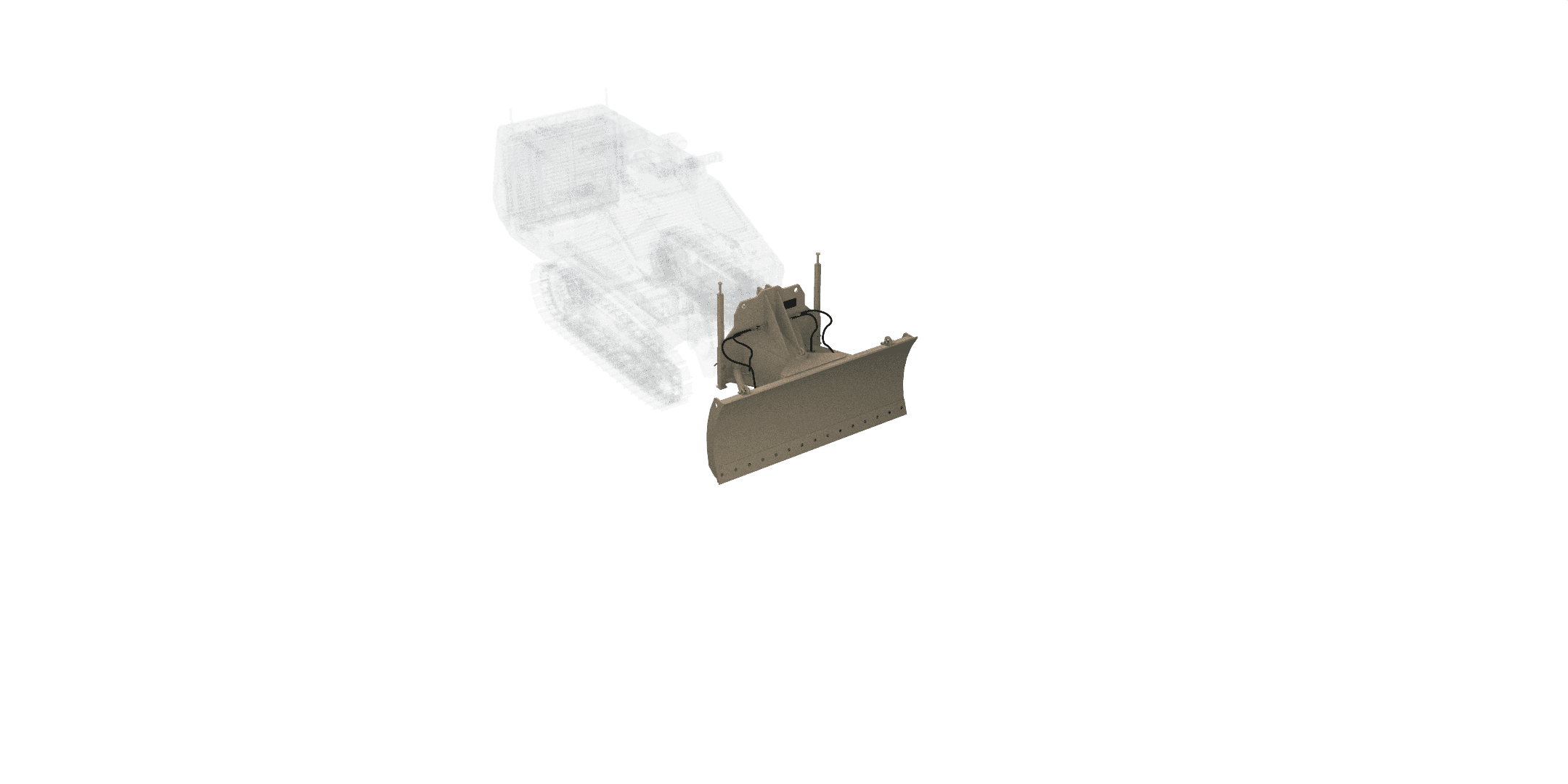
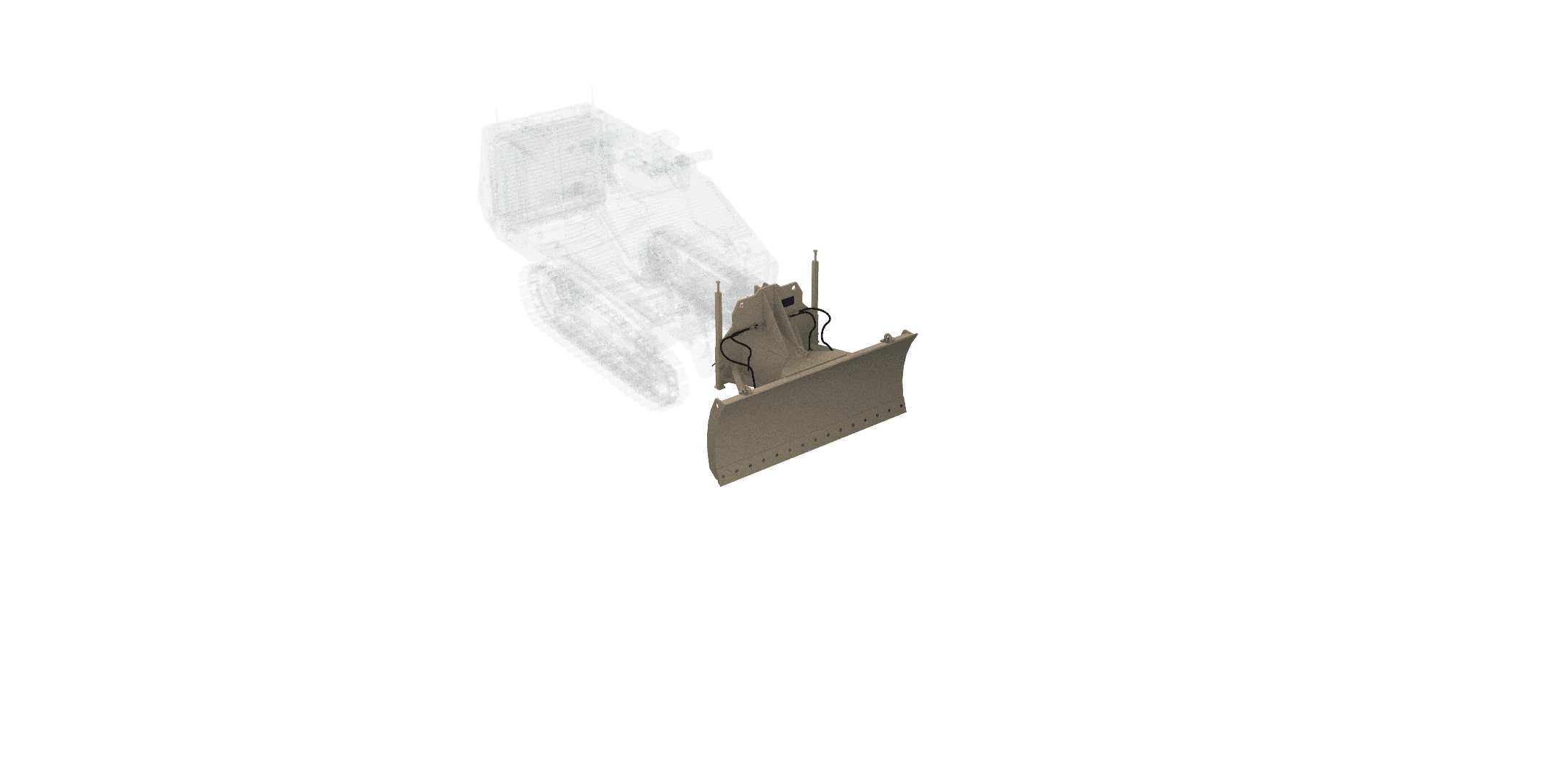
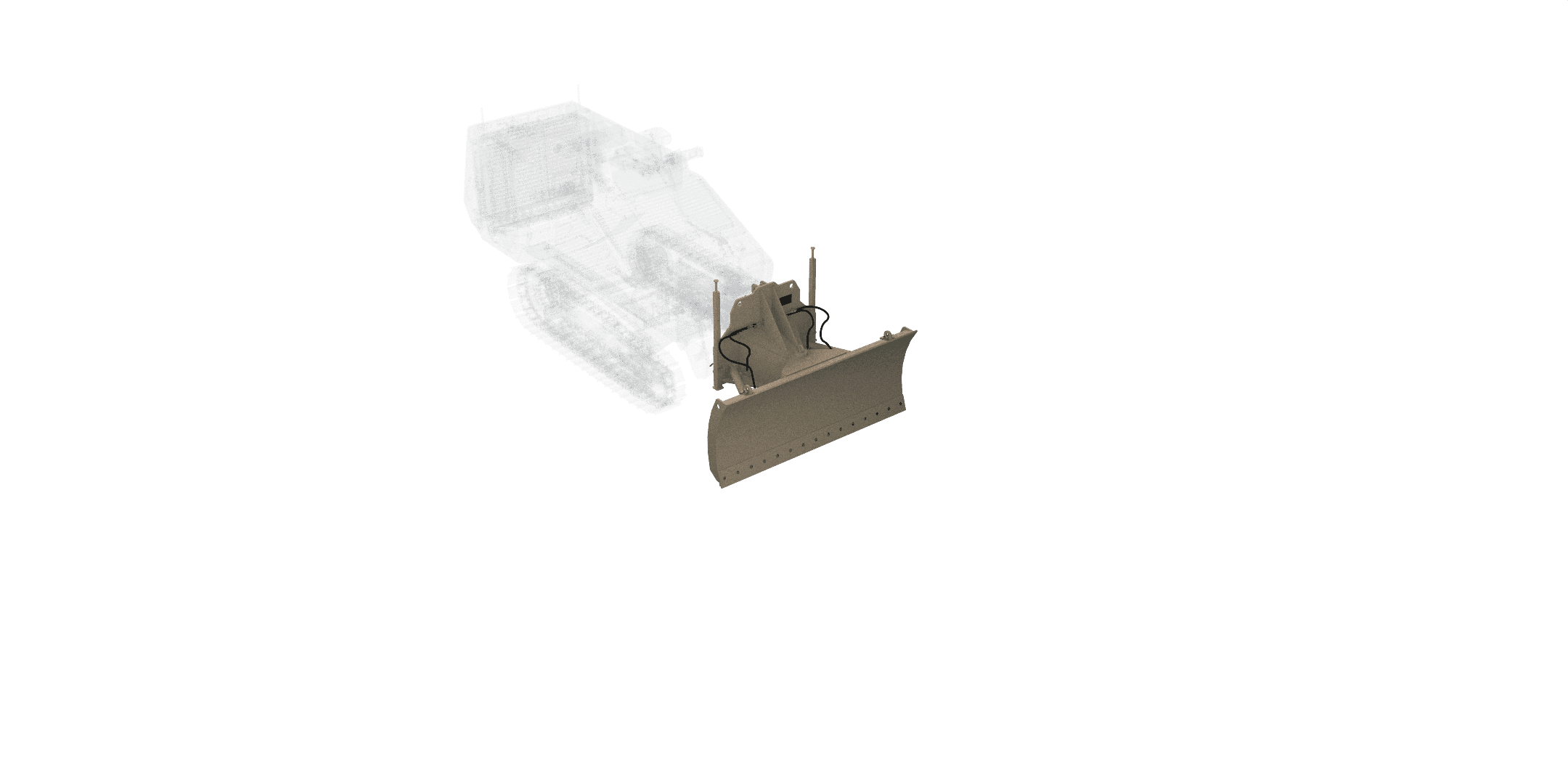
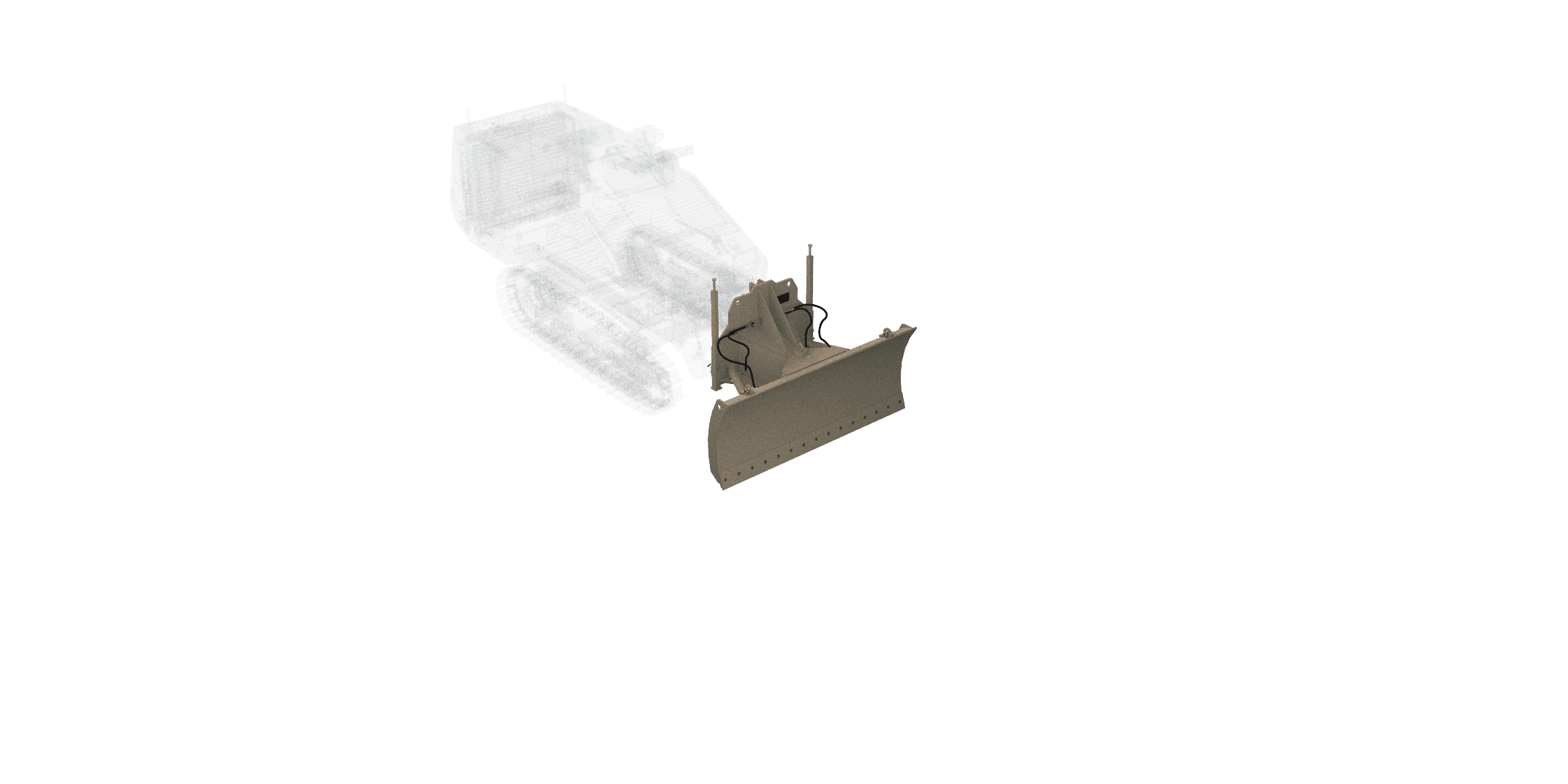
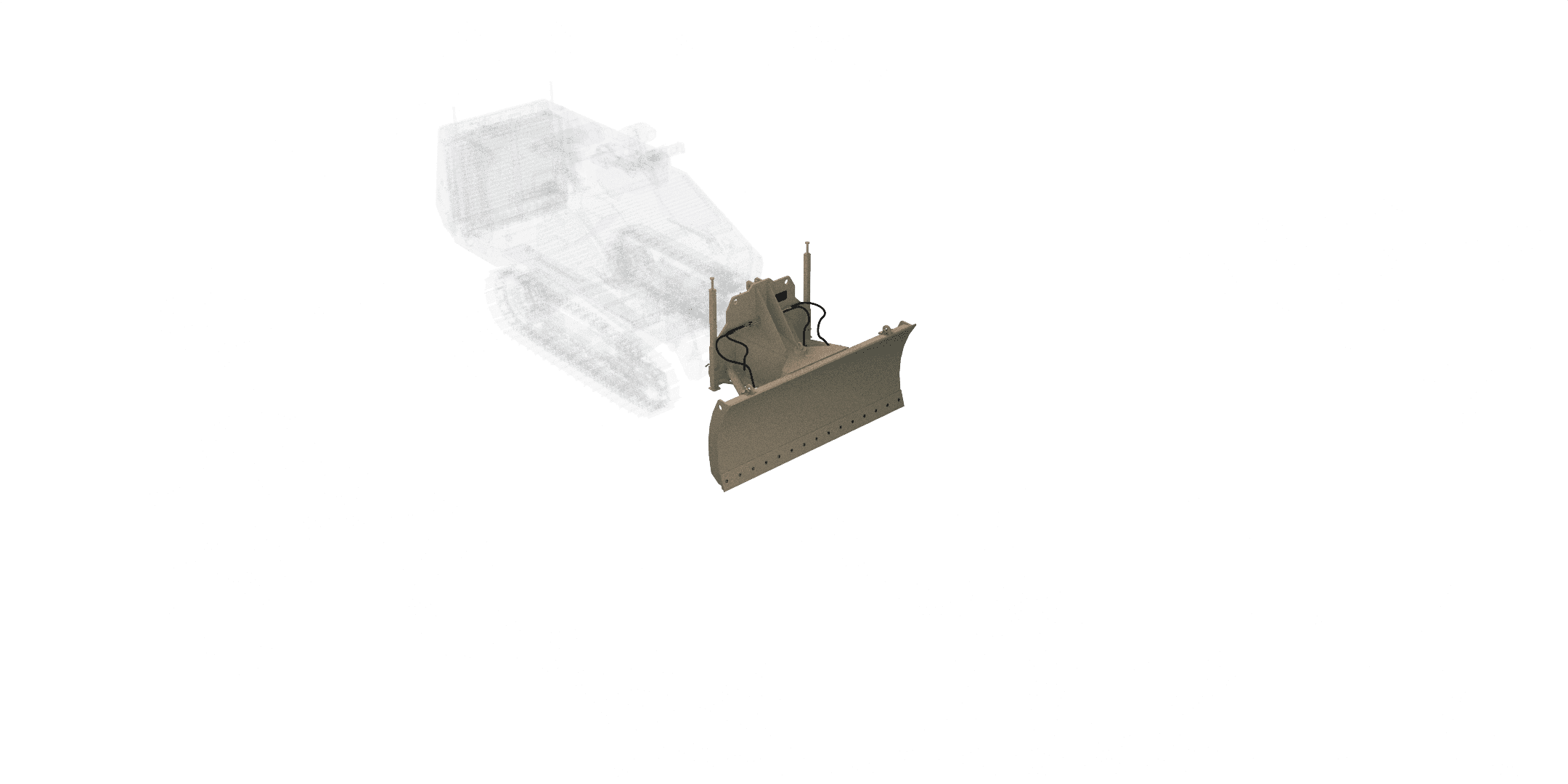
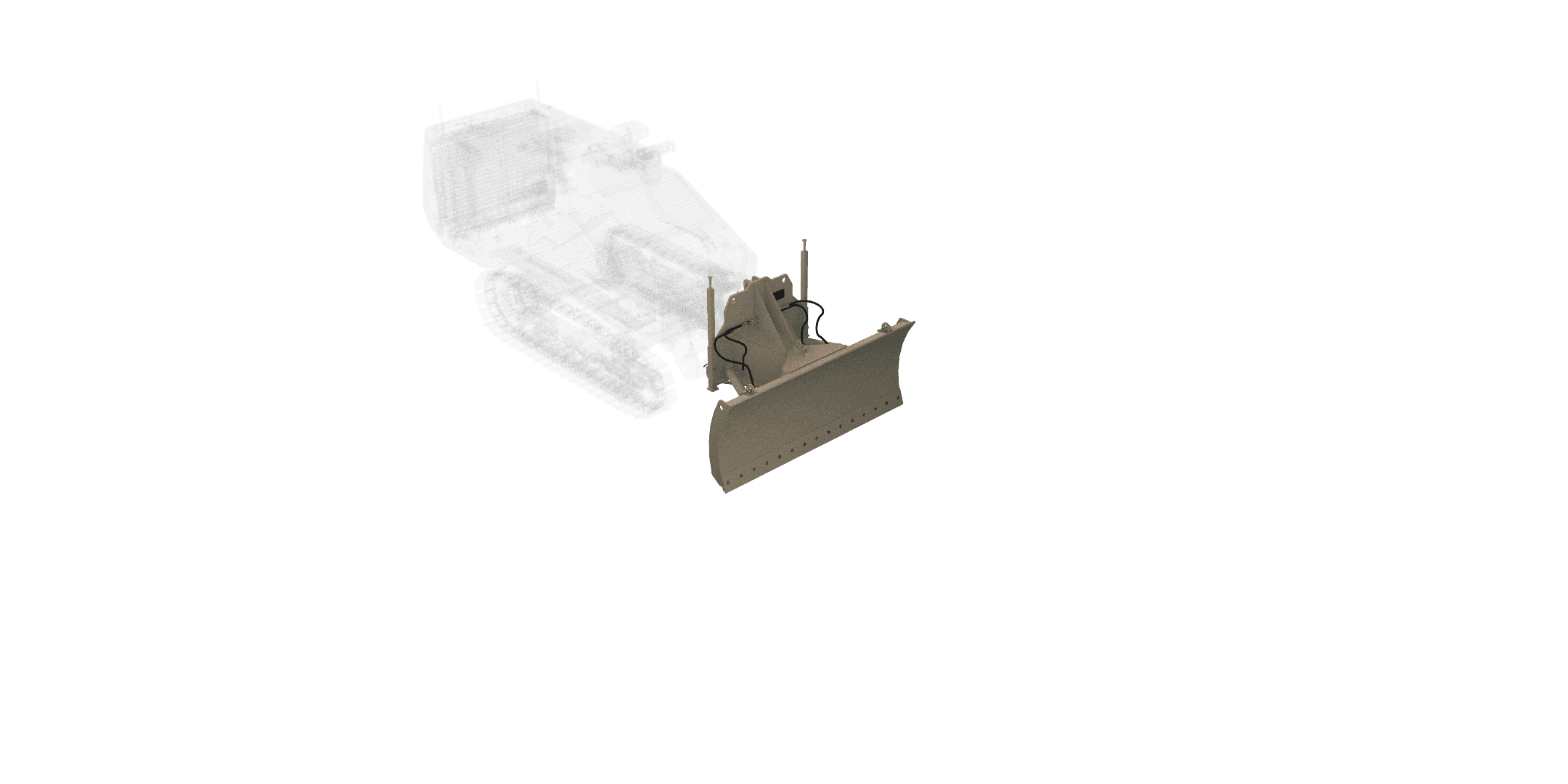
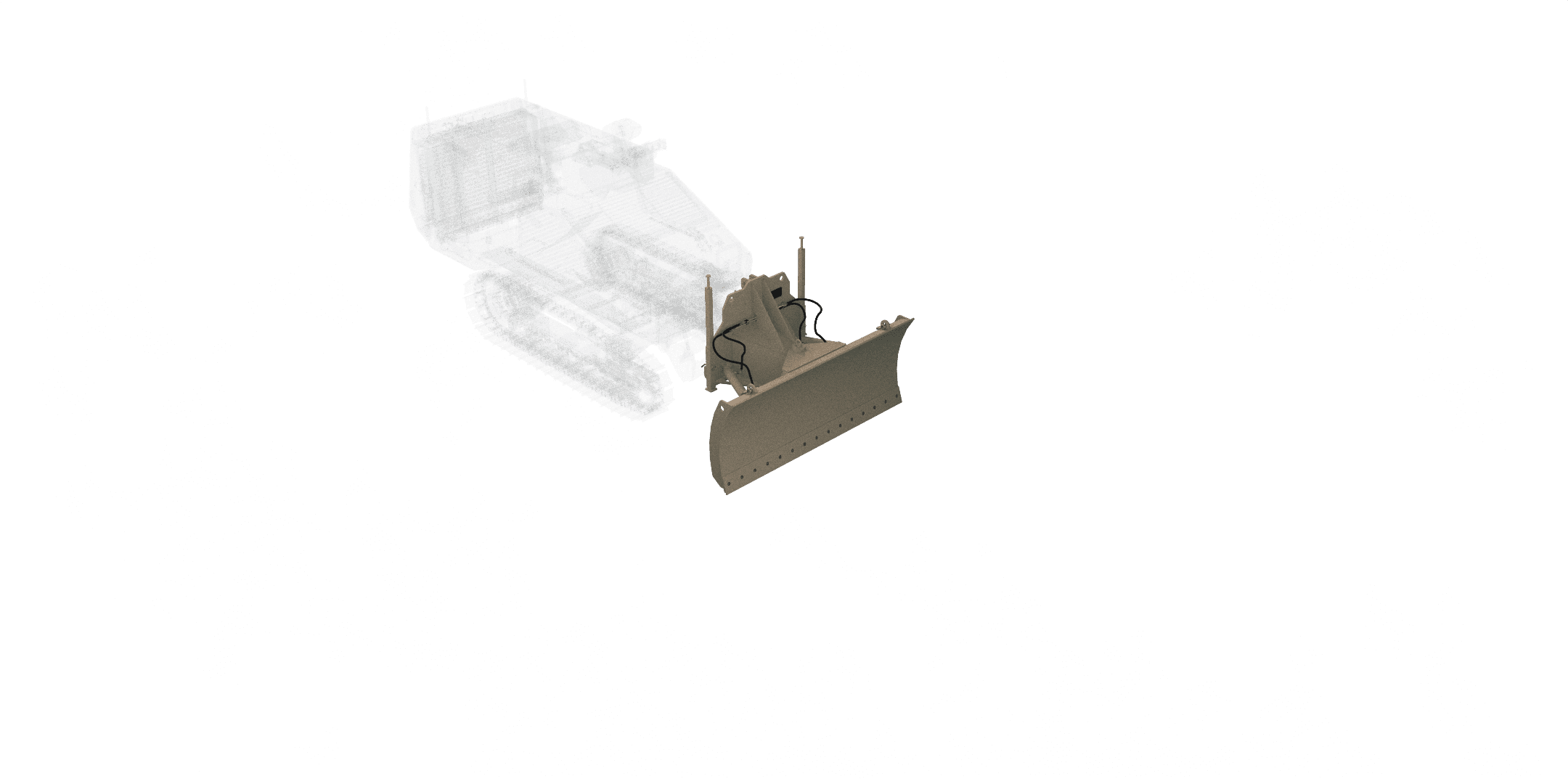
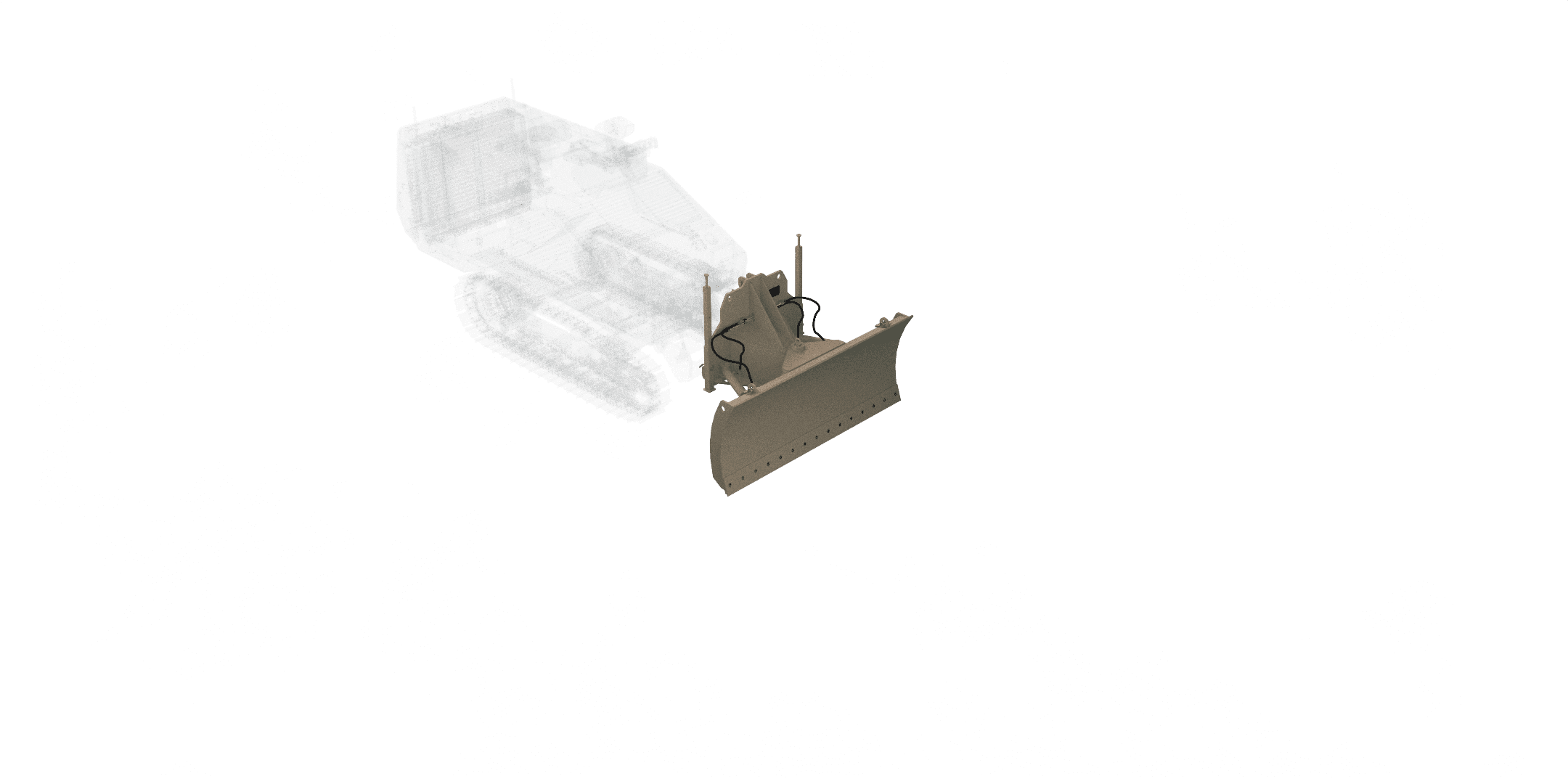
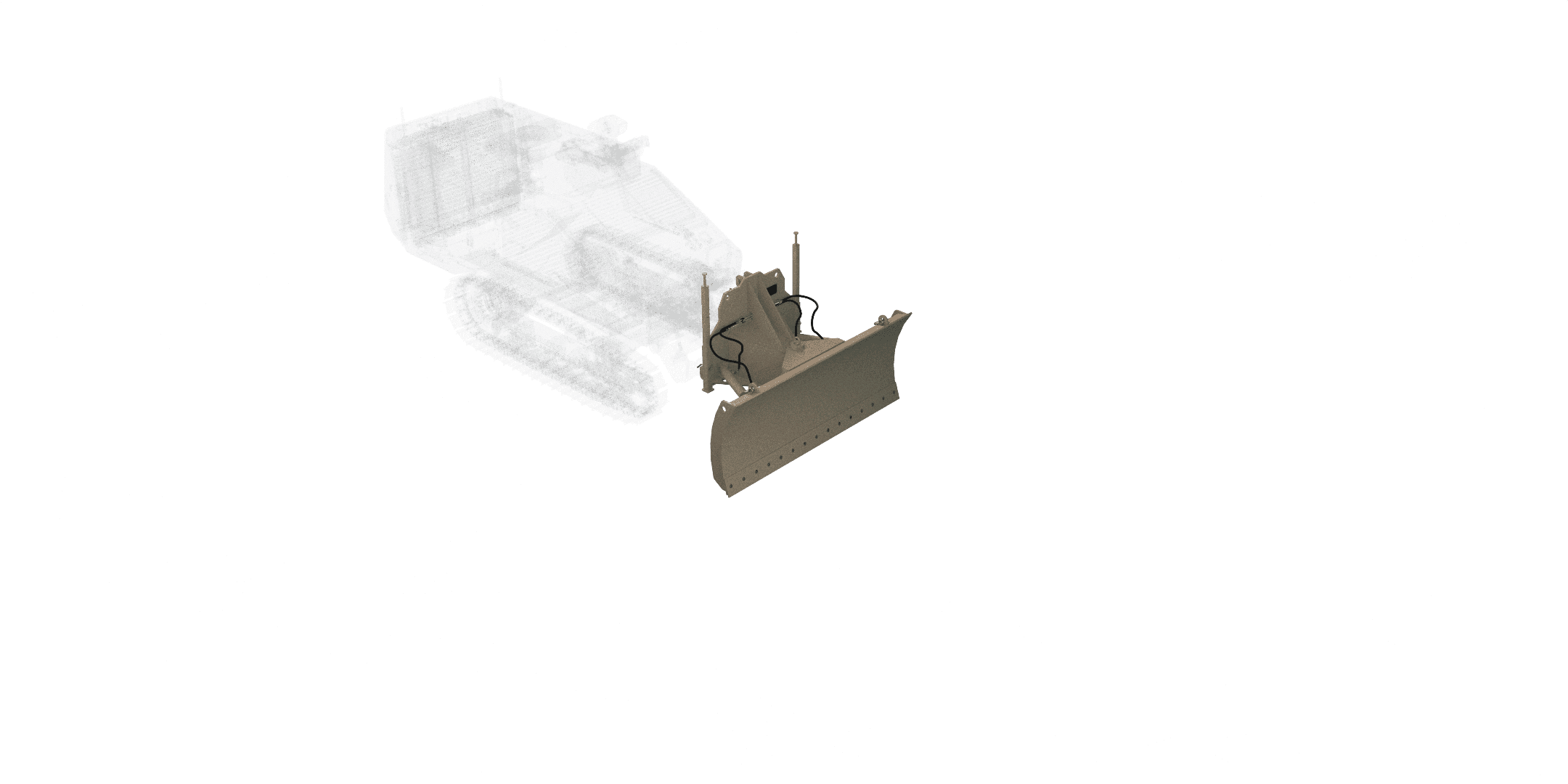
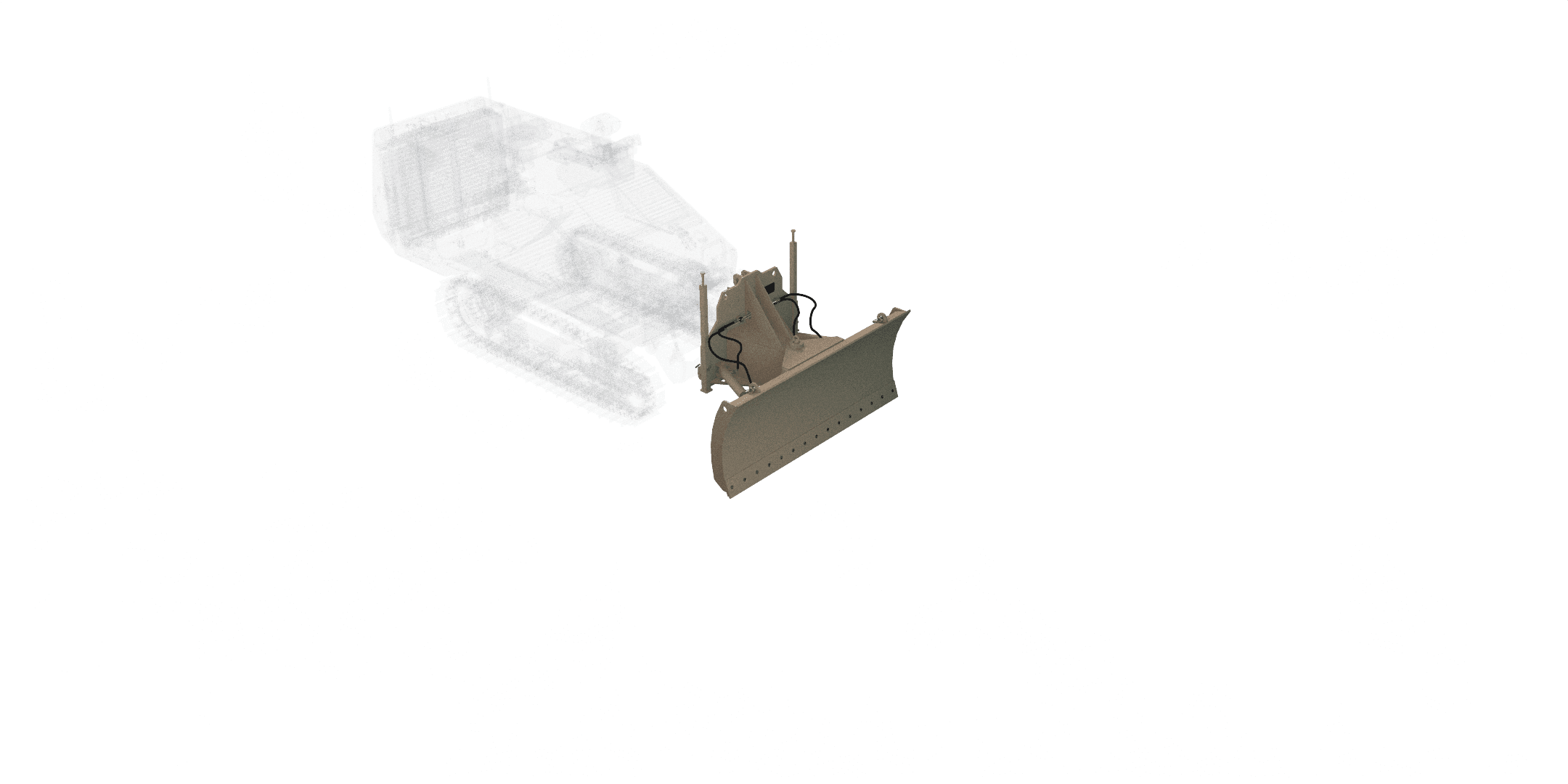
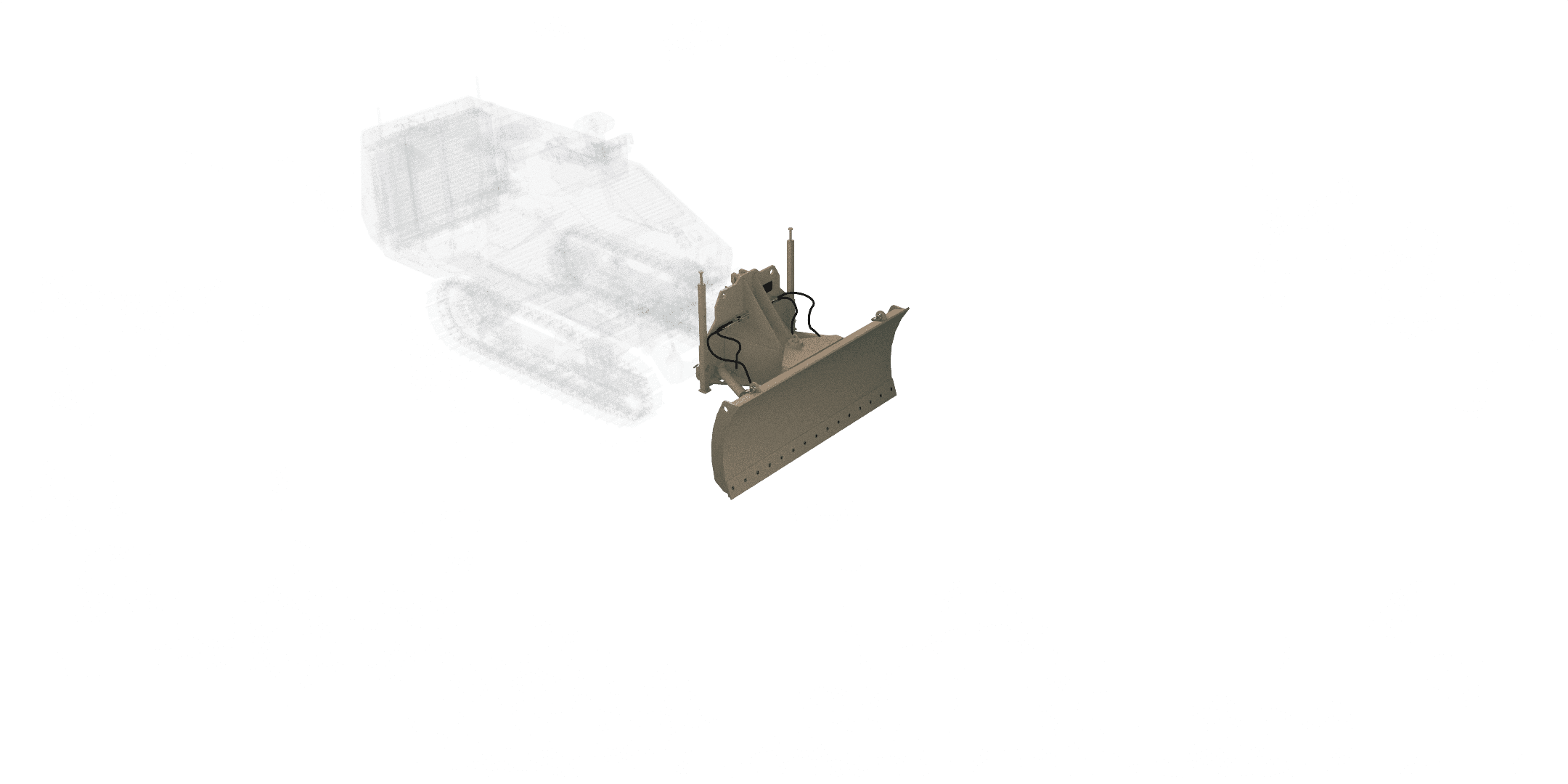
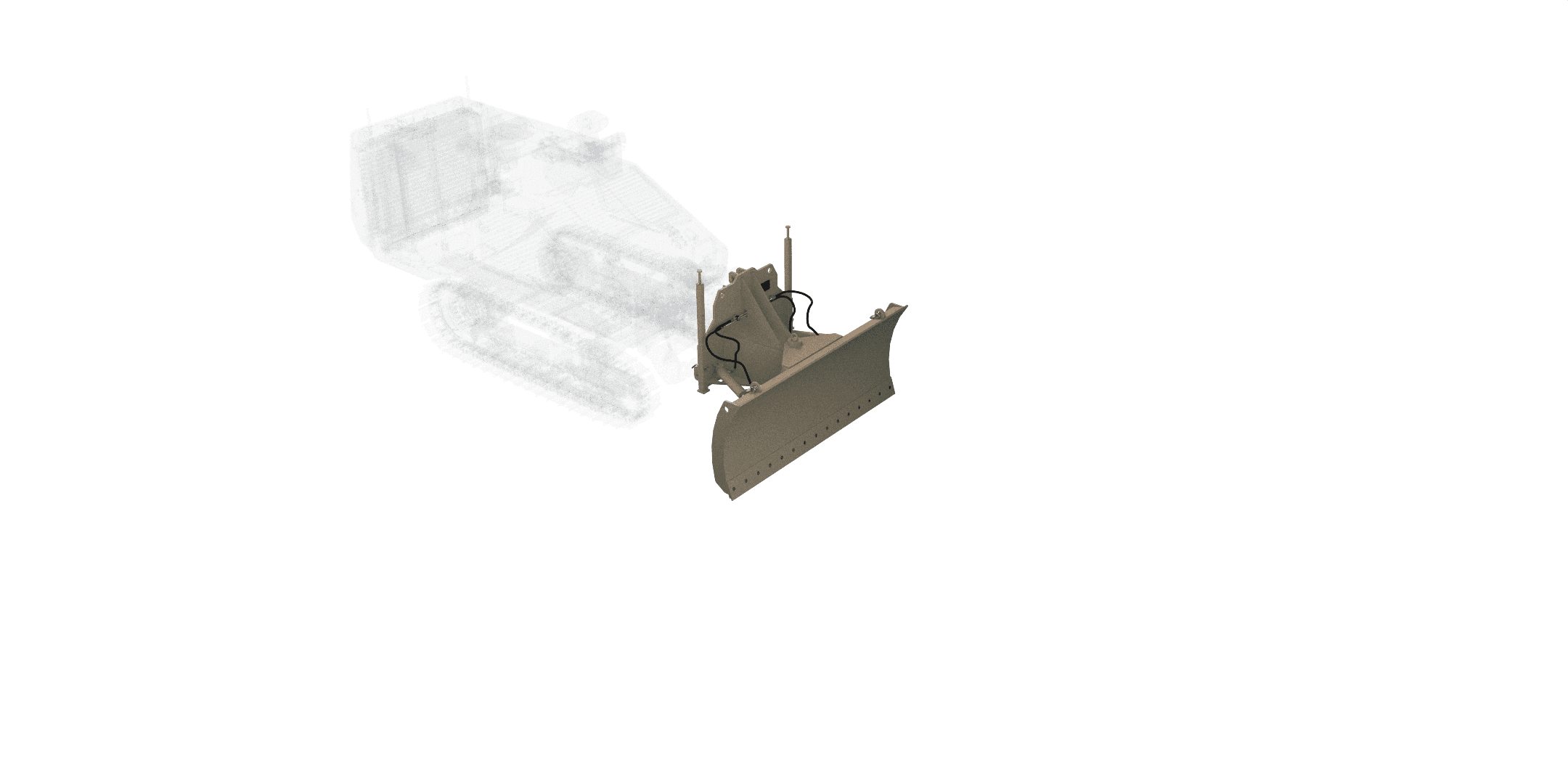
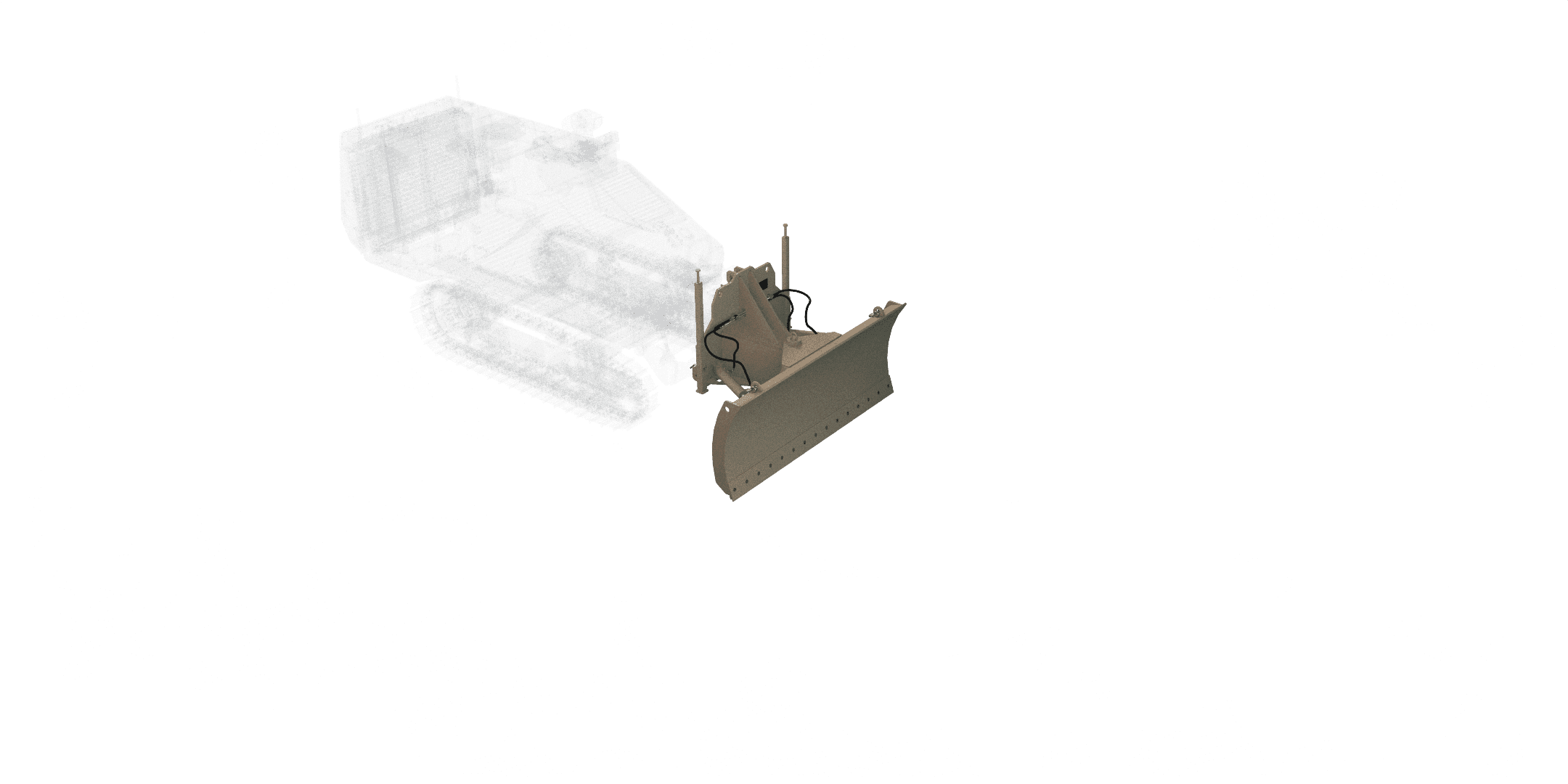
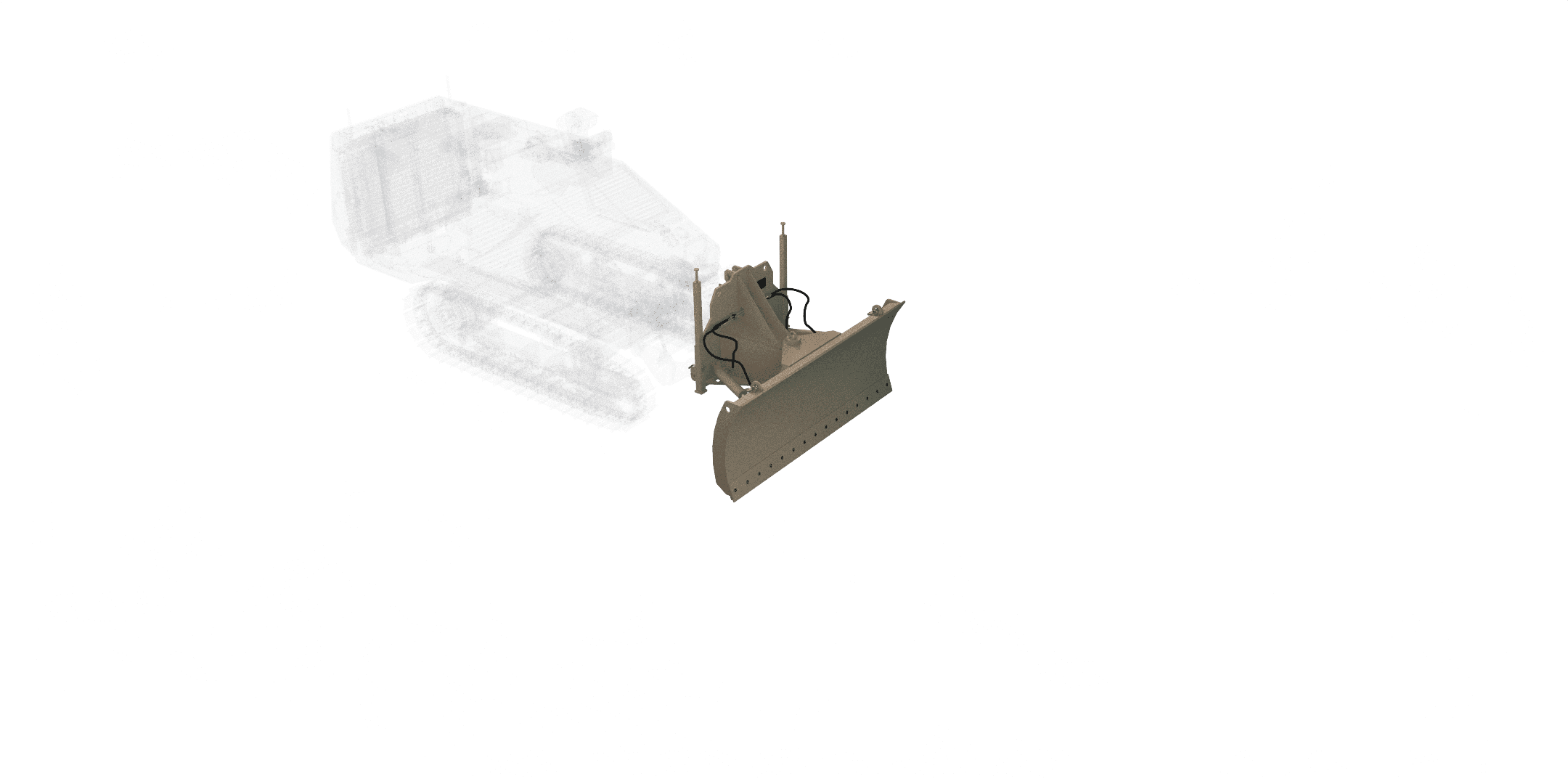
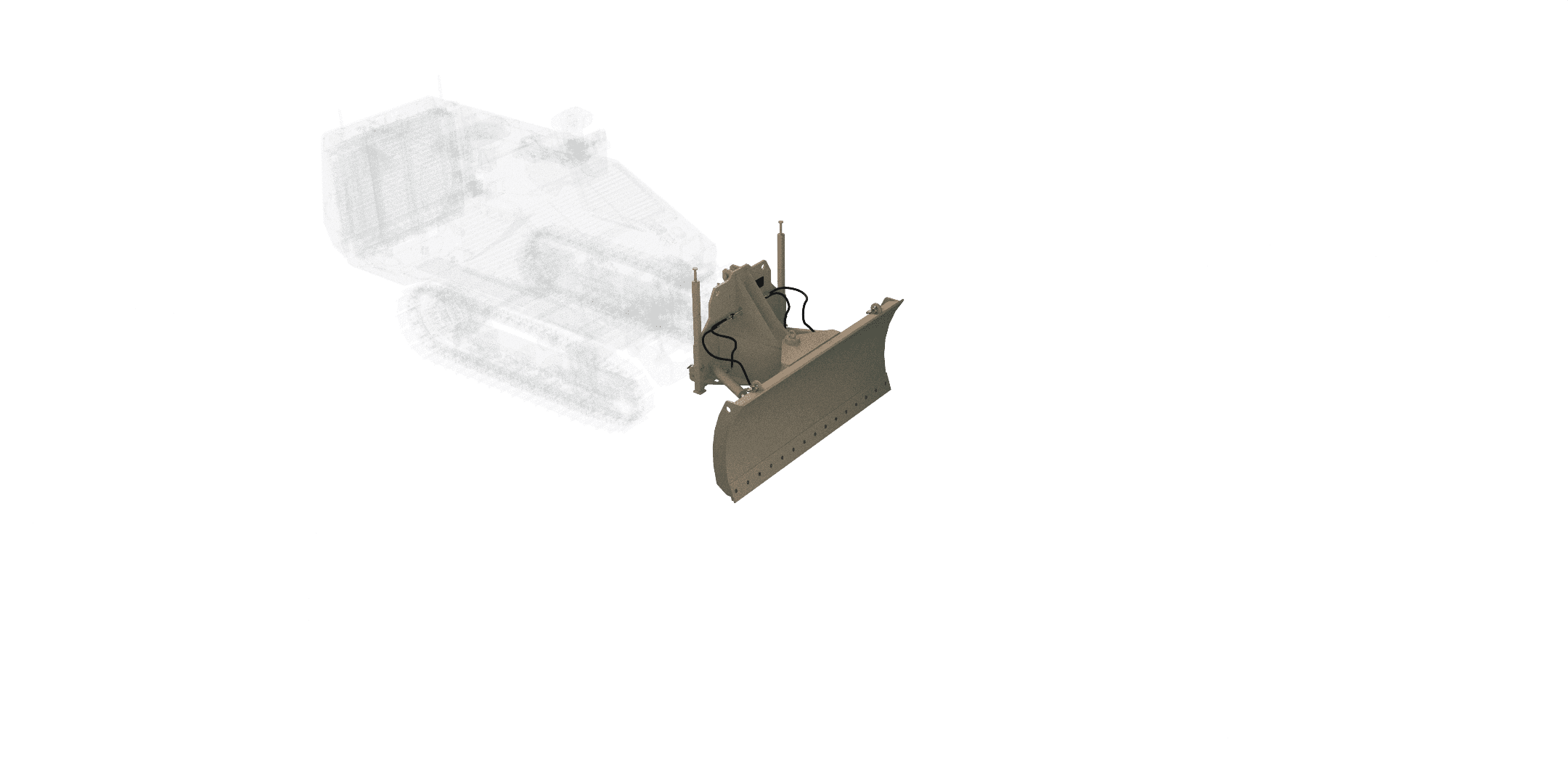
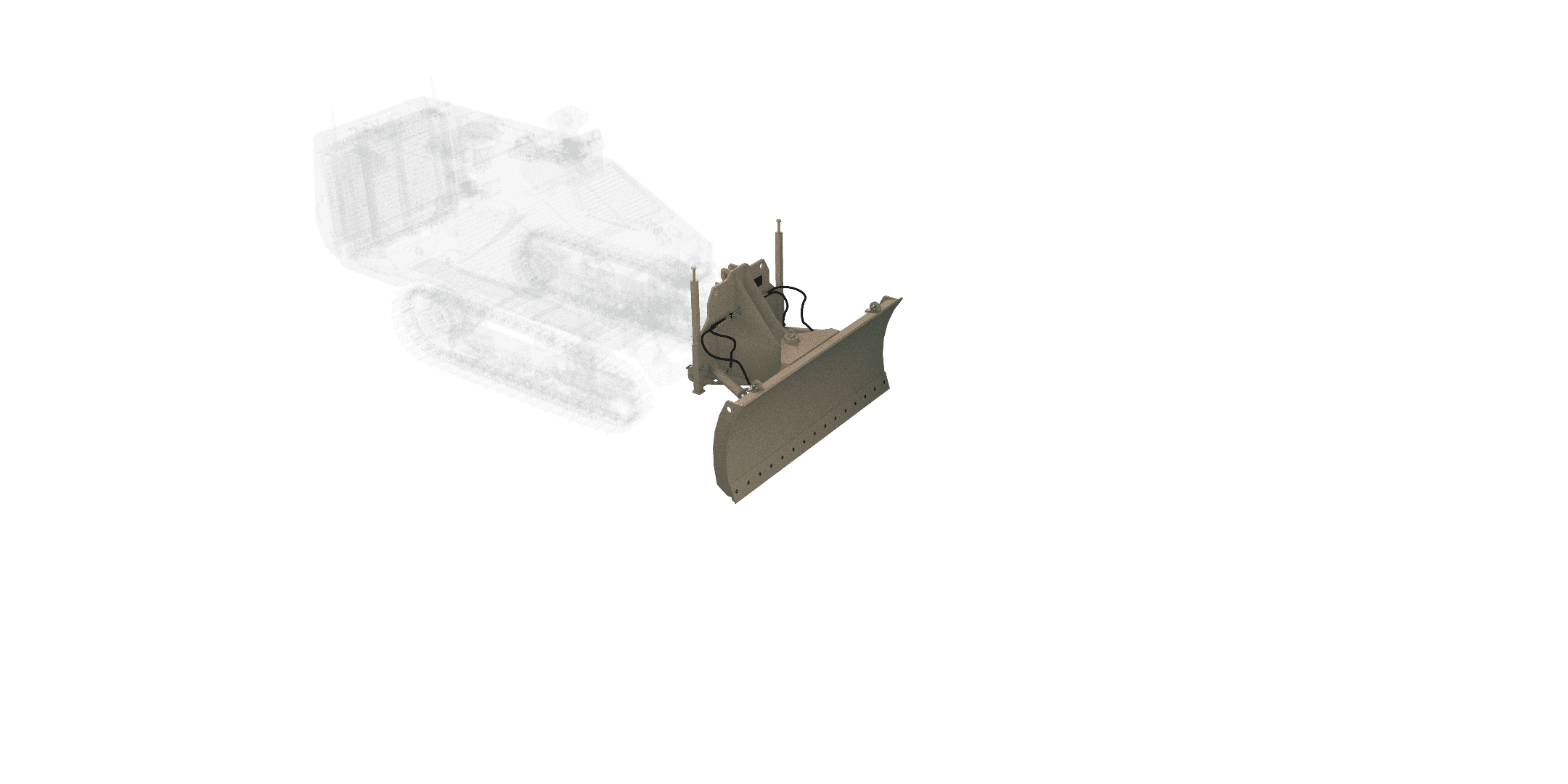
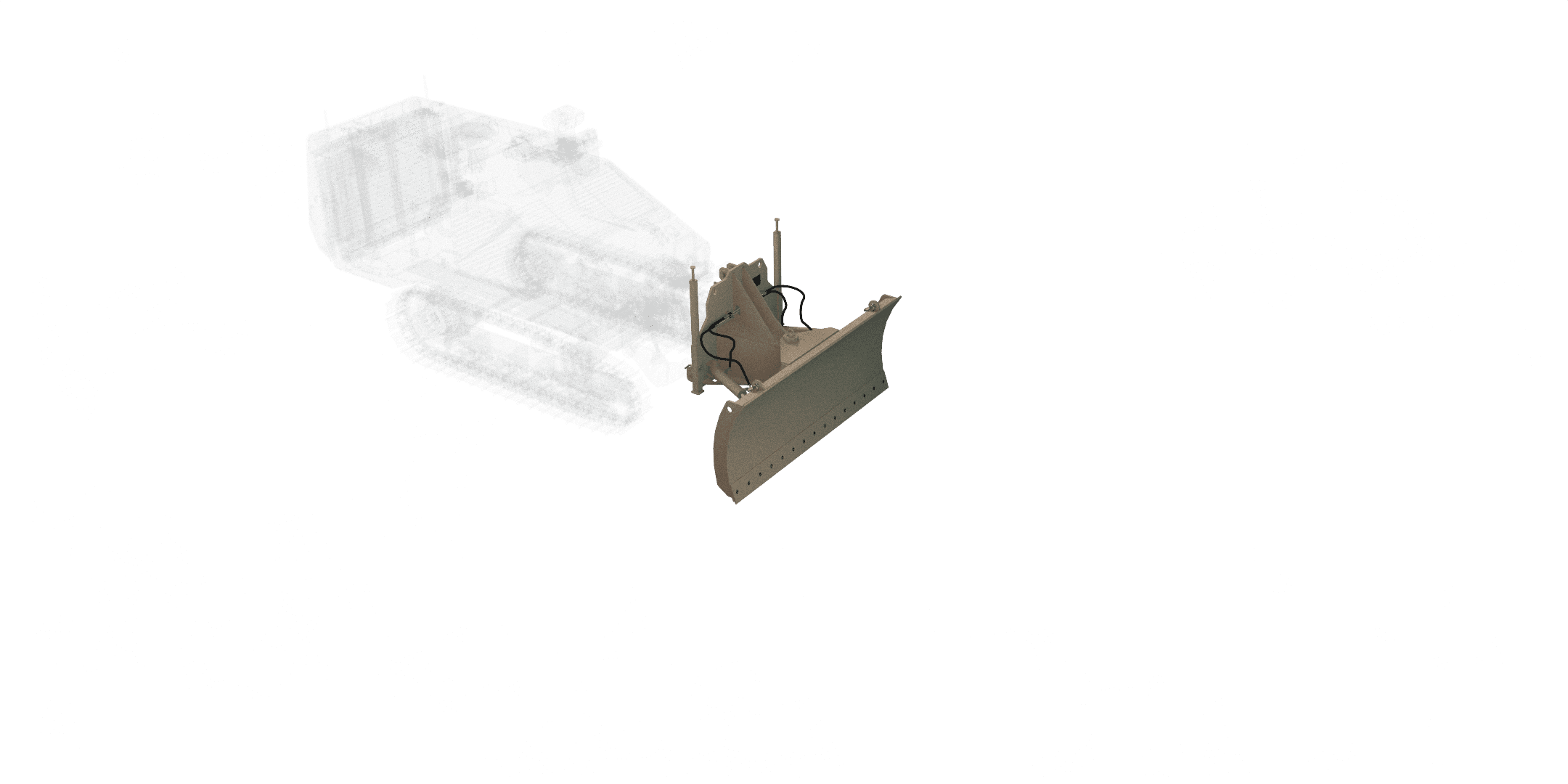
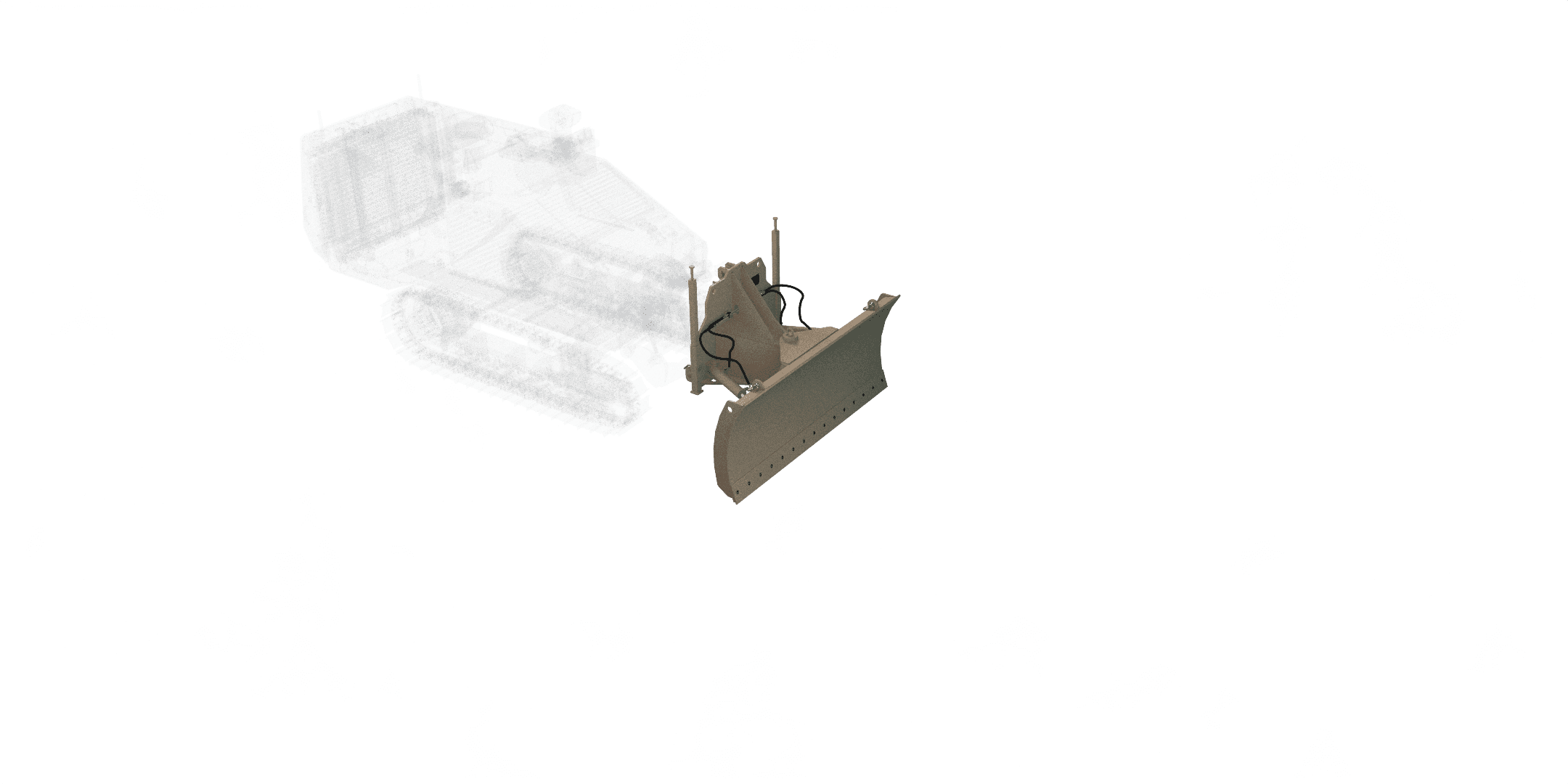
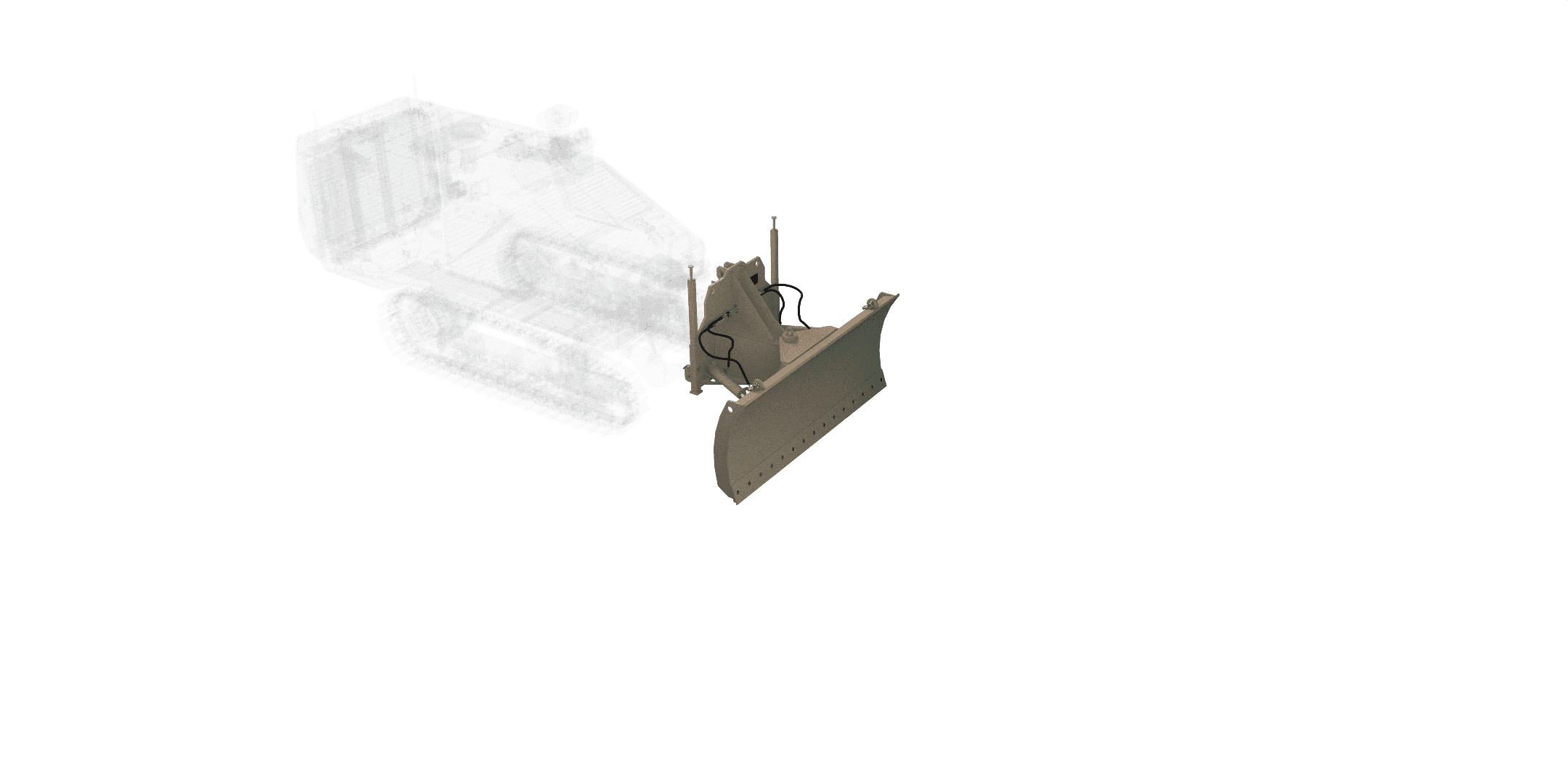
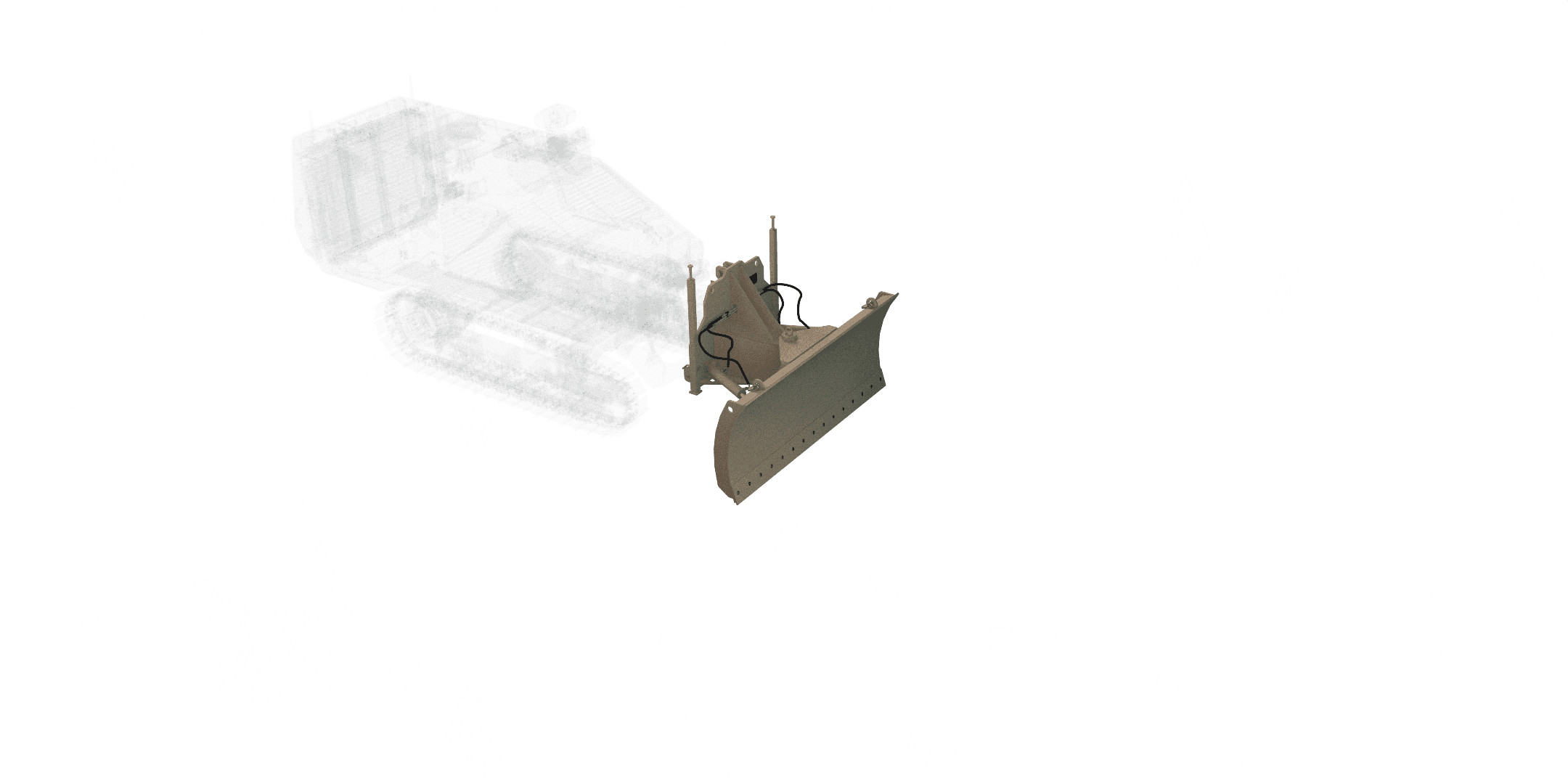
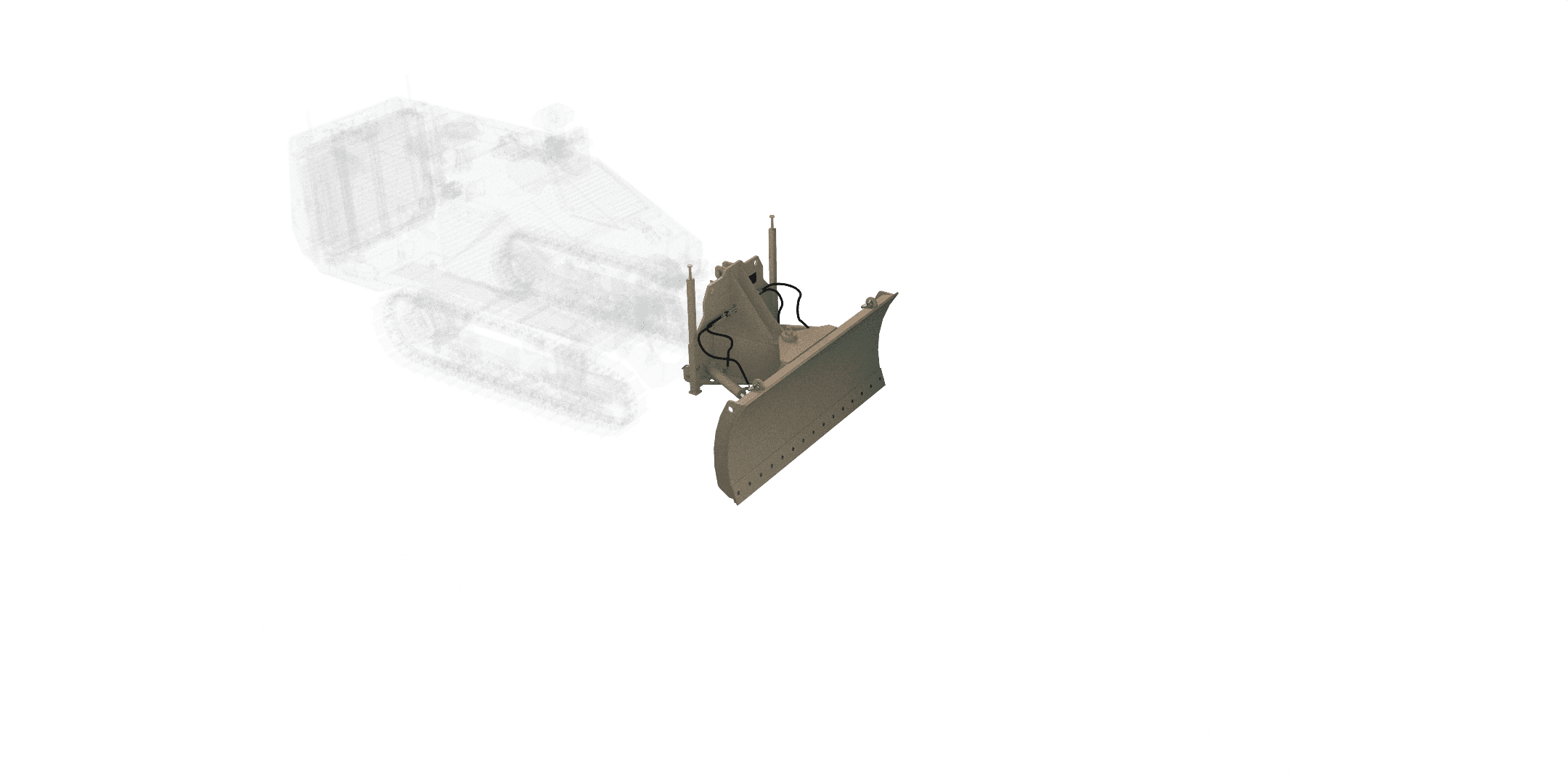
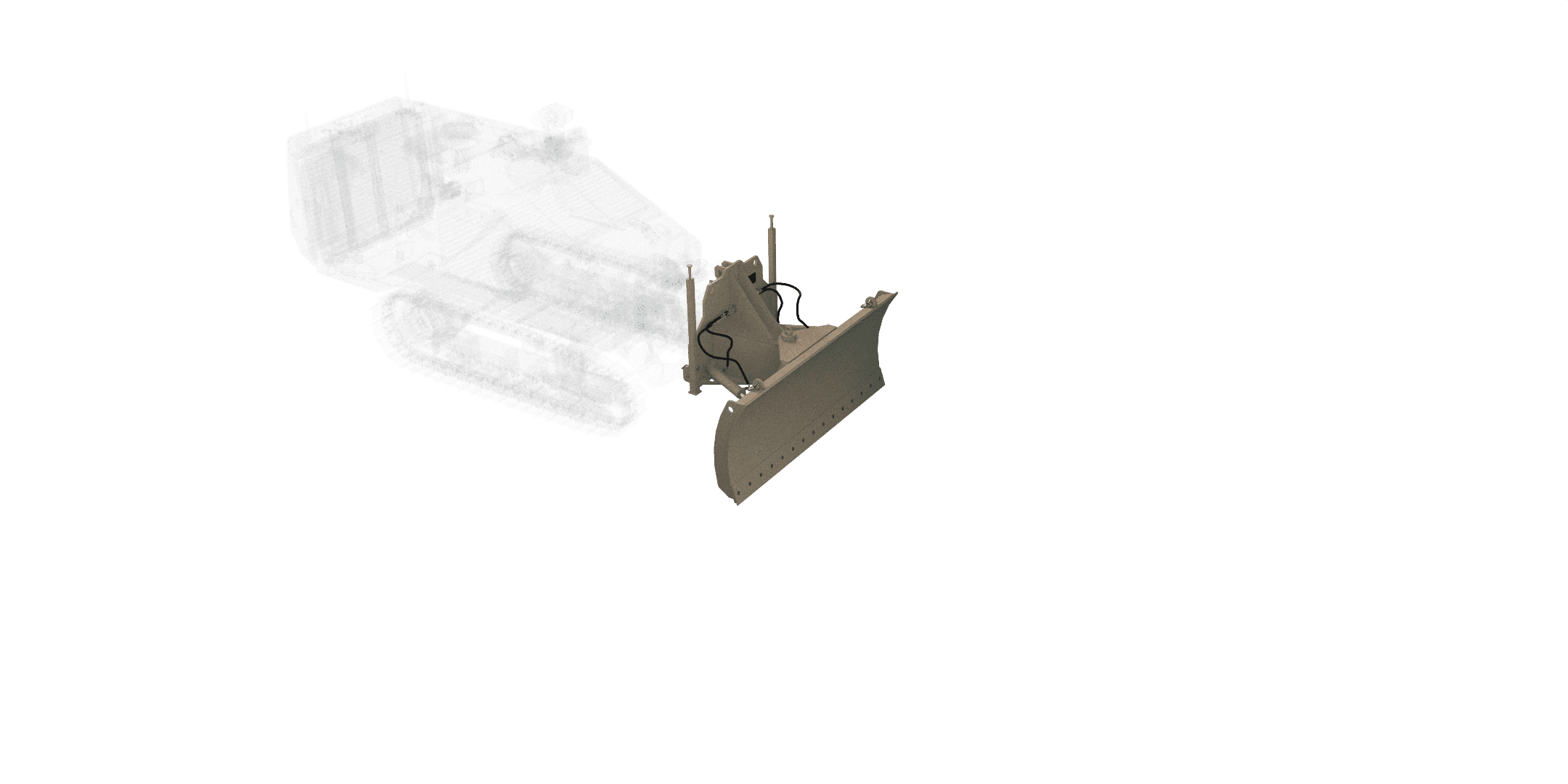
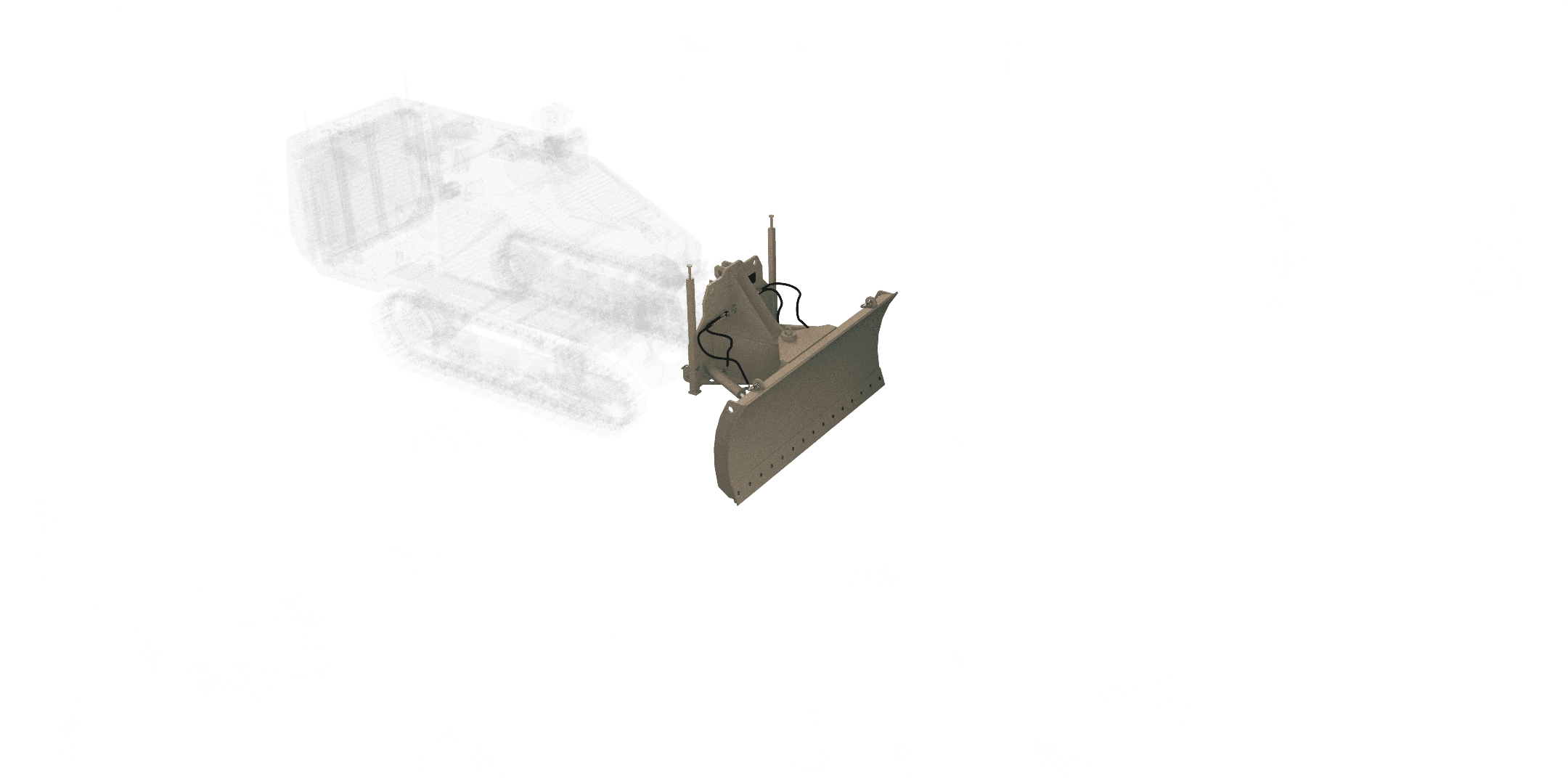
Dozer Blade (DB)
Mechanical attachment for obstacle removal, surface preparation and access restoration
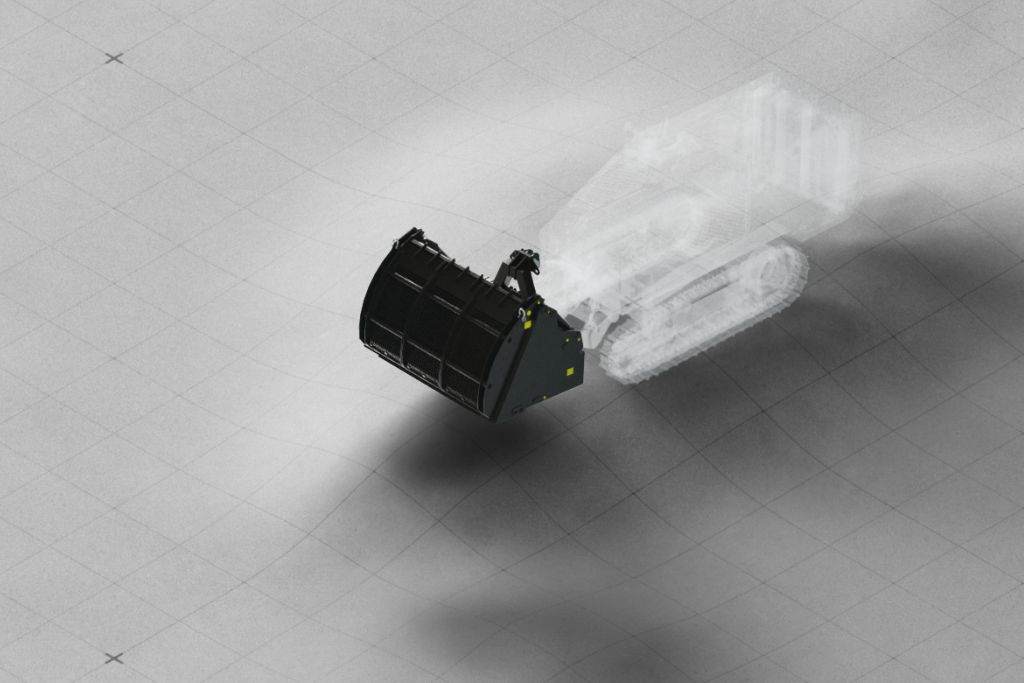
Solid steel construction with replaceable wear bar to support repeated use in abrasive conditions.
Controlled surface preparation and access restoration by pushing rollable obstacles, levelling loose soil and clearing debris.
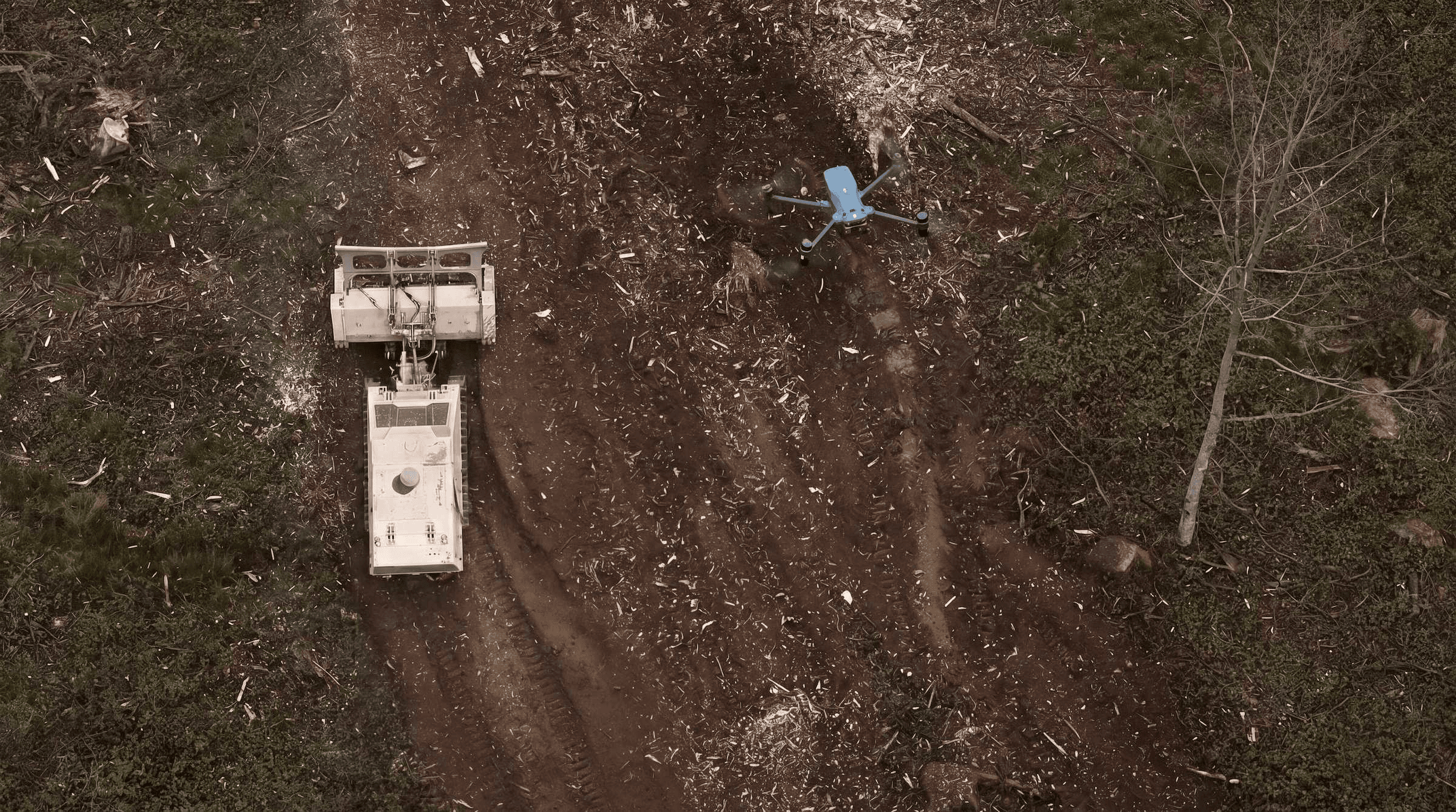
Designed for the mechanical removal of surface obstacles and light earthmoving tasks, the GCS Dozer Blade supports route preparation, site access and engineering activities in contaminated or post‑conflict environments. Mounted on unmanned GCS platforms and operated remotely, the dozer blade enables controlled pushing, levelling and clearing of loose material such as soil, gravel, rubble, snow and debris, while keeping operators at a safe distance.
The Dozer Blade is typically used to restore access routes, prepare ground for follow‑on clearance tasks and support engineering and recovery activities where manual access is limited or unsafe. It is intended for surface‑level work on loose or loosely bedded material and is not designed to replace a conventional bulldozer.
Designed for the mechanical removal of surface obstacles and light earthmoving tasks, the GCS Dozer Blade supports route preparation, site access and engineering activities in contaminated or post‑conflict environments. Mounted on unmanned GCS platforms and operated remotely, the dozer blade enables controlled pushing, levelling and clearing of loose material such as soil, gravel, rubble, snow and debris, while keeping operators at a safe distance.
The Dozer Blade is typically used to restore access routes, prepare ground for follow‑on clearance tasks and support engineering and recovery activities where manual access is limited or unsafe. It is intended for surface‑level work on loose or loosely bedded material and is not designed to replace a conventional bulldozer.
Designed for the mechanical removal of surface obstacles and light earthmoving tasks, the GCS Dozer Blade supports route preparation, site access and engineering activities in contaminated or post‑conflict environments. Mounted on unmanned GCS platforms and operated remotely, the dozer blade enables controlled pushing, levelling and clearing of loose material such as soil, gravel, rubble, snow and debris, while keeping operators at a safe distance.
The Dozer Blade is typically used to restore access routes, prepare ground for follow‑on clearance tasks and support engineering and recovery activities where manual access is limited or unsafe. It is intended for surface‑level work on loose or loosely bedded material and is not designed to replace a conventional bulldozer.
Designed for the mechanical removal of surface obstacles and light earthmoving tasks, the GCS Dozer Blade supports route preparation, site access and engineering activities in contaminated or post‑conflict environments. Mounted on unmanned GCS platforms and operated remotely, the dozer blade enables controlled pushing, levelling and clearing of loose material such as soil, gravel, rubble, snow and debris, while keeping operators at a safe distance.
The Dozer Blade is typically used to restore access routes, prepare ground for follow‑on clearance tasks and support engineering and recovery activities where manual access is limited or unsafe. It is intended for surface‑level work on loose or loosely bedded material and is not designed to replace a conventional bulldozer.
Explore our range of products
The Dozer Blade comes in two variants, matched to the size, power and operational role of their host platforms.
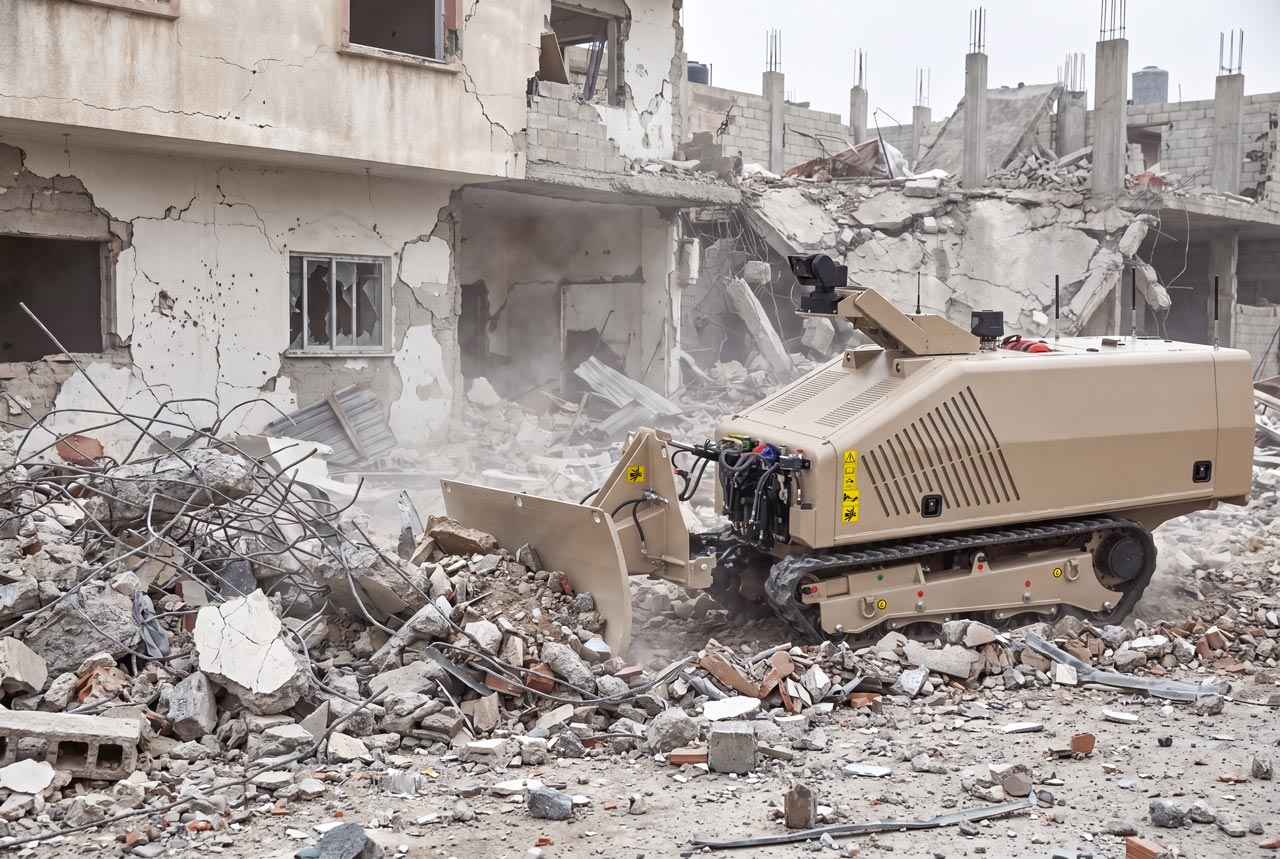
DB‑100
The DB‑100 is a compact dozer blade designed for integration with the GCS‑100 platform. It supports light earthmoving, obstacle removal and ground levelling tasks where low system weight, high manoeuvrability and access to confined or sensitive terrain are required.
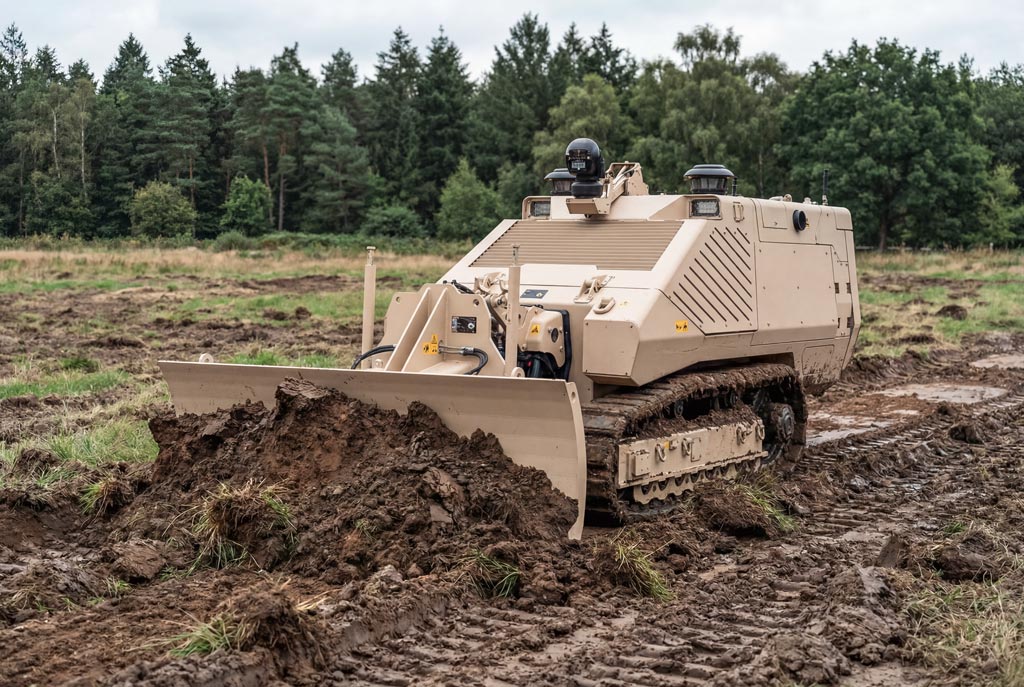
DB‑200
The DB‑200 is a heavy‑duty dozer blade for the GCS‑200 platform. It is designed for more demanding pushing and levelling tasks, including route and airfield preparation, debris clearance and engineering support in environments where higher mass, width and robustness are required.
Built for operational deployment
01
Controlled obstacle removal & surface preparation
Designed for pushing rollable obstacles, levelling loose soil and clearing debris to restore access and prepare ground for follow‑on operations.
02
Robust welded construction with replaceable wear components
Solid steel construction with replaceable wear bar supports repeated use in abrasive conditions while reducing lifecycle maintenance effort.
03
Adjustable blade angle
Hydraulically slewed blade enables angled pushing and controlled material displacement to either side, supporting route preparation and surface shaping.
04
Remote‑controlled operation
Fully integrated into the GCS unmanned platform architecture, allowing operation from a safe stand‑off distance in hazardous environments.
05
Platform‑matched interfaces
Three‑point hitch mounting and hydraulic quick couplings enable secure integration and efficient attachment to GCS‑100 or GCS‑200 platforms.
Built for operational deployment
01
Controlled obstacle removal & surface preparation
Designed for pushing rollable obstacles, levelling loose soil and clearing debris to restore access and prepare ground for follow‑on operations.
02
Robust welded construction with replaceable wear components
Solid steel construction with replaceable wear bar supports repeated use in abrasive conditions while reducing lifecycle maintenance effort.
03
Adjustable blade angle
Hydraulically slewed blade enables angled pushing and controlled material displacement to either side, supporting route preparation and surface shaping.
04
Remote‑controlled operation
Fully integrated into the GCS unmanned platform architecture, allowing operation from a safe stand‑off distance in hazardous environments.
05
Platform‑matched interfaces
Three‑point hitch mounting and hydraulic quick couplings enable secure integration and efficient attachment to GCS‑100 or GCS‑200 platforms.
Built for operational deployment
01
Controlled obstacle removal & surface preparation
Designed for pushing rollable obstacles, levelling loose soil and clearing debris to restore access and prepare ground for follow‑on operations.
02
Robust welded construction with replaceable wear components
Solid steel construction with replaceable wear bar supports repeated use in abrasive conditions while reducing lifecycle maintenance effort.
03
Adjustable blade angle
Hydraulically slewed blade enables angled pushing and controlled material displacement to either side, supporting route preparation and surface shaping.
04
Remote‑controlled operation
Fully integrated into the GCS unmanned platform architecture, allowing operation from a safe stand‑off distance in hazardous environments.
05
Platform‑matched interfaces
Three‑point hitch mounting and hydraulic quick couplings enable secure integration and efficient attachment to GCS‑100 or GCS‑200 platforms.
Built for operational deployment
01
Controlled obstacle removal & surface preparation
Designed for pushing rollable obstacles, levelling loose soil and clearing debris to restore access and prepare ground for follow‑on operations.
02
Robust welded construction with replaceable wear components
Solid steel construction with replaceable wear bar supports repeated use in abrasive conditions while reducing lifecycle maintenance effort.
03
Adjustable blade angle
Hydraulically slewed blade enables angled pushing and controlled material displacement to either side, supporting route preparation and surface shaping.
04
Remote‑controlled operation
Fully integrated into the GCS unmanned platform architecture, allowing operation from a safe stand‑off distance in hazardous environments.
05
Platform‑matched interfaces
Three‑point hitch mounting and hydraulic quick couplings enable secure integration and efficient attachment to GCS‑100 or GCS‑200 platforms.
Operational specifications
DB‑100
1,265 mm
working width
Up to
1,700 kg
pushed weight
±18°
slewing angle
640 mm
blade height
Three‑point hitch interface
for GCS‑100
Remote‑controlled
operation via GCS-100 platform integration
DB‑200
2,200 mm
working width
Up to
8,000 kg
pushed weight
±15°
slewing angle
900 mm
blade height
Three‑point hitch interface
for GCS‑200
Remote‑controlled
operation via GCS-200 platforms integration
Capabilities this platform supports
Capabilities this platform supports
Capabilities this platform supports
Capabilities this platform supports

Route Clearance
Restoring controlled movement along critical routes affected by explosive threats
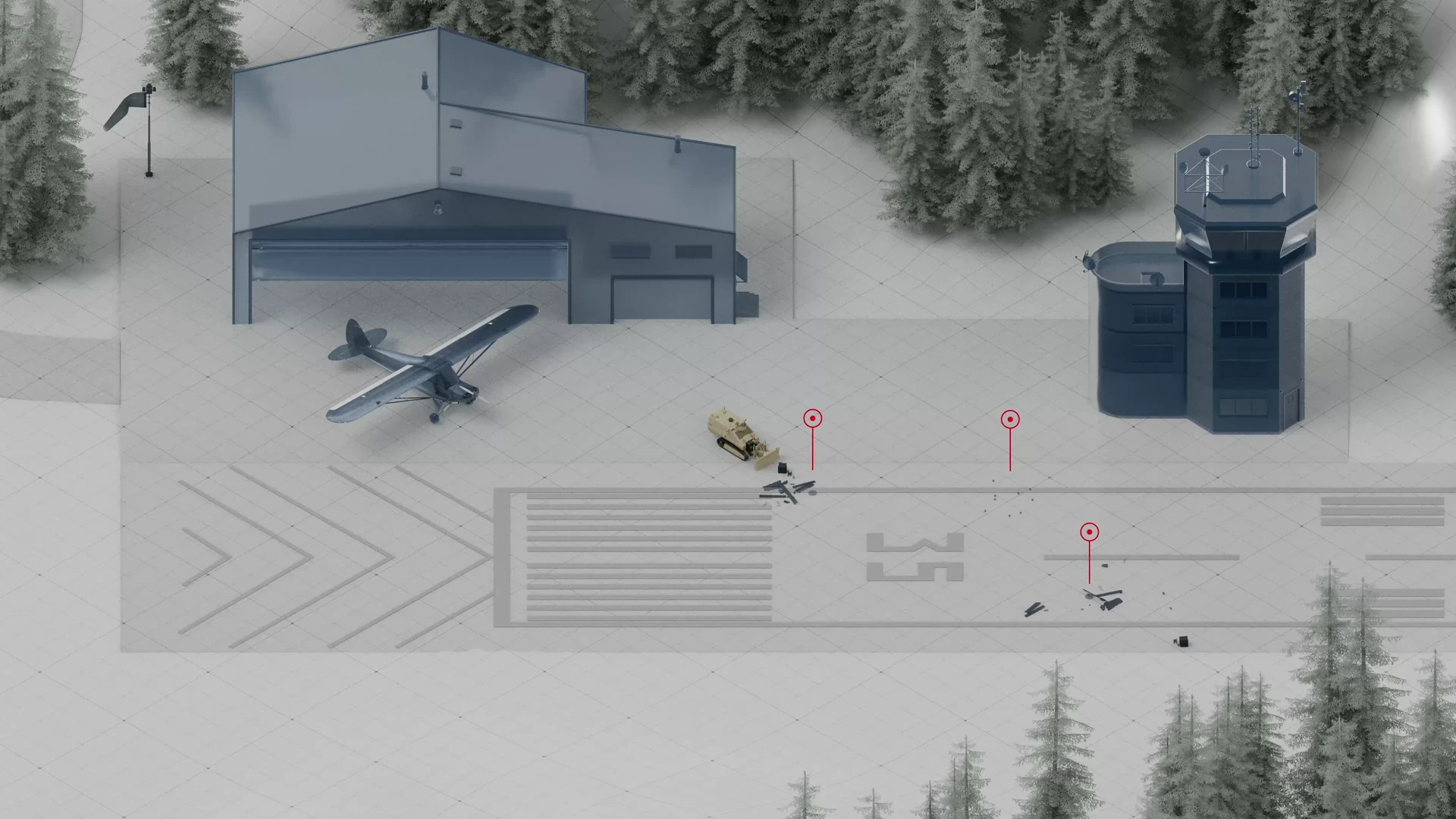
Runway/Airfield Clearance
Restoring controlled aviation access and operational continuity in EO-contaminated airfield environments
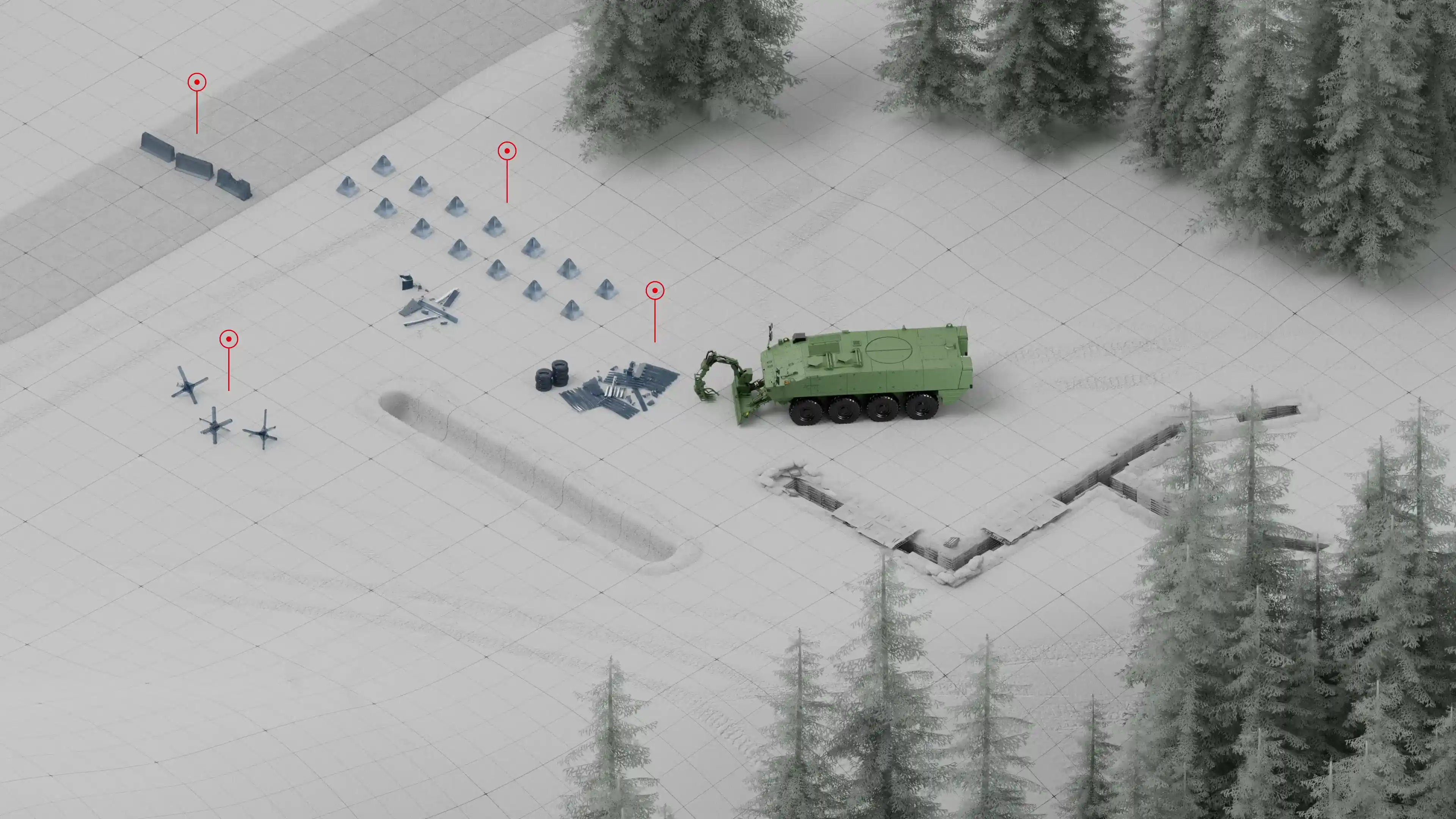
Combat Engineering
Shaping battlefield environments to support mobility, protection and control in high-threat environments
Route Clearance
Restoring controlled movement along critical routes affected by explosive threats
Runway/Airfield Clearance
Restoring controlled aviation access and operational continuity in EO-contaminated airfield environments
Combat Engineering
Shaping battlefield environments to support mobility, protection and control in high-threat environments
Route Clearance
Restoring controlled movement along critical routes affected by explosive threats
Runway/Airfield Clearance
Restoring controlled aviation access and operational continuity in EO-contaminated airfield environments
Combat Engineering
Shaping battlefield environments to support mobility, protection and control in high-threat environments
Route Clearance
Restoring controlled movement along critical routes affected by explosive threats
Runway/Airfield Clearance
Restoring controlled aviation access and operational continuity in EO-contaminated airfield environments
Combat Engineering
Shaping battlefield environments to support mobility, protection and control in high-threat environments
Related mission package components
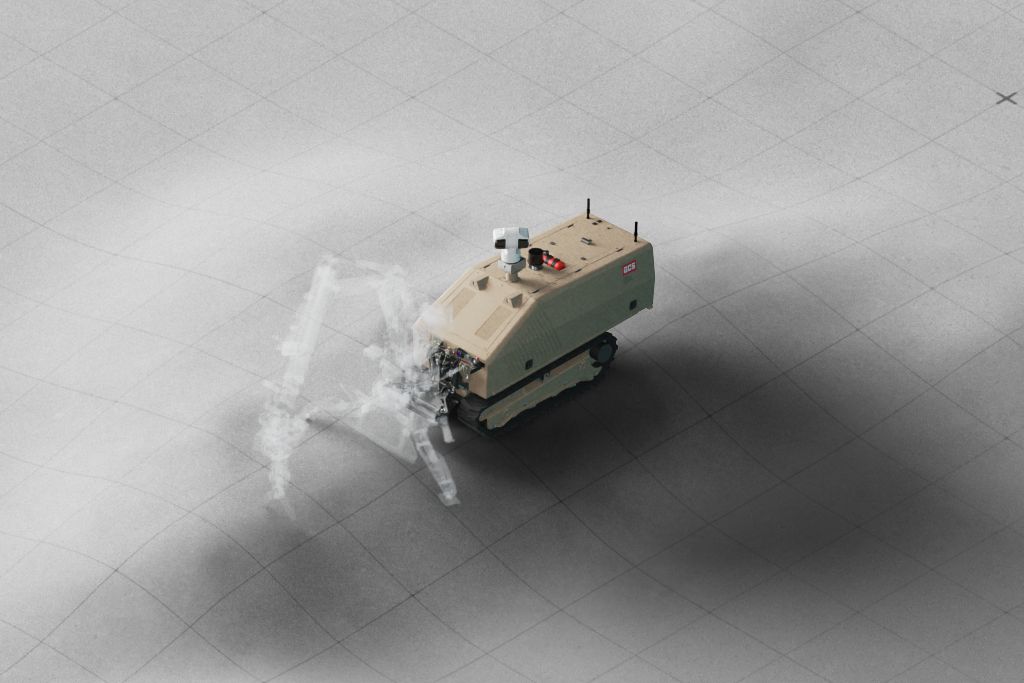
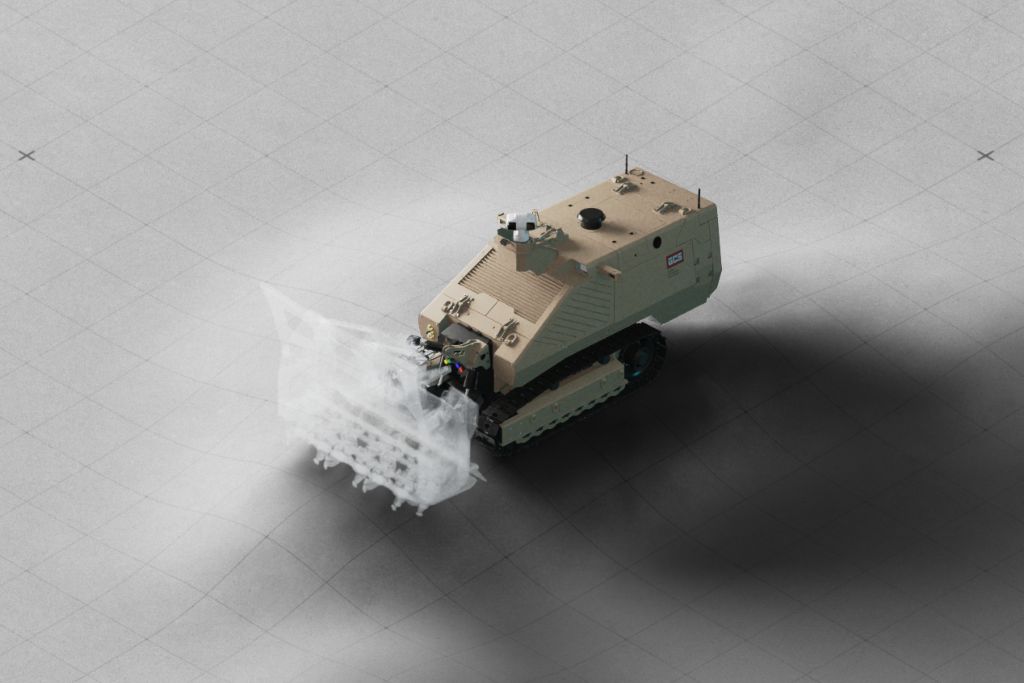
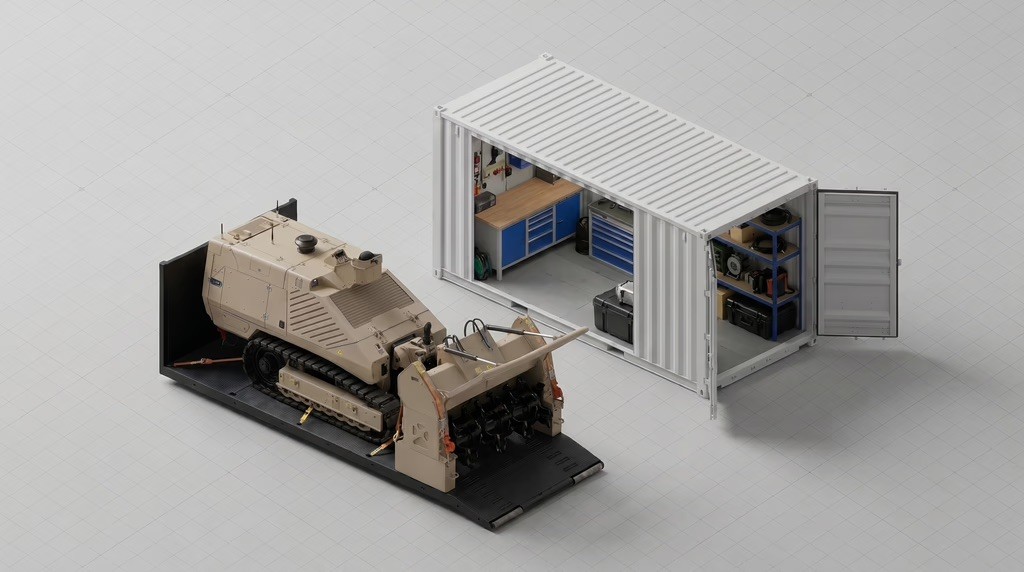
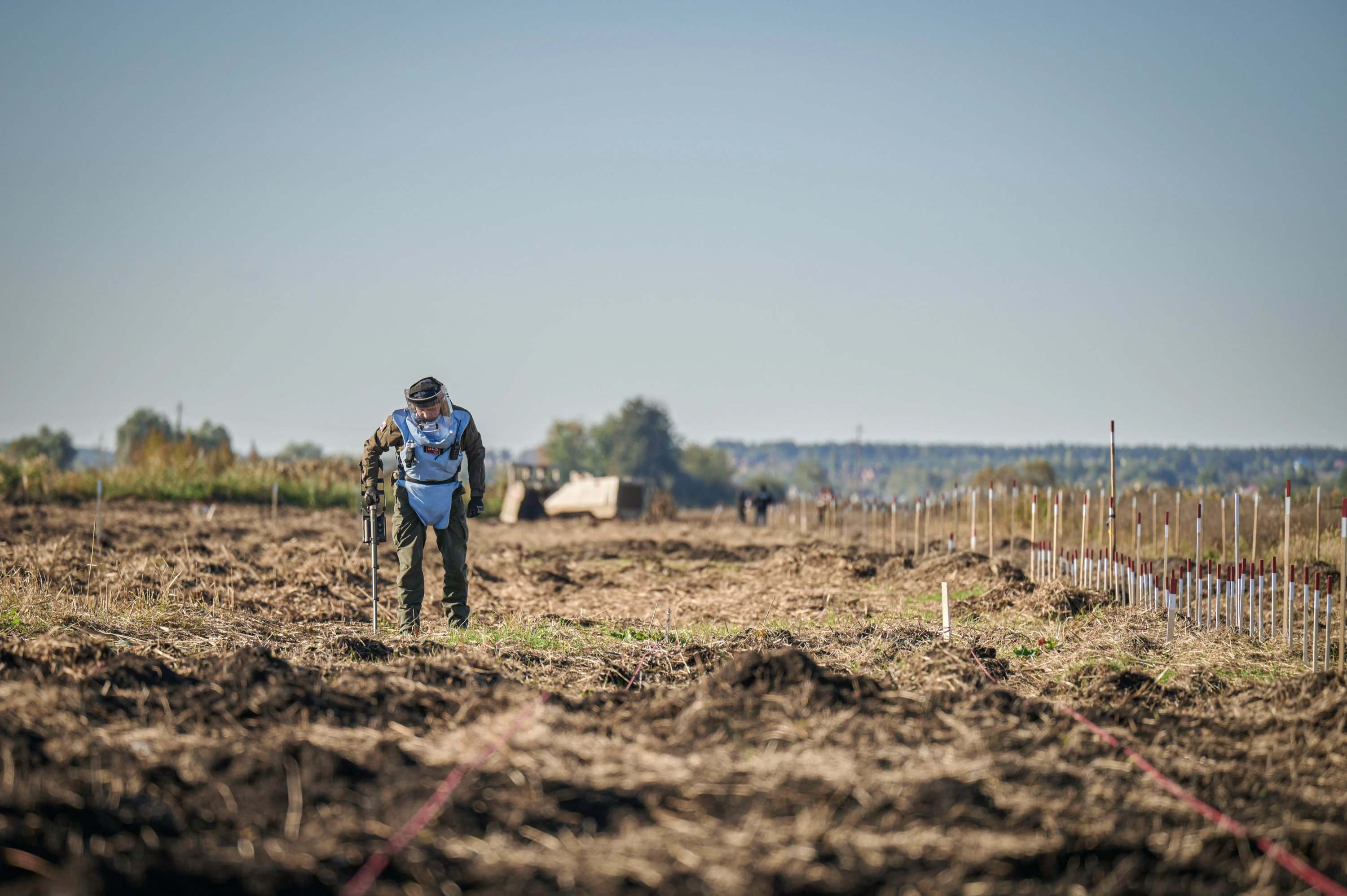
The Dozer Blade is part of GCS’ integrated solution ecosystem, combining platforms, attachments, training, service and operational support to enable safe and effective field use.
Unmanned Platforms
Operational Support

Related mission package components
The Dozer Blade is part of GCS’ integrated solution ecosystem, combining platforms, attachments, training, service and operational support to enable safe and effective field use.
Unmanned Platforms
Operational Support
Related mission package components
The Dozer Blade is part of GCS’ integrated solution ecosystem, combining platforms, attachments, training, service and operational support to enable safe and effective field use.
Unmanned Platforms
Operational Support
Related mission package components
The Dozer Blade is part of GCS’ integrated solution ecosystem, combining platforms, attachments, training, service and operational support to enable safe and effective field use.
Unmanned Platforms
Operational Support
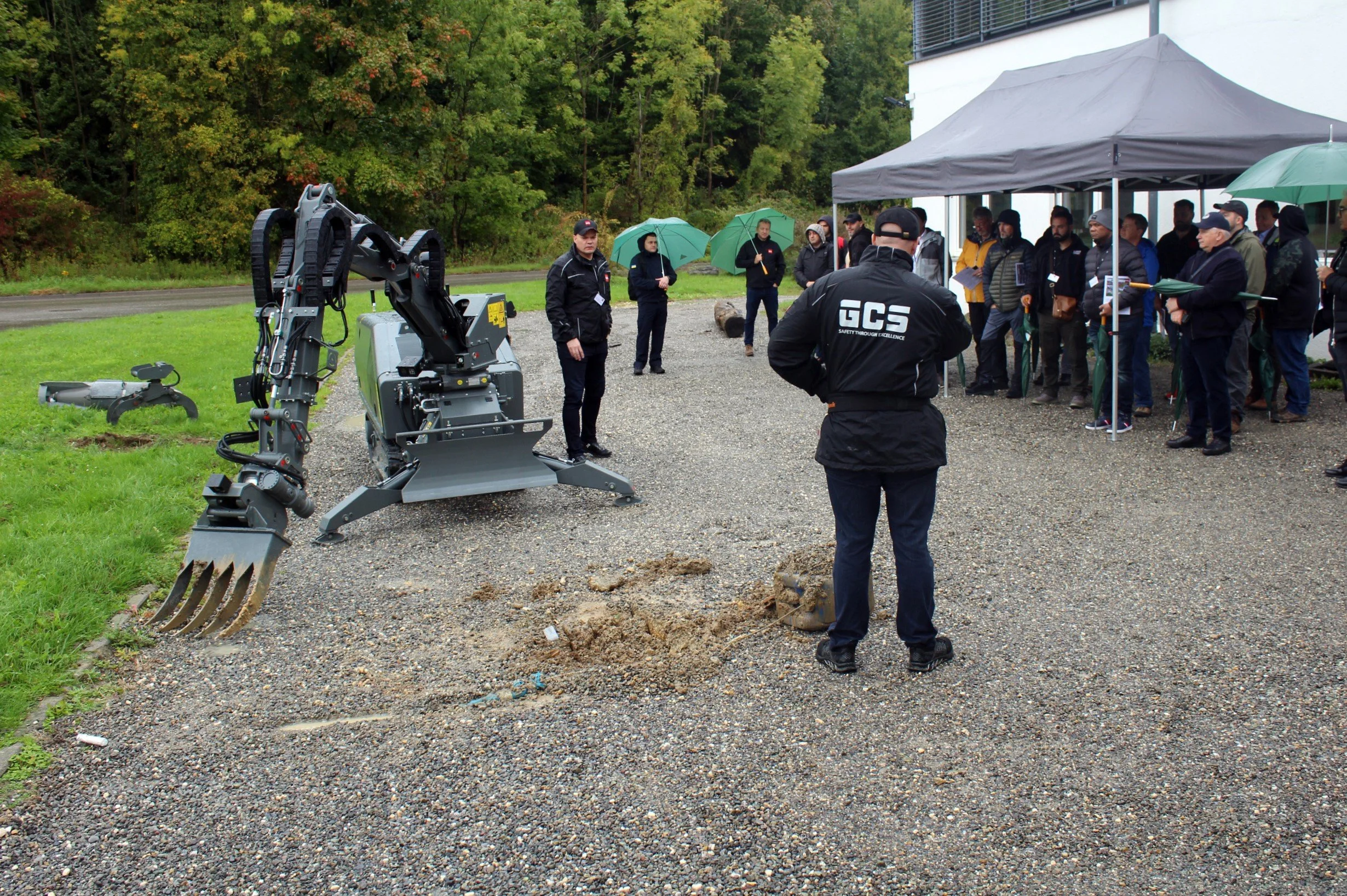
Operational experience from the field, across contexts and missions.
Operational experience from the field, across contexts and missions.
Operational experience from the field, across contexts and missions.
Operational experience from the field, across contexts and missions.
For similar operational needs
For similar operational needs
For similar operational needs
For similar operational needs
Configure the right system for your task
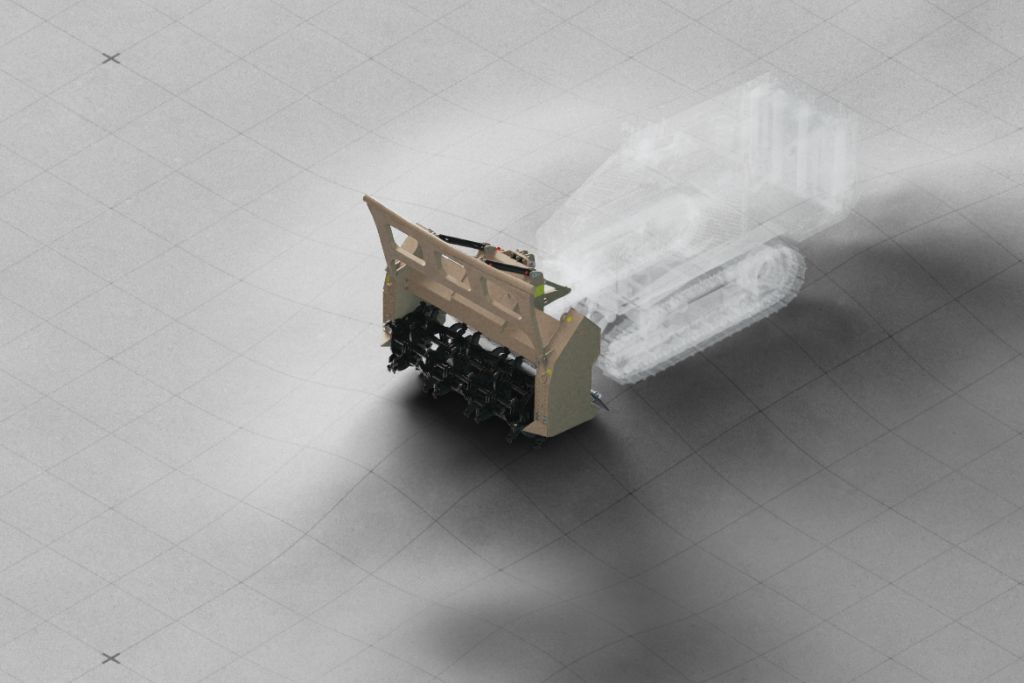
GCS helps define the right platform, attachments, sensors and support package based on threat type, terrain and mission requirements.
Configure the right system for your task
GCS helps define the right platform, attachments, sensors and support package based on threat type, terrain and mission requirements.
Configure the right system for your task
GCS helps define the right platform, attachments, sensors and support package based on threat type, terrain and mission requirements.
Configure the right system for your task
GCS helps define the right platform, attachments, sensors and support package based on threat type, terrain and mission requirements.
Dozer Blade (DB)
Dozer Blade (DB)
Dozer Blade (DB)
Dozer Blade (DB)
Mechanical attachment for obstacle removal, surface preparation and access restoration