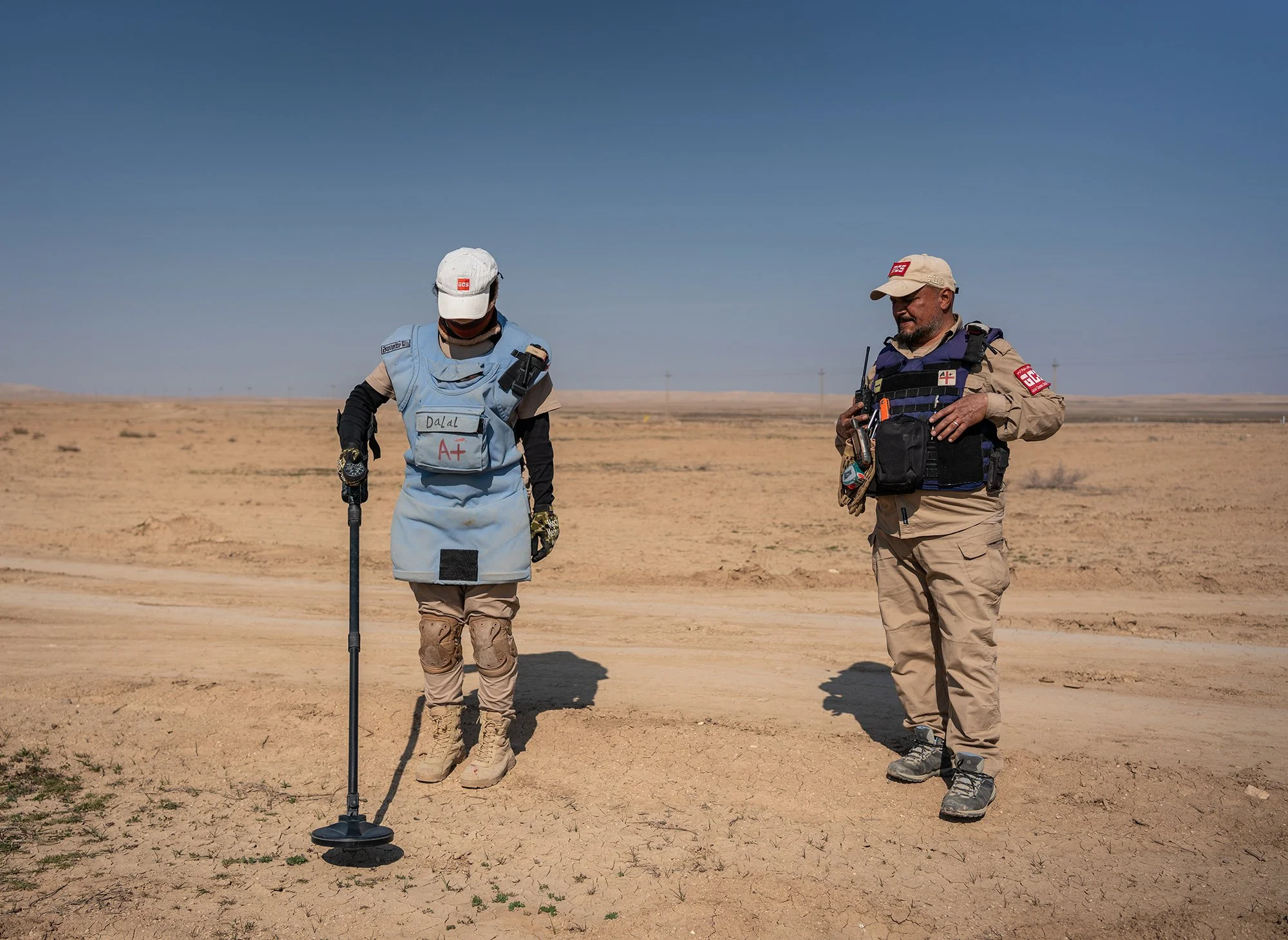
Large parts of Syria remain affected by landmines, improvised explosive devices and explosive remnants of war following more than a decade of armed conflict. Contamination is widespread, diverse in nature and often poorly documented, reflecting prolonged fighting, the use of improvised devices, air‑delivered munitions and repeated front‑line shifts since 2011. This legacy contamination continues to restrict safe movement, delay infrastructure rehabilitation and expose civilians, returnees and workers to ongoing risk.
GCS supports humanitarian mine action in Syria by contributing technical expertise, operational capacity and systems support aligned with UNMAS‑coordinated priorities, enabling safe access to land and critical infrastructure while supporting the gradual development of national mine action standards and processes.
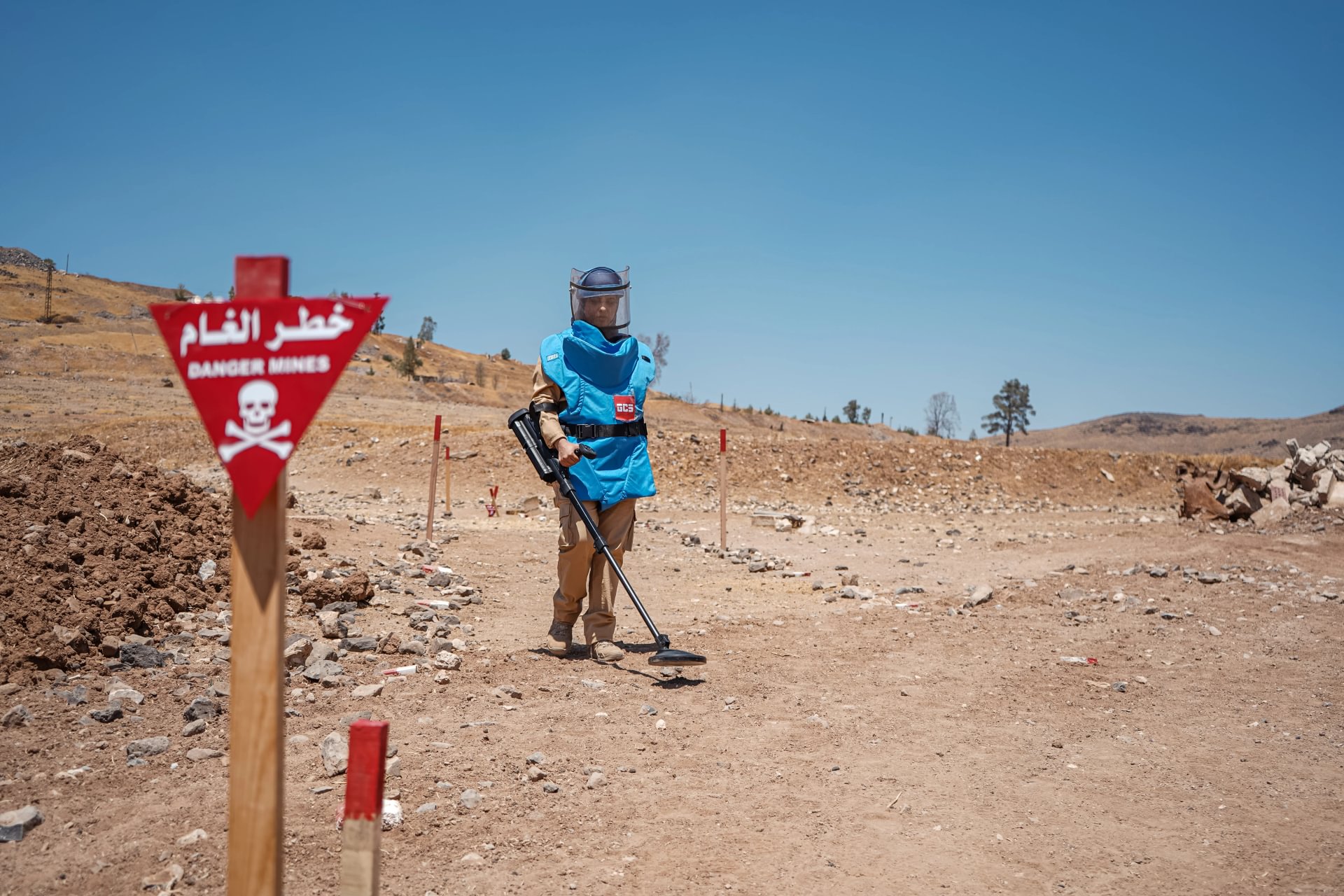


GCS has an active presence in Syria through a formally registered branch and UNMAS accreditation, enabling participation in UN‑mandated mine action activities including survey, clearance, EOD and risk education.
Engagement in Syria focuses on supporting humanitarian objectives rather than acting as a stand‑alone commercial operator. GCS works within UN tasking frameworks, providing technical and operational inputs that support survey, land release and clearance activities, as well as Explosive Ordnance Risk Education and Provincial Explosive Awareness and Reporting (PEAR) training where required.
In addition to field operations, GCS contributes specialist input to technical coordination processes related to survey, clearance methodology, land release criteria and quality management, supporting the development of nationally appropriate mine action standards. Another core element of GCS’ engagement in Syria is supporting sustainable mine action capacity through training, mentoring and technical advisory input.

Local coordinated humanitarian mine action
Mine action in Syria is mandated and coordinated by the national authorities; the UN and Partners provide further support in the framework of Protection, Recovery and Development. Activities are task‑based and subject to accreditation, quality assurance and reporting requirements. GCS operates strictly within this framework, ensuring that survey, clearance and EOD activities are authorised, monitored and documented in accordance with approved procedures.
Survey‑led land release
Given the scale and complexity of contamination, land release in Syria relies heavily on structured non‑intrusive and intrusive survey. GCS supports survey‑led decision‑making by applying evidence‑based methodologies that distinguish between suspected, confirmed, reduced and cancelled hazardous areas, contributing to efficient prioritisation and controlled release of land.
Clearance and EOD support
Clearance activities in Syria typically address a mixed threat profile, including ERW, IEDs and legacy mine contamination. GCS supports clearance and EOD operations through technical supervision, specialist operators, and the integration of mechanical assets where appropriate to terrain and task requirements. Operations are adapted to damaged infrastructure, urban rubble environments and proximity to civilian populations.
Risk education and community engagement
Risk education remains a critical component of mine action in Syria, particularly in areas experiencing return of displaced populations. GCS delivers EORE and PEAR‑based training to support safe behaviour, reporting and coordination with clearance actors, aligned with UNMAS‑approved curricula and national coordination mechanisms.
GCS maintains a registered branch presence in Syria, enabling sustained engagement with UN‑coordinated mine action activities and technical processes. Operations and support activities are conducted in accordance with national approvals and UNMAS accreditation requirements.
Syria
Regional Office
Global Clearance Solutions AG
Damascus, Arab Syrian Republic