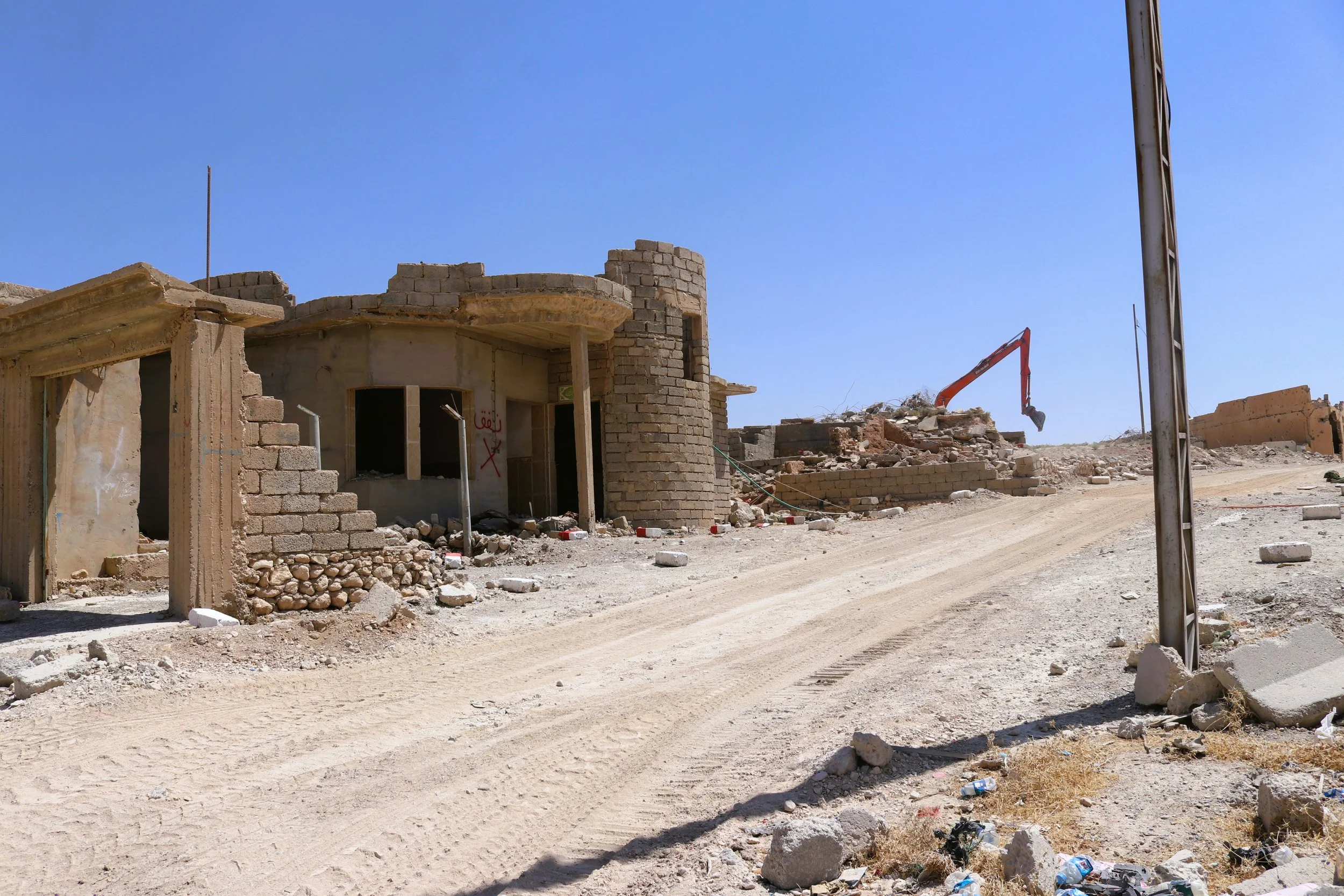
Iraq remains one of the most extensively contaminated countries worldwide after decades of conflict. The 2014–2017 occupation by the Islamic State of Iraq and the Levant (ISIL) left behind explosive contamination on an unprecedented scale, dominated by improvised explosive devices, unexploded ordnance and IED infrastructure. Large areas of residential, agricultural and public land remain unsafe, delaying stabilisation and preventing the return of internally displaced populations.
GCS has supported humanitarian mine action and stabilisation efforts in Iraq through accredited high‑risk clearance operations, technical expertise and sustained in‑country support, enabling safer access to land, infrastructure and essential services.
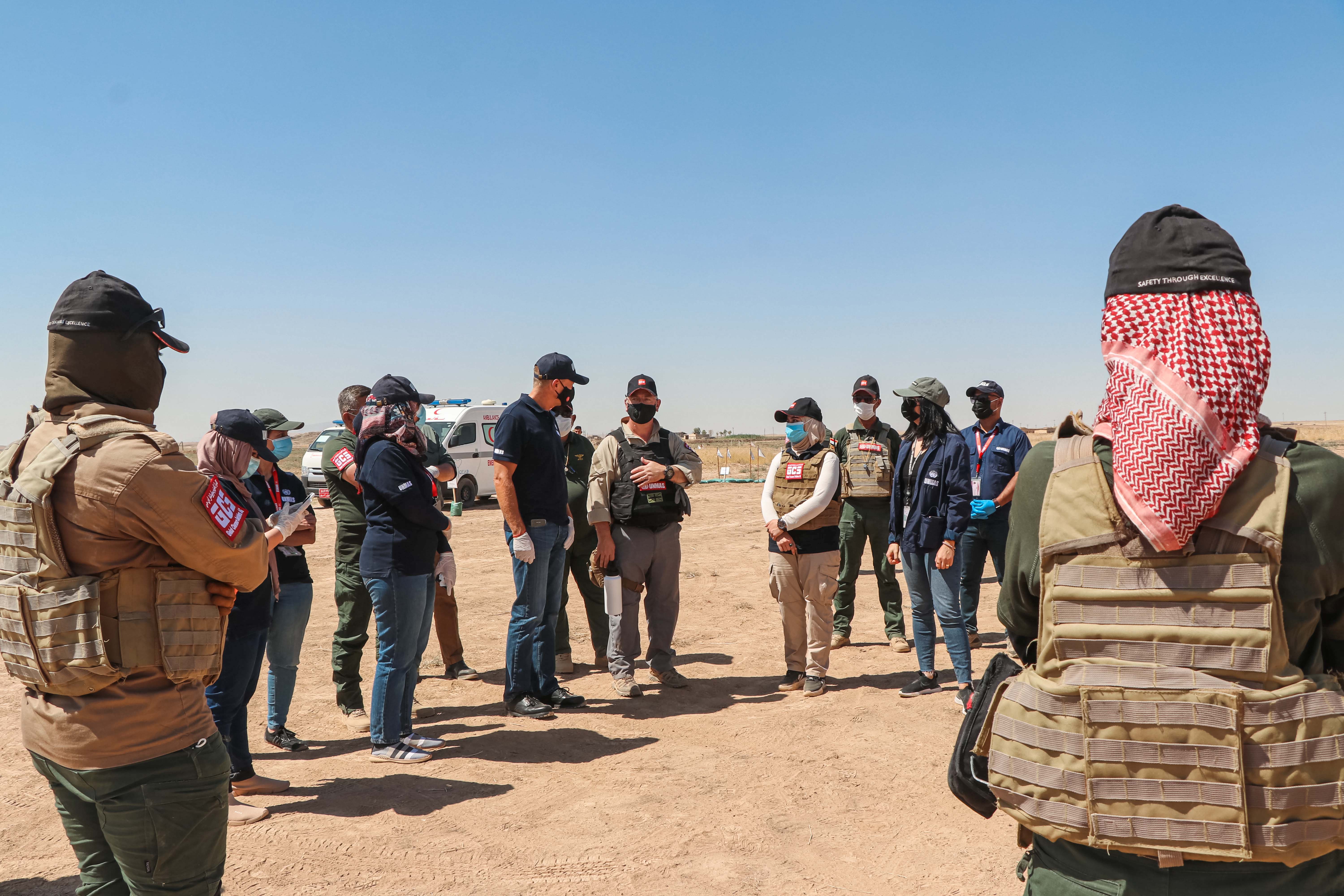
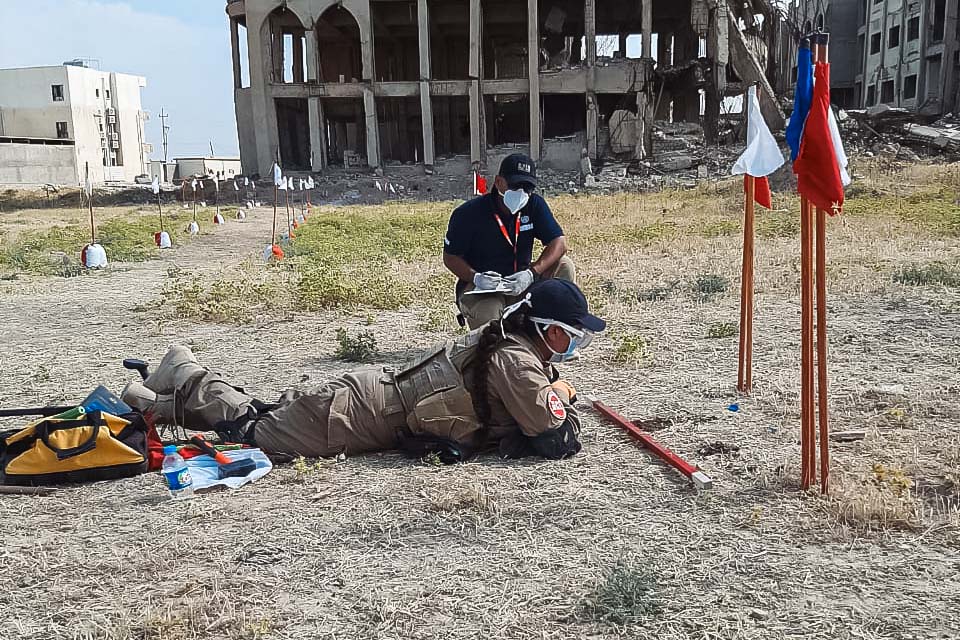
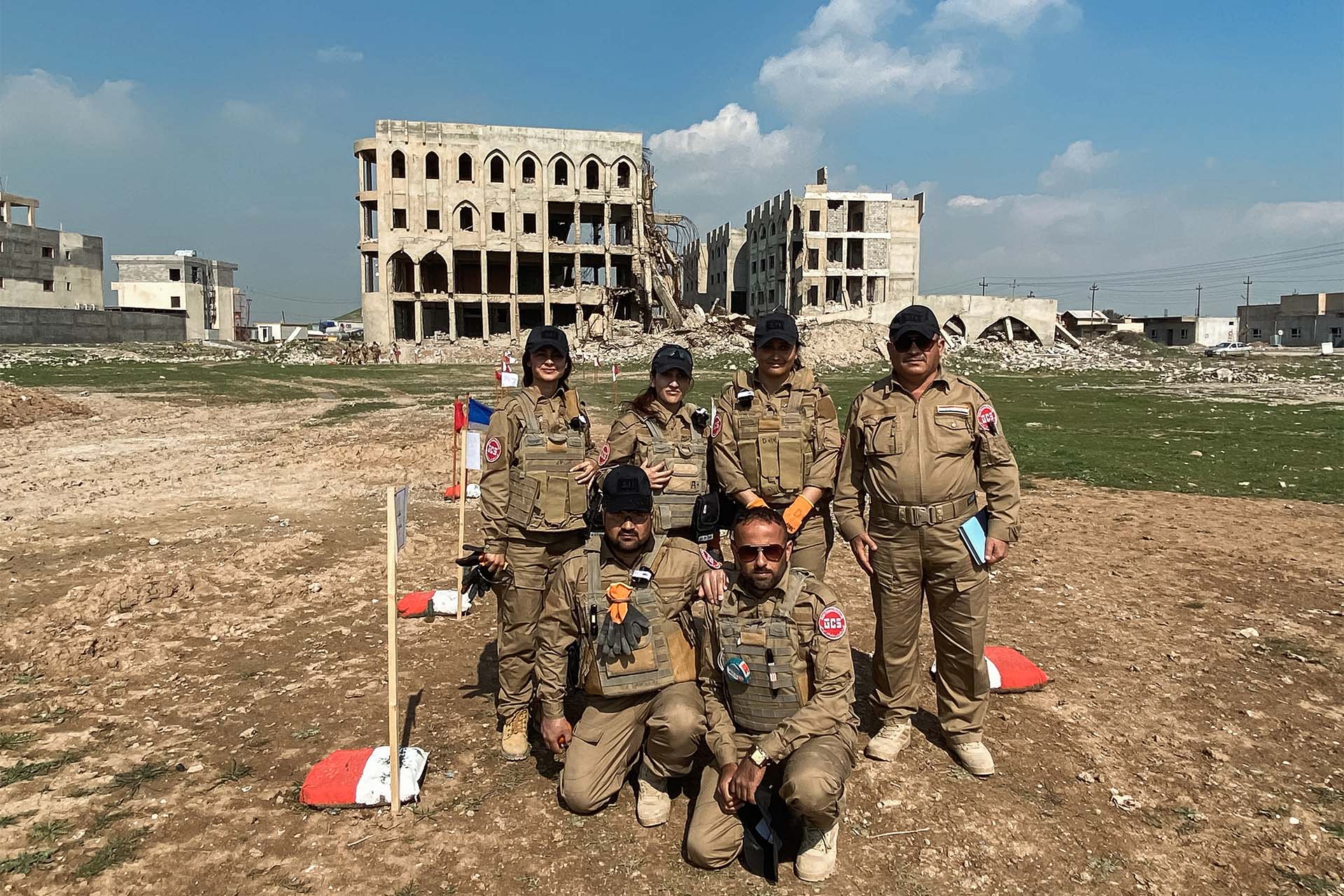
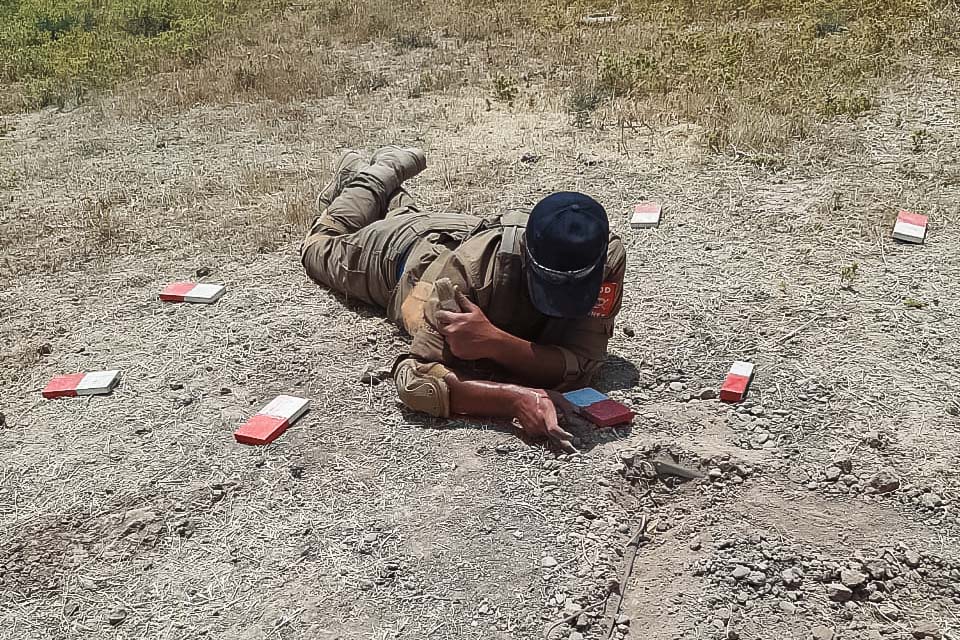
GCS has maintained a permanent presence in Iraq since 2018, with a dedicated in‑country office supporting operational delivery and coordination. The company received accreditation from the Iraqi Directorate of Mine Action in 2019 and has since supported UN‑mandated clearance activities in highly contaminated regions.
Engagements focus on complex post‑conflict environments where full‑spectrum IED threats, unexploded ordnance and explosive hazards are present across public and private infrastructure.
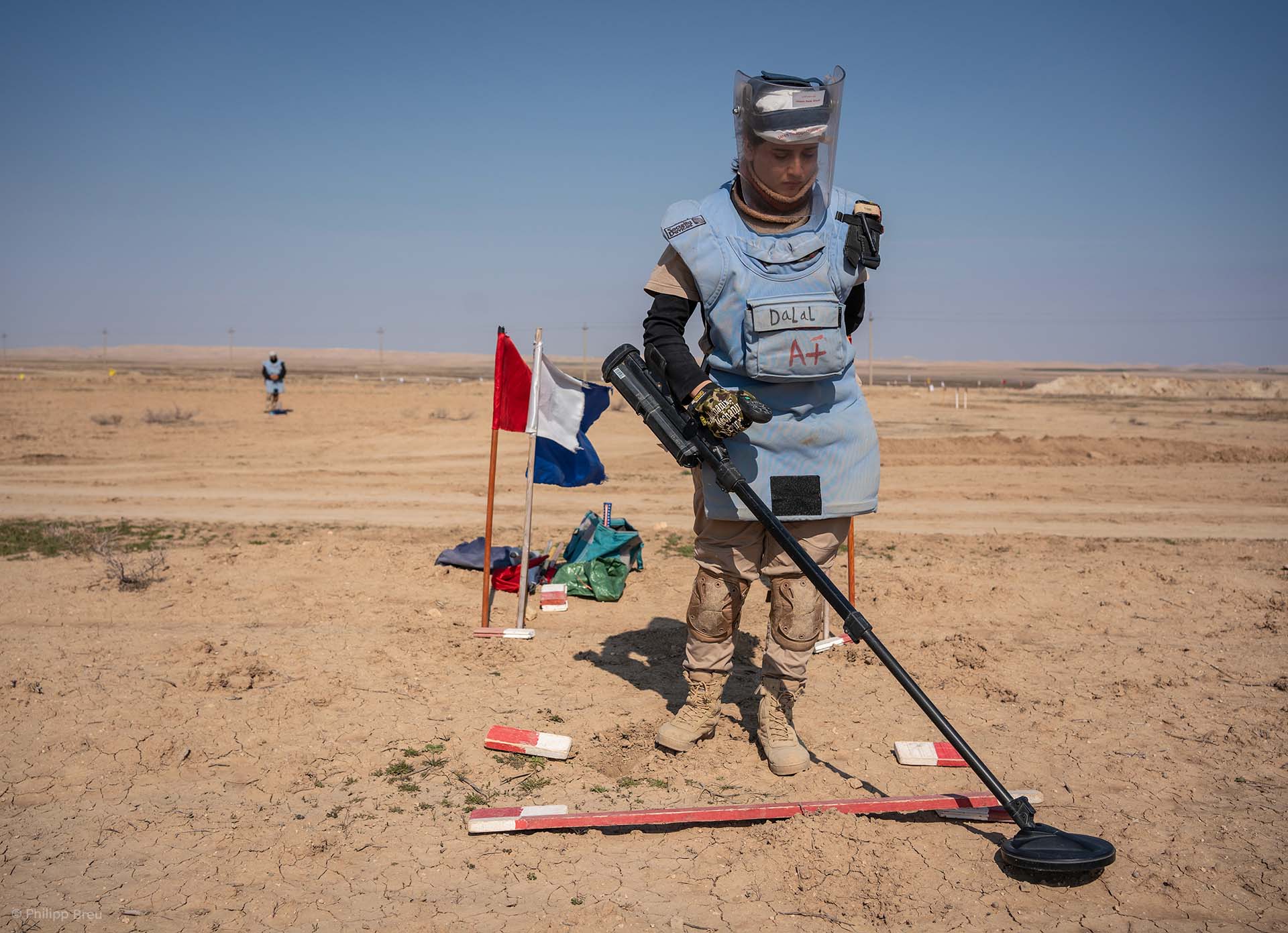
UN‑mandated high‑risk clearance and urban clearance operations
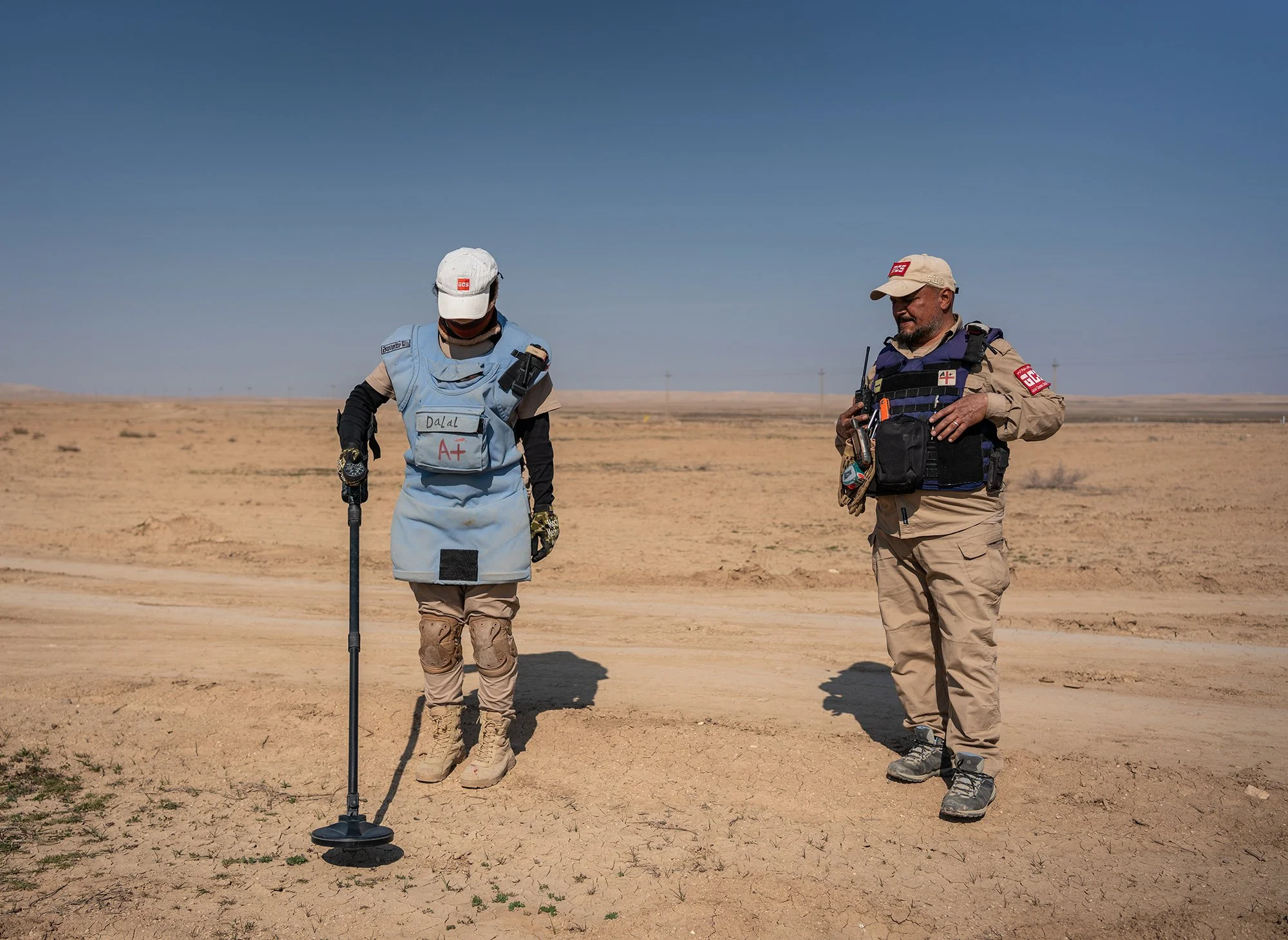
International organisations operating in Iraq face extreme explosive‑threat conditions, particularly in areas affected by systematic IED emplacement during the 2014–2017 conflict. Under contracts awarded by UNOPS on behalf of the United Nations Mine Action Service (UNMAS), GCS supports humanitarian and stabilisation programmes through the delivery of high‑risk IED search and clearance operations.
GCS acts as an implementing clearance partner within UN‑coordinated mine action frameworks, conducting systematic search, identification, neutralisation and removal of explosive hazards, operating in dense urban and peri‑urban environments under humanitarian mine action frameworks.
Support to stabilisation and safe return
Explosive contamination continues to block access to residential neighbourhoods and essential infrastructure, leaving many areas uninhabitable. GCS operations directly support stabilisation objectives by enabling safe access for reconstruction activities and facilitating conditions for the voluntary return of displaced populations.
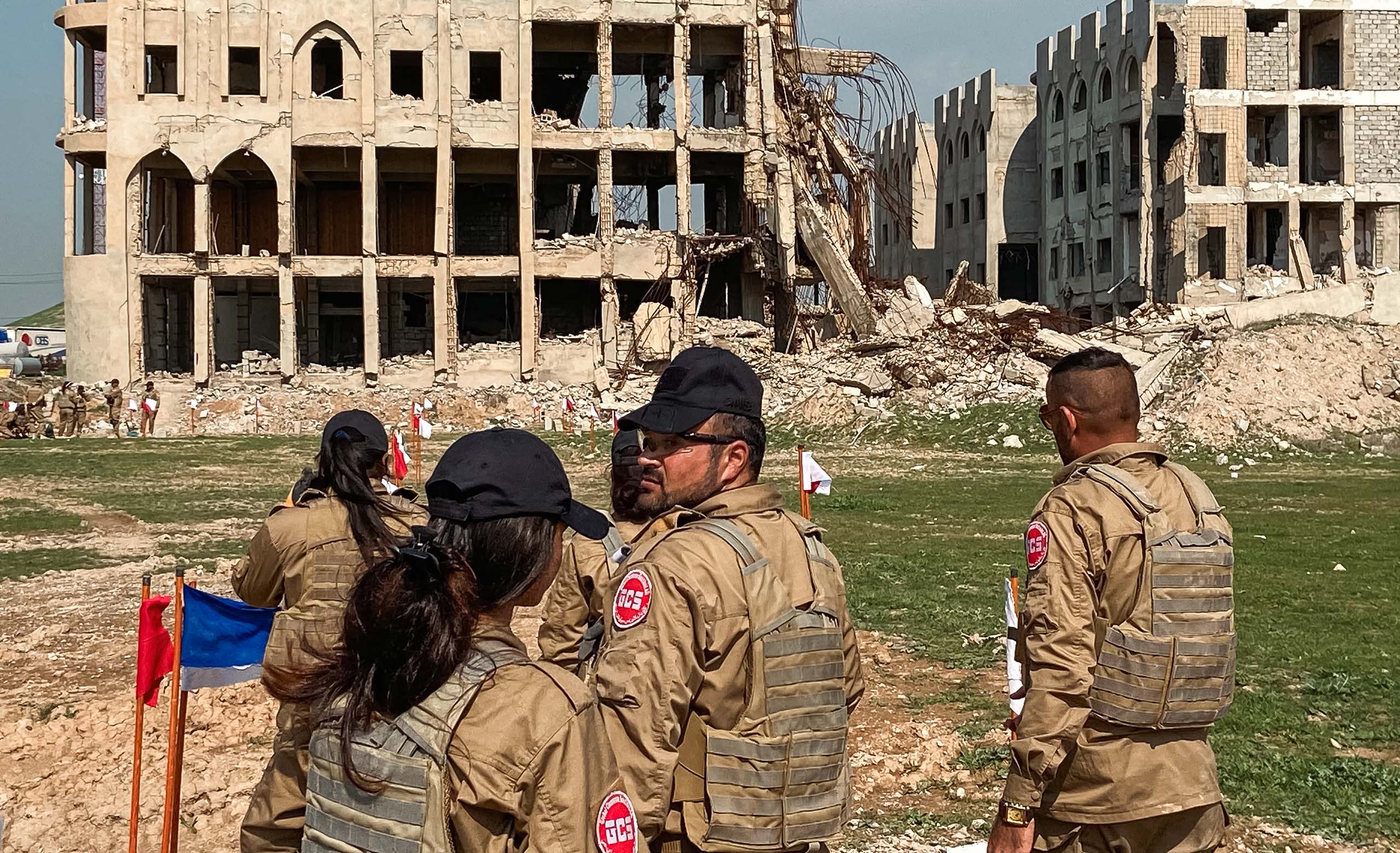
In locations such as Tal Afar and other conflict‑affected urban environments, GCS operations have focused on houses, schools, hospitals, roads and adjacent agricultural land, where explosive contamination prevents reconstruction and service restoration. Clearance approaches are adapted to dense rubble, damaged structures and mixed contamination, supporting progressive land release.
Risk education and community engagement
As part of UNMAS‑supported programmes, GCS contributes to Explosive Ordnance Risk Education activities targeting communities returning to, or living near, contaminated areas, helping to reduce civilian risk during early recovery phases. Risk education is delivered in parallel with clearance tasks to reduce civilian exposure during early recovery phases and to support safe community behaviour in contaminated environments.
Local capacity building and national workforce development
A core element of GCS’ engagement in Iraq is the development of sustainable national clearance capacity. While high‑risk clearance operations have traditionally relied on international expertise, GCS has implemented a model focused on transitioning operational responsibility to national teams.
International specialists provide mentoring, technical guidance and oversight while national personnel manage day‑to‑day operations and progressively assume supervisory and leadership roles. This approach supports the creation of a self‑sustaining, nationally led clearance capability aligned with Iraq’s long‑term stabilisation and recovery goals.
Gender inclusion in mine action operations
GCS integrates gender equality considerations into recruitment, training and operational planning in Iraq. The project actively supports the participation of women in operational and support roles, including search teams, risk education and project management functions. Particular emphasis is placed on recruiting and training young women and men, addressing both inclusion and youth unemployment challenges in affected regions.
Permanent in‑country presence with a dedicated GCS office in Baghdad, supporting UN‑mandated and project‑based clearance operations.
Iraq
Regional Office
Global Clearance Solutions AG
Al Mansour district, locality 609, St 8, house 9
Baghdad, Iraq