Chad remains affected by landmines, anti‑vehicle mines and other explosive remnants of war following successive conflicts from the 1960s through the 1980s. Explosive contamination continues to restrict safe access to housing, roads, water points and grazing land, particularly in remote desert regions such as Borkou and Ennedi. It is estimated that around 300,000 people live under the threat of mines and ERW, limiting livelihoods and hindering regional development.
GCS supports humanitarian mine action in Chad by enabling safer and more efficient clearance operations in harsh, infrastructure‑constrained environments through mechanical systems, training and sustained technical field support.
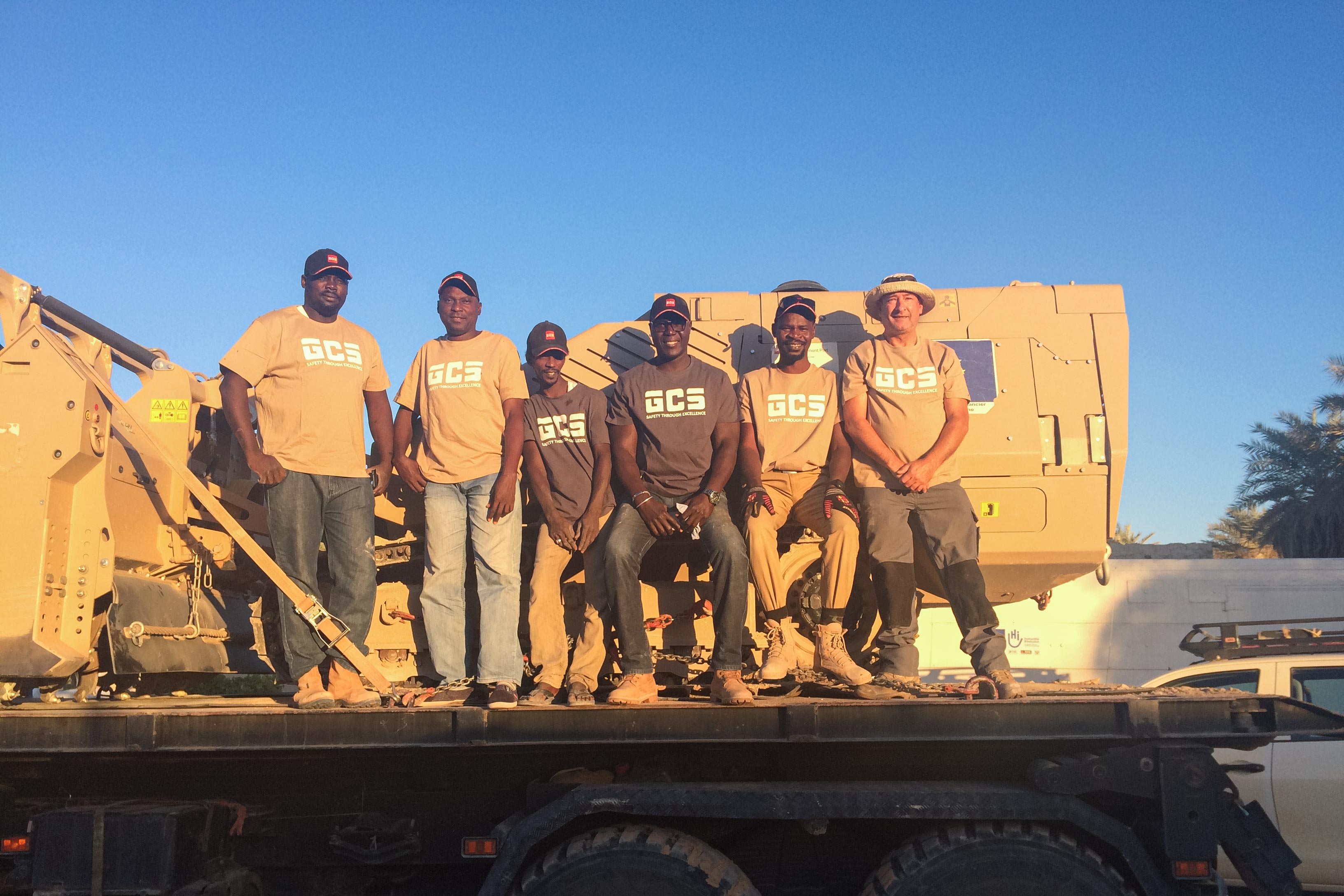
GCS has been active in Chad since 2018, supporting the international humanitarian organisation Humanity & Inclusion (HI), formerly Handicap International, within an EU‑funded mine action and development programme implemented together with MAG, SECADEV and FSD.
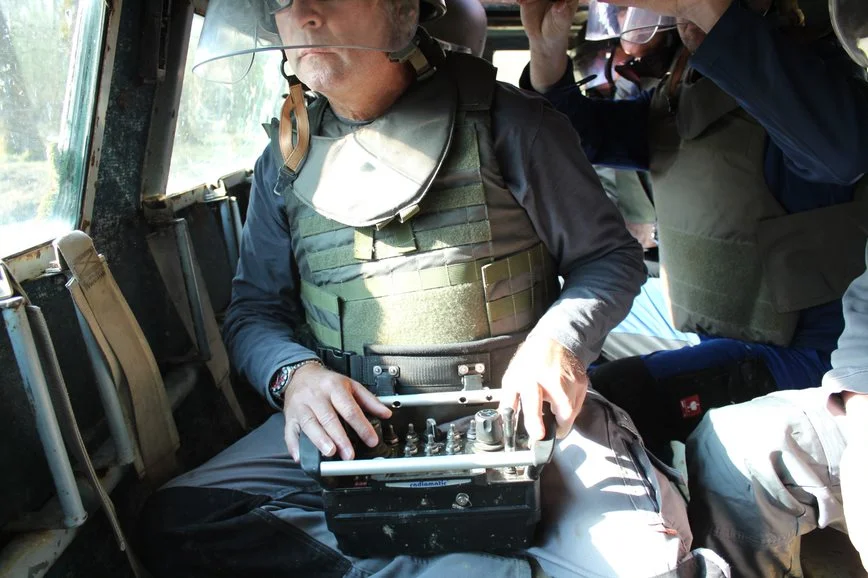
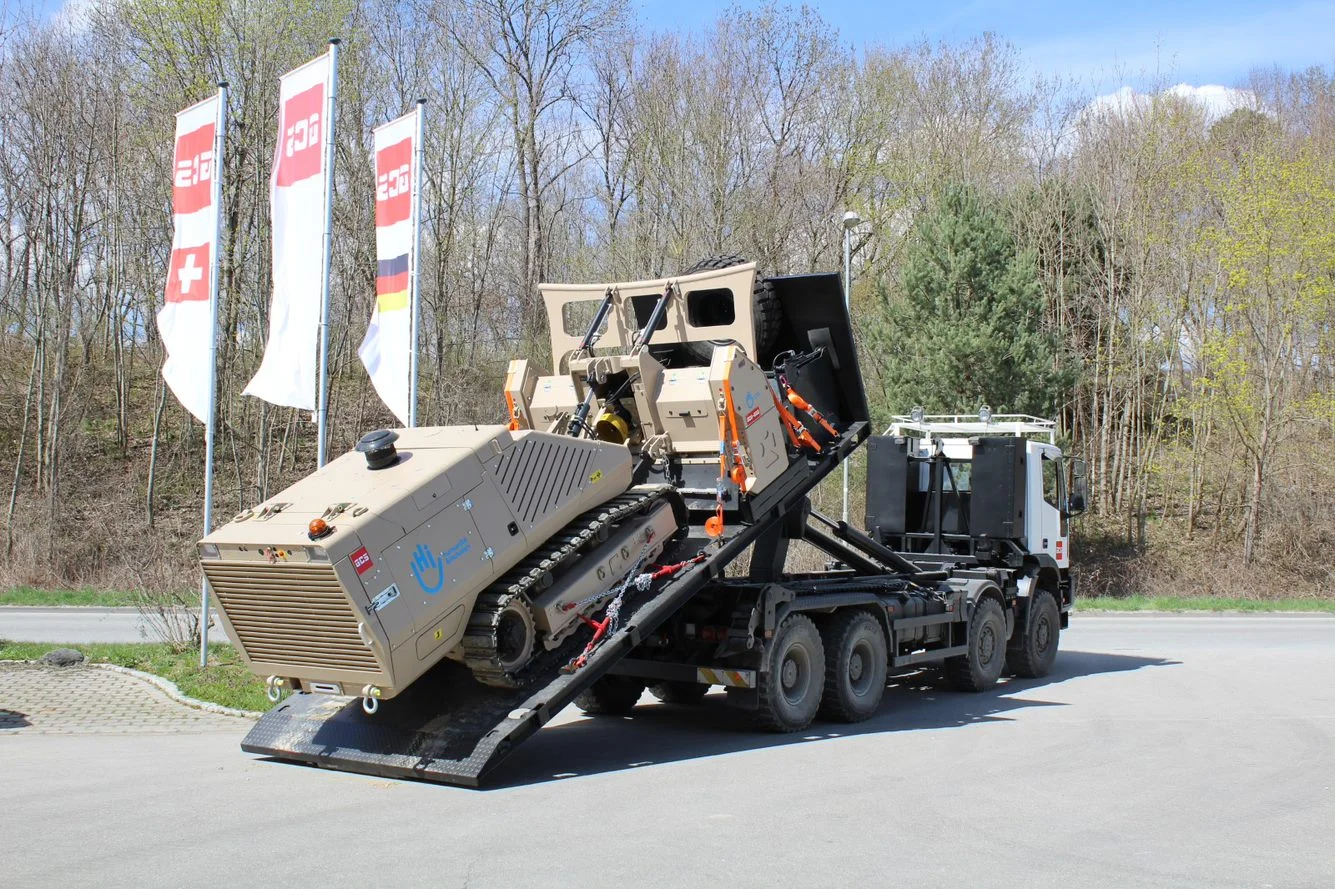
GCS was commissioned to supply a remotely operated mechanical clearance system adapted to Chad’s semi‑desert terrain and extreme operating conditions. Support has combined the delivery of a GCS‑200 mechanical clearance platform with attachments, operator and mechanic training, and ongoing in‑field technical assistance to enable sustained humanitarian clearance operations.
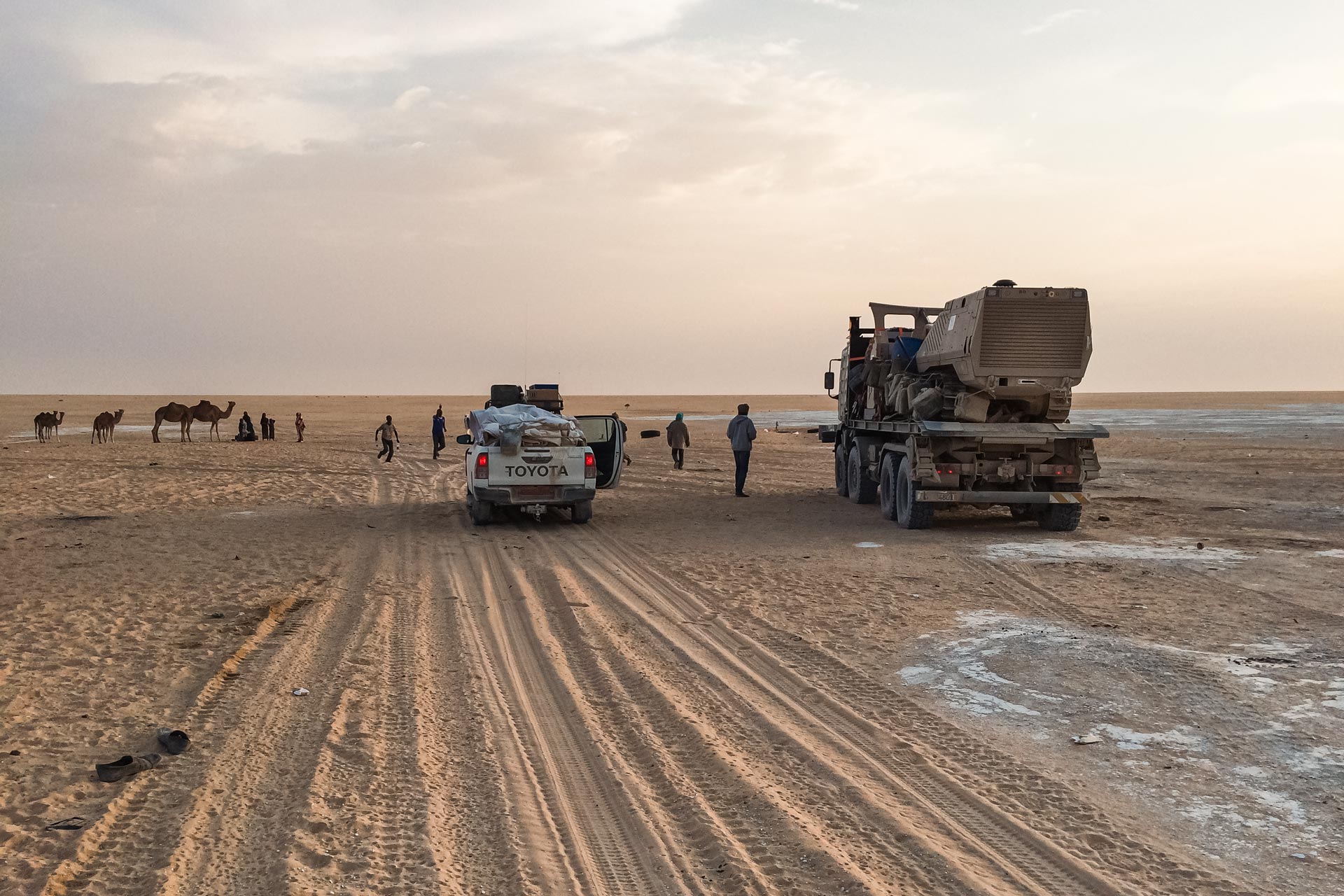
Mechanical clearance support in desert environments
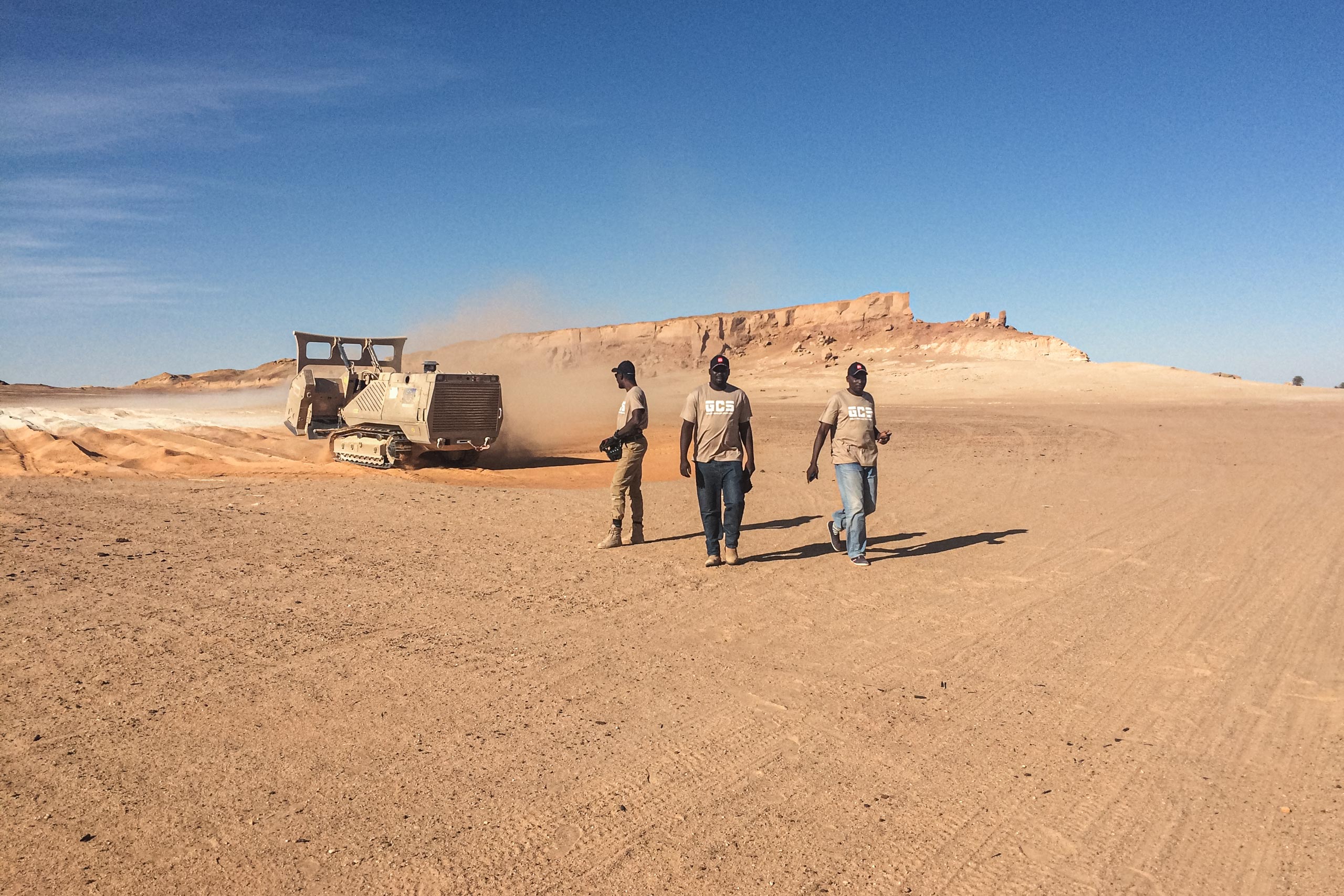
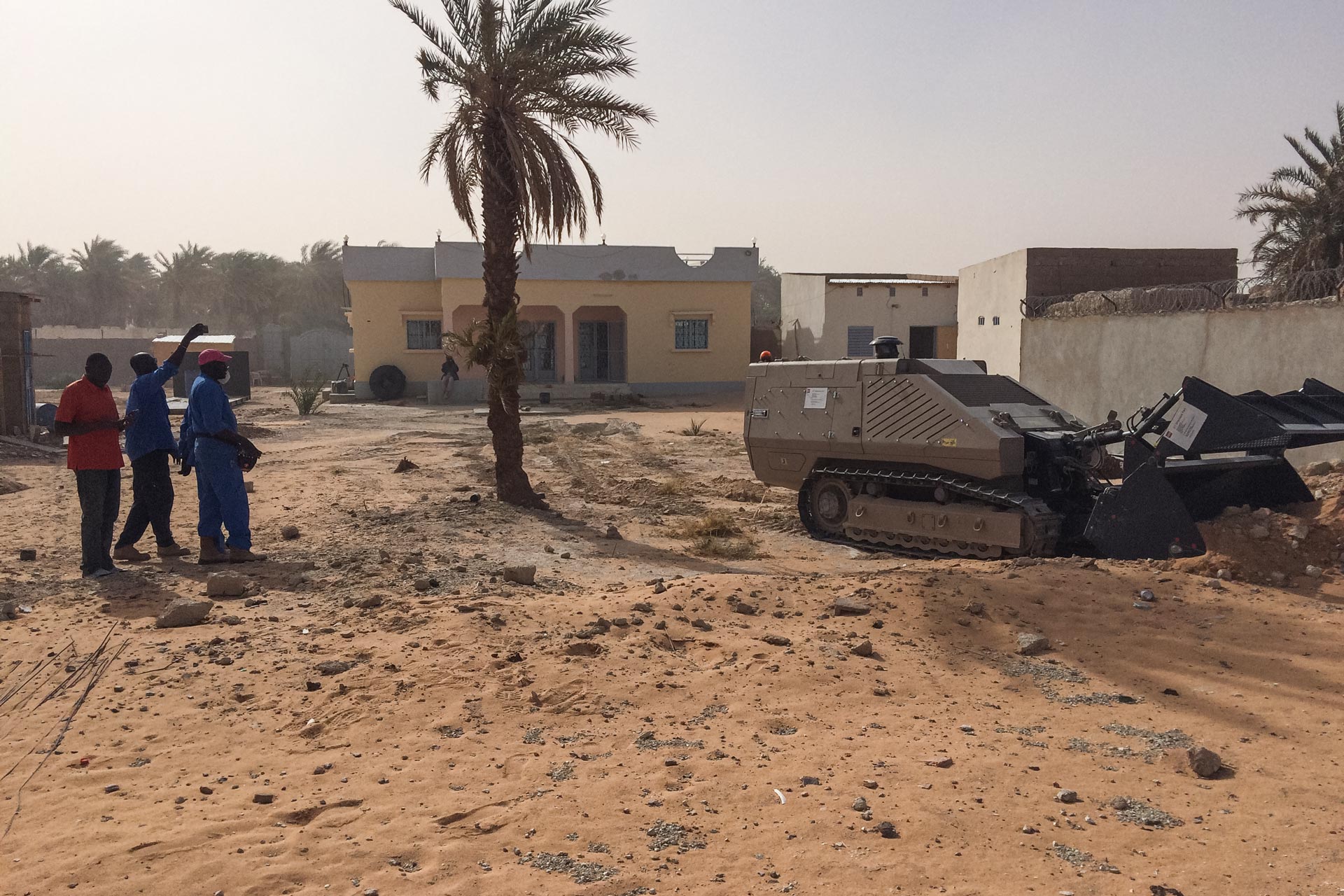
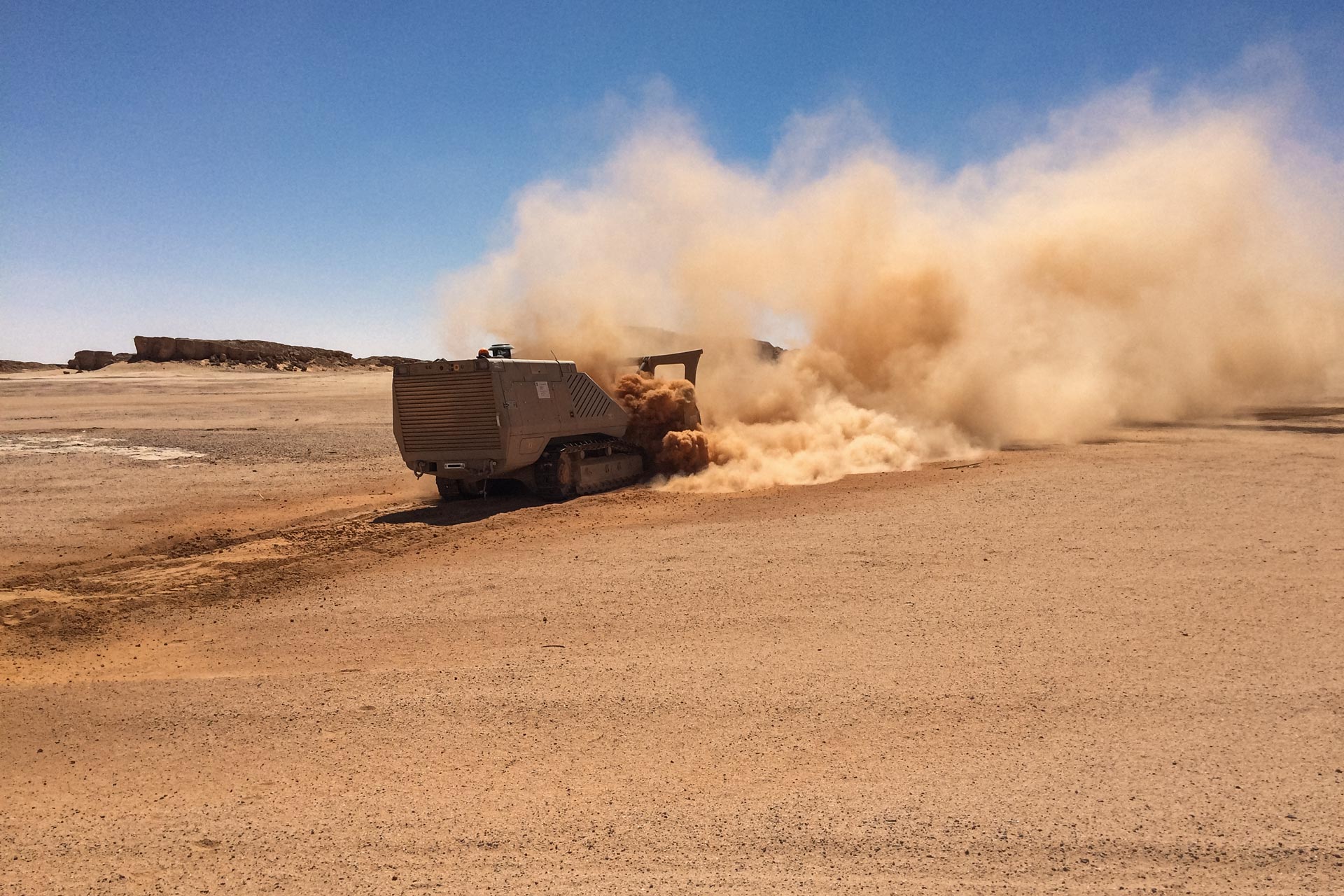
Humanitarian demining in northern Chad is characterised by large, relatively flat areas, deep sand, long supply lines and limited infrastructure. To address these conditions, GCS supplied the GCS‑200 remotely controlled tracked platform equipped with mechanical clearance tools, including Tiller attachments, to support ground preparation and mine clearance tasks. The system has been deployed near Faya‑Largeau, where it has supported clearance of extensive contaminated areas by processing vegetation, breaking soil and exposing or destroying explosive threats as a complement to manual clearance. By early 2019, more than 100,000 square metres had been cleared using the GCS‑200 in support of HI operations.
Integration into NGO‑led demining programmes
GCS support in Chad has focused on integrating mechanical assets into existing humanitarian demining workflows rather than replacing established methodologies. Mechanical clearance has been applied to improve access and safety in areas where manual clearance alone would be slow or resource‑intensive, while remaining aligned with humanitarian mine action standards and national coordination structures.
Mechanical ground preparation has enabled follow‑on manual clearance and verification activities, supporting efficient land release in remote locations affected by anti‑personnel and anti‑vehicle mines as well as ERW.
Training, logistics and sustained technical support
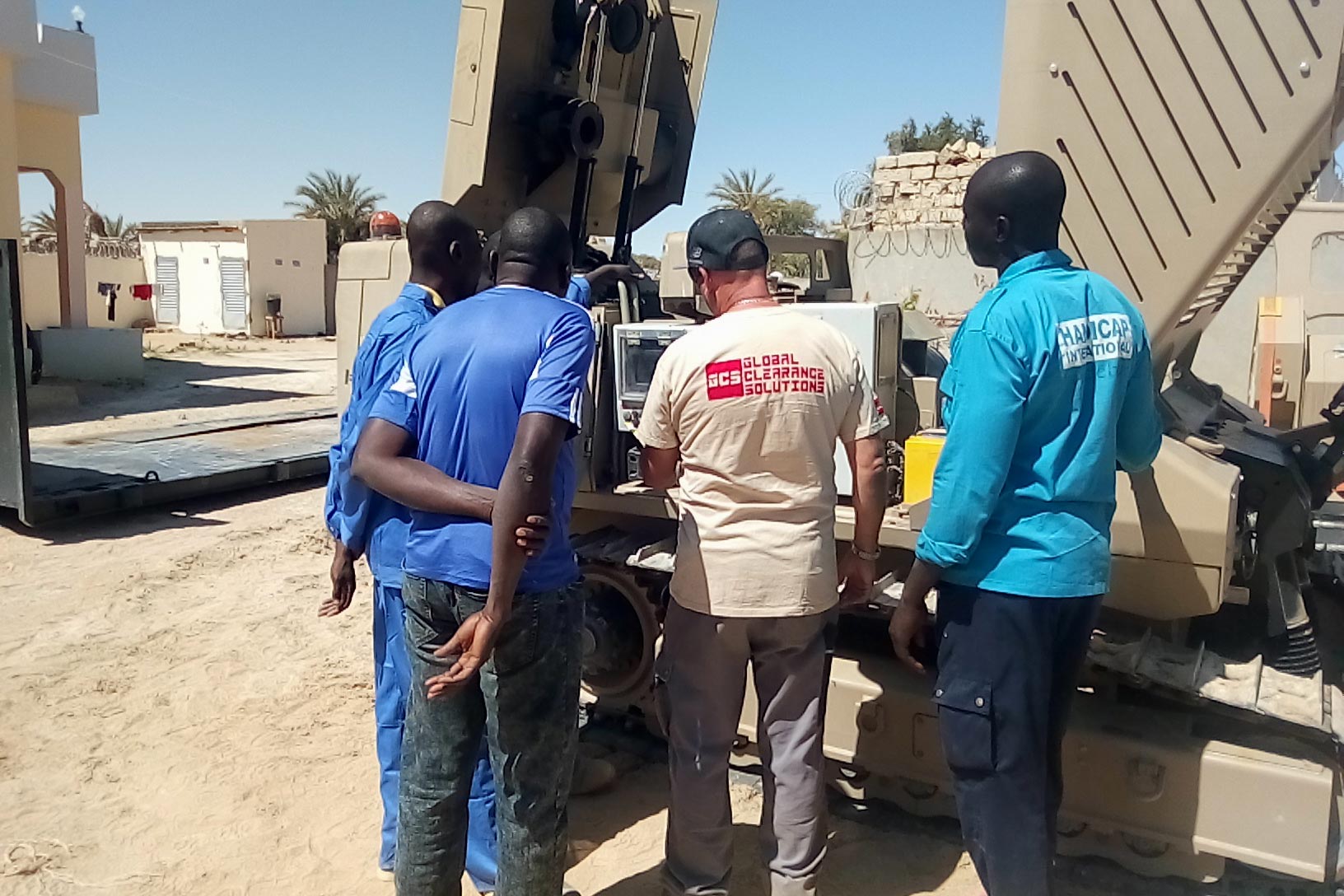
To build local operational capacity, GCS conducted a four‑week training programme for HI operators and mechanics covering system operation, maintenance and field repairs. Training was delivered in parallel with system deployment to ensure safe and effective operational use.
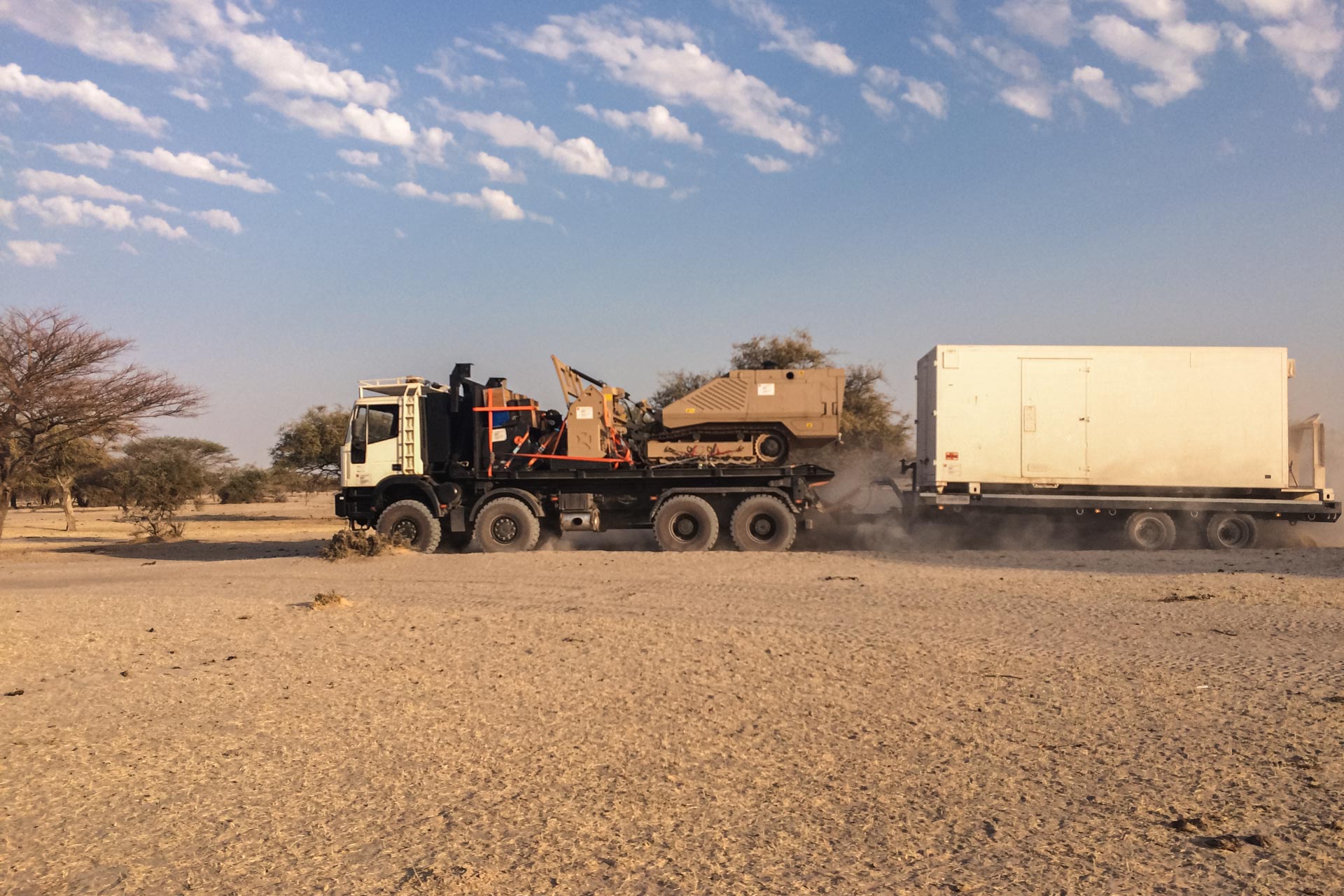
Beyond training, GCS provided extensive in‑country technical field support, including deployment assistance, logistics coordination for transport to remote sites, mentoring during early operational phases and spare‑parts support. This long‑term sustainment approach helped maintain system availability and operational continuity under challenging desert conditions.
Operational presence through project‑based humanitarian deployments in northern Chad, including Borkou and Ennedi regions.