
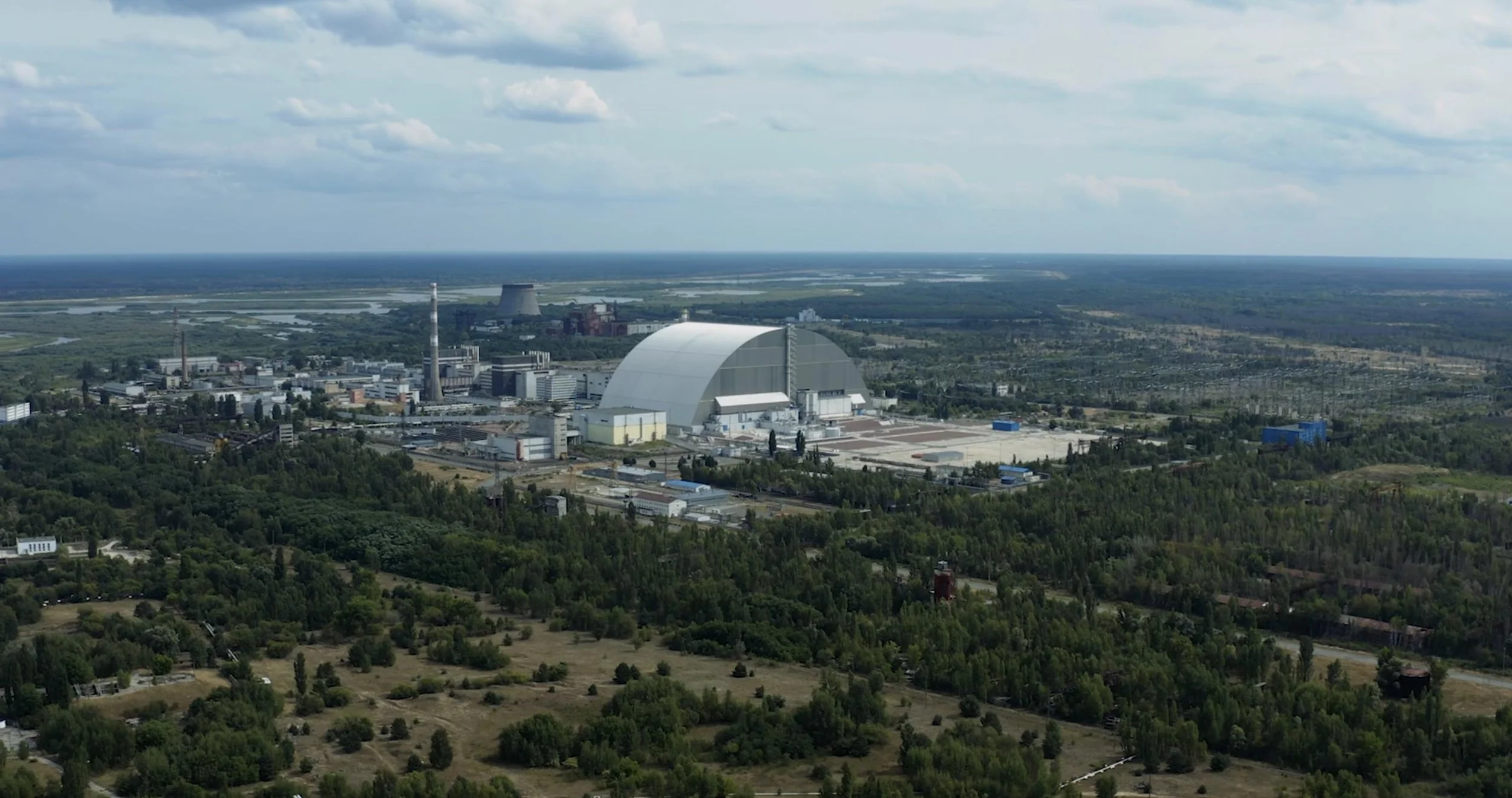
On 26 April, the world marks Chernobyl Disaster Remembrance Day, commemorating the 1986 explosion at Reactor No. 4 of the Chernobyl Nuclear Power Plant, the worst nuclear accident in history.
The disaster did not only affect cities and communities: vast forest areas absorbed radioactive fallout, creating long‑term environmental contamination and leading to the establishment of the Chernobyl Exclusion Zone. Decades later, these forests remain among the most complex and sensitive landscapes in Europe.
On this day of remembrance, those same forests face a new and compounding threat.
A new layer of contamination: mines in radioactive forests
Since the start of Russia’s full‑scale invasion of Ukraine, parts of the Chernobyl Exclusion Zone and surrounding forested areas have been exposed to landmines and explosive remnants of war.
As a result, forests that were already dangerous due to residual radiation have become even more hazardous, not only for civilians, but also for firefighters, environmental workers, and emergency responders.
Across Ukraine, more than 400,000 hectares of forests are now estimated to be potentially contaminated by mines. The total forest area requiring survey and clearance reaches approximately 450,000 hectares; an area larger than Luxembourg. So far, only around 10% has been cleared, primarily along roads and firebreaks.
Forest demining is among the most demanding forms of mine action. Operations are four to six times more expensive than agricultural clearance, requiring specialised equipment, adapted methodologies, and close coordination between operators.
Why this matters beyond Ukraine
In areas like the Chernobyl Exclusion Zone, the stakes are particularly high.
Large‑scale forest fires are a known risk in the region. If fires occur in radioactively contaminated and mined forests, responders may be unable to act safely or quickly enough. This raises the risk of radioactive particles being released and carried across borders, potentially affecting countries far beyond Ukraine.
For this reason, what happens in Chernobyl today is a matter of European environmental and security concern. Chernobyl is no longer only a symbol of past failure, yet became a reminder of our shared responsibility to prevent new disasters.
GCS and Ukrainian partners: a coordinated response
Against this backdrop, Global Clearance Solutions (GCS) and Ukrainian Demining Services (UDS) have signed a memorandum of cooperation to support large‑scale humanitarian demining in complex environments, including forests and wetlands.
The partnership brings together international operational expertise, Ukrainian local knowledge and access and advanced technologies such as remotely operated systems and modern sensor solutions.
One of the first potential areas of collaboration is the Chernobyl Exclusion Zone itself: one of the most challenging, but also most symbolically and strategically important areas for restoring safety.
“Chernobyl reminds us that environmental disasters do not stop at national borders,” says Dmytro Salimonov, General Manager of GCS Ukraine.
“Clearing forests today is about land use, but also about long‑term safety, environmental protection, and preventing risks that could affect the whole region.”
From remembrance to action
On Chernobyl Disaster Remembrance Day, GCS and UDS call on international institutions, European governments, and donor organisations to support the clearance of contaminated forests, including in and around the Exclusion Zone.
“Investing in forest clearance in the Chernobyl region is essential for protecting people, ecosystems and environmental safety across Europe,” says Oleksandr Romaniuk, Acting CEO of UDS.
Remembering Chernobyl means learning from it, and acting to ensure that the forests marked by the past do not become the source of future crises.