Operations & Field Service
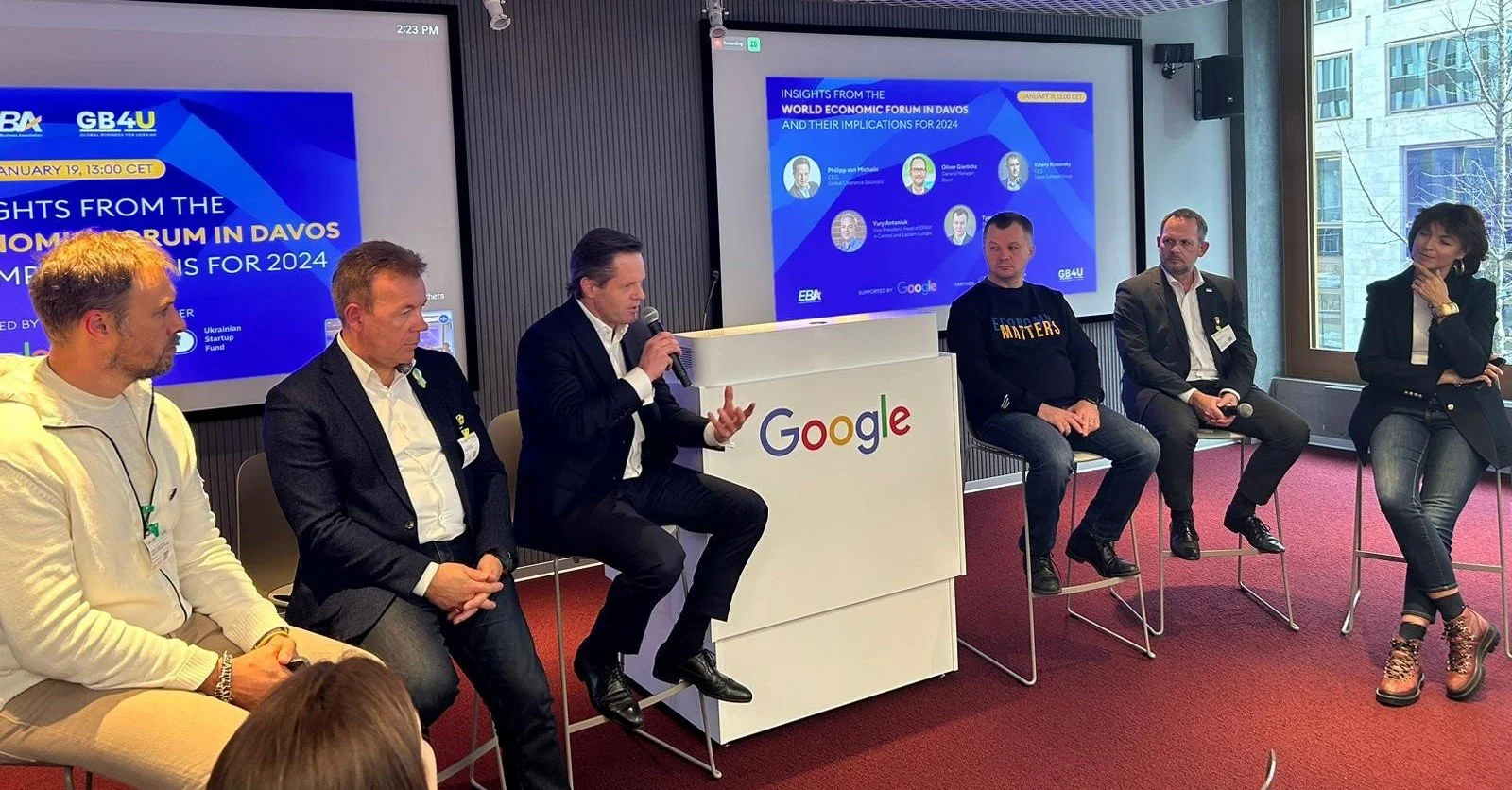
Explosive contamination remains one of the most significant structural barriers to recovery and investment in Ukraine. Landmines, unexploded ordnance and other remnants of war restrict access to land, infrastructure and industrial sites, directly affecting economic activity, reconstruction and long-term stability.
Against this backdrop, Global Clearance Solutions (GCS) continues to engage with international business and policy stakeholders to highlight the role of explosivehazard mitigation as a foundational enabler of recovery.
In January 2024, GCS leadership contributed operational insights to a senior business discussion in Switzerland focused on global economic risks and their implications for Ukraine in 2024. The exchange drew on findings from the World Economic Forum and addressed how security, resilience and investment conditions are shaped by unresolved explosive threats.
Clearance as an economic enabler
GCS's contribution focused on its operational experience in Ukraine, where demining and explosive hazard clearance are a prerequisite for restoring access to agricultural land, transport corridors and industrial infrastructure. Without clearance, reconstruction financing and private investment cannot be translated into practical recovery on the ground.
This perspective aligns with broader international assessments that identify security and physical safety as key preconditions for economic resilience and democratic stability.
Linking risk mitigation to recovery planning
The discussion reinforced the need to integrate mine action into recovery and investment planning at an early stage. Explosive threat mitigation is not a parallel humanitarian activity, but a core enabling function that allows reconstruction programmes, supply chains and labour markets to function.
By sharing lessons from field operations, training programmes and sustainment support in Ukraine, GCS highlighted how clearance capacity can be scaled and integrated into national recovery efforts when supported by coordinated international engagement.
Continued engagement
GCS remains engaged with Ukrainian authorities, international partners and business networks to ensure that mine action remains visible within broader recovery discussions. This includes advocating for sustained clearance capacity, trained national personnel and long-term support frameworks that match the scale and duration of contamination.
As global risks continue to evolve, experience from Ukraine underscores a clear lesson: recovery, investment and stability depend on safe ground. Addressing explosive hazards is therefore not only a humanitarian or security imperative, but a strategic economic necessity.
Country
Ukraine
Publish Date
Product Segments
Operations & Field Service
Capabilities
Demining (Humanitarian Mine Action)
Battle Area Clearance


