
Operations & Field Service
For agricultural communities in southern Ukraine, clearance of explosive hazards is the decisive step between prolonged disruption and the return of productive land. In regions affected by occupation and heavy fighting, restoring farmland requires close cooperation between landowners, agricultural operators and professional demining teams.
The third instalment in the field series from Nibulon and Global Clearance Solutions (GCS) shows how this cooperation has enabled farmland in the Mykolaiv region to be cleared and brought back into use.
From contamination to cultivation
In the village of Shyroke, land leased by Anatolii Lytvynenko to Nibulon had remained unusable for two growing seasons due to contamination by landmines and other explosive remnants of war. Following survey and clearance activities, the land was verified as safe and could be prepared for planting in time for the current season.
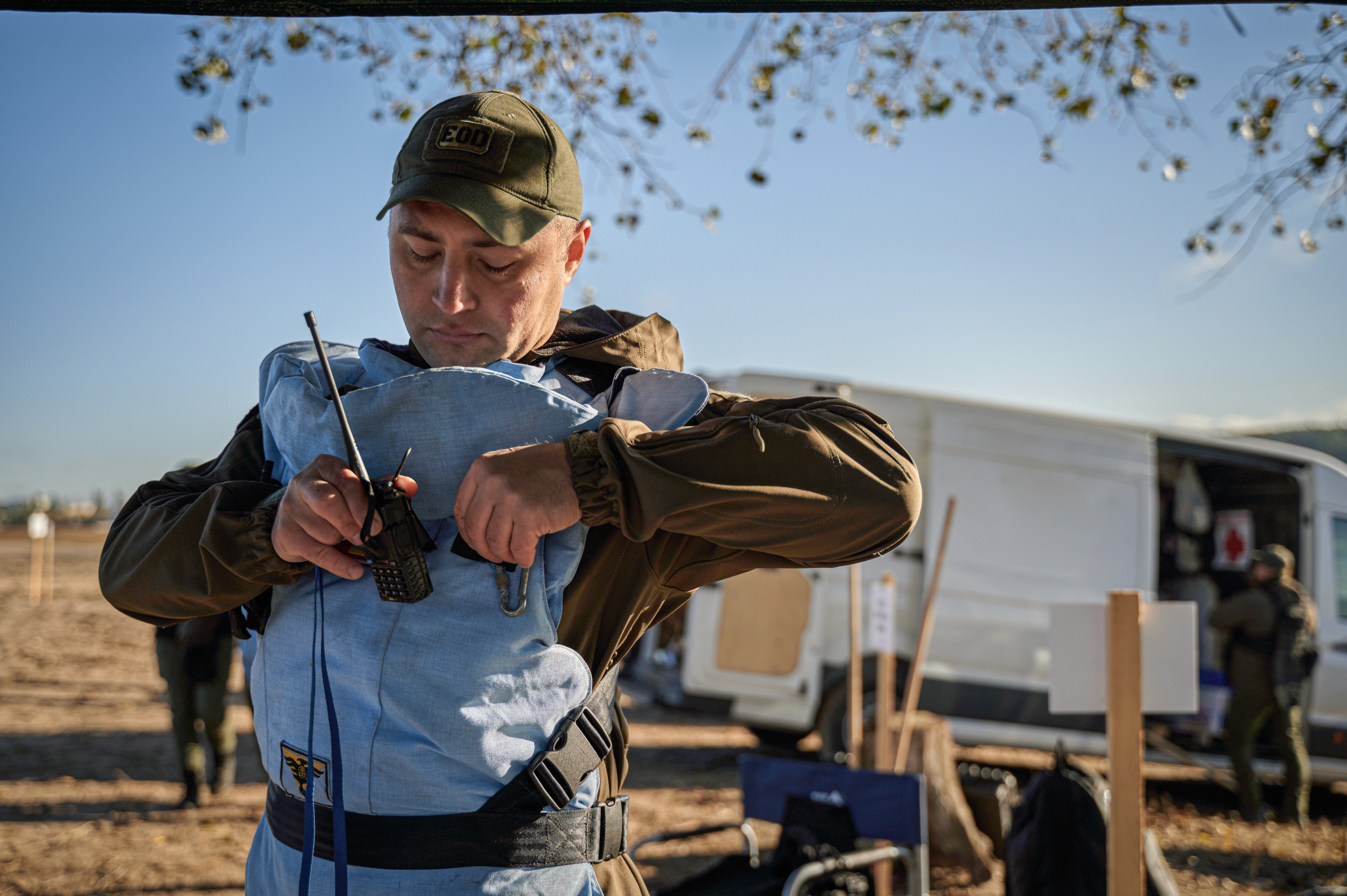
The clearance work was carried out by Ukrainian deminers trained to conduct both manual and mechanical operations. Mechanical clearance was supported through the use of GCS-200 remotecontrolled demining platforms, which are suited to the conditions found in former occupied territory, including large areas affected by artillery fire and cluster munition remnants.
Speed and safety in agricultural clearance
Mechanical demining significantly increases productivity while reducing direct exposure of personnel to explosive hazards. Depending on terrain and contamination, a single platform can process approximately 10,000 to 20,000 square metres per day, allowing clearance to progress at a scale required for agricultural recovery.
As Maksym Sovetkin, Head of Nibulon's Demining Department, notes, these conditions demand both speed and control, which are critical advantages of a remoteoperated system when working in heavily affected farmland.
GCS supports this capability by providing training and technical expertise, enabling Ukrainian operators to deploy the systems safely and sustainably.
A locally embedded model for recovery
The project is supported by DEG Impulse as part of the develoPPP programme, with funding from the German Federal Ministry for Economic Cooperation and Development (BMZ). This structure channels international support into Ukrainianled operations, strengthening national capacity rather than replacing it.
By aligning demining with Ukraine's leaseholding system, the model supports landowners during clearance while enabling agricultural operators to plan for renewed production. Once land is released, it can immediately contribute to livelihoods, employment and food supply.
Safe land as the basis for future harvests
The clearance of farmland in Mykolaiv illustrates how coordinated survey, mechanical demining and local expertise can translate directly into restored agricultural activity. For landowners and operators alike, safe access to land makes it possible to move from recovery planning to tangible results.
Get to know Anatolii Lytvynenko, who leases eight hectares to NIBULON, who together with GCS helped demine his land to rescue his harvest.
Country
Ukraine
Publish Date
Product Segments
Operations & Field Service
Unmanned Systems (UXS)


